
24/7 Commercial HVAC Repair in San Antonio: A Preventative Maintenance Checklist
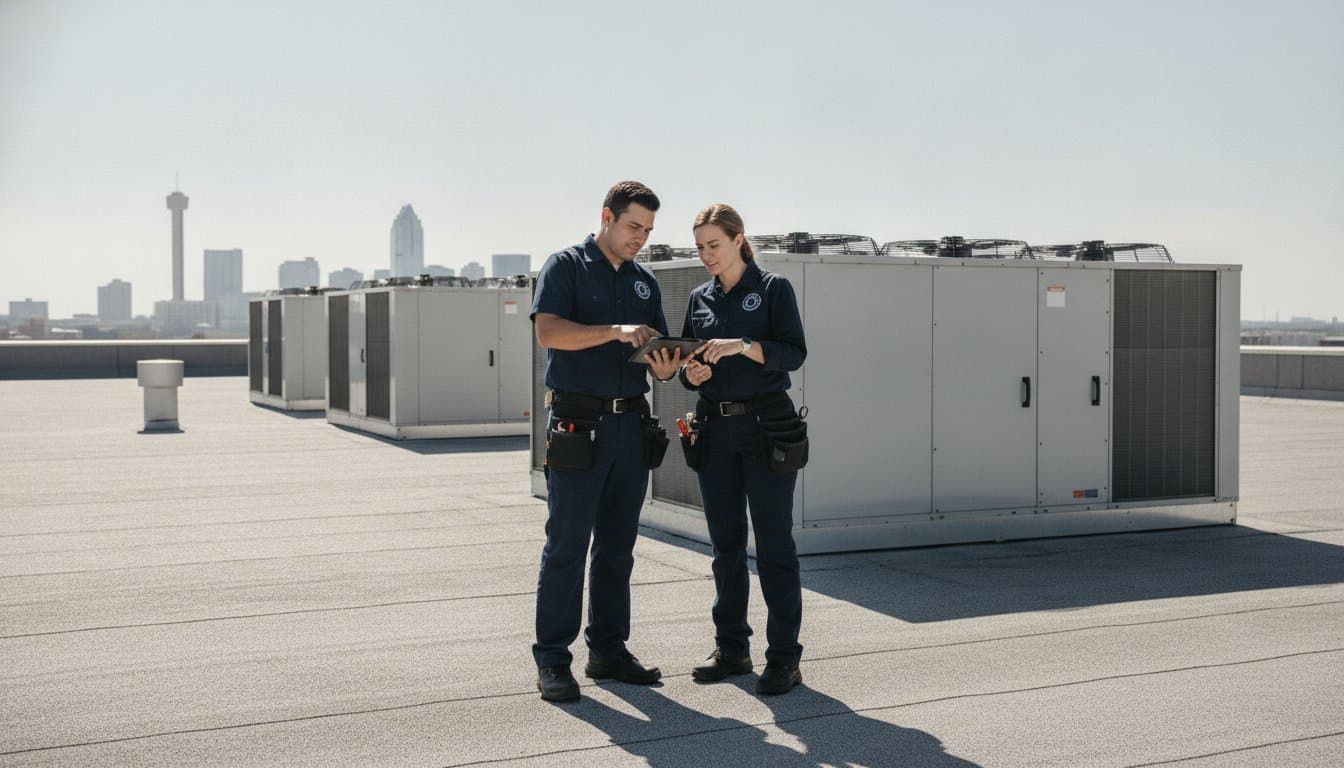
In the unforgiving thermal environment of South Texas, a mechanical failure isn't merely a maintenance inconvenience; it's a direct threat to your enterprise's operational integrity. When your facility requires 24/7 commercial HVAC repair San Antonio, the immediate priority is restoration, yet the long term objective must be the mitigation of future risks. You've likely recognized that unscheduled downtime often stems from a cycle of reactive repairs and superficial fixes that fail to address the underlying engineering challenges of large scale systems.
Securing your facility's continuity requires more than a temporary solution. It demands a professional diagnostic protocol and a comprehensive preventative maintenance framework designed to withstand extreme local heat indexes. By implementing a disciplined strategy, you can achieve zero unscheduled downtime and extend the lifecycle of your critical infrastructure through precise technical oversight and systematic verification.
This article outlines a technical checklist for maintaining peak performance, examines the logistical impact of the 2026 A2L refrigerant mandates, and demonstrates how a proactive maintenance plan serves as a strategic financial asset. You'll gain a clear understanding of the rigorous standards necessary to manage complex thermal loads while maintaining strict control over energy expenditures and operational stability.
Key Takeaways
- Learn why transitioning from a reactive "break-fix" model to a disciplined preventative framework is essential for mitigating revenue loss and extending the operational lifecycle of your mechanical assets.
- Understand the technical rigor of professional diagnostic protocols, including systematic refrigerant cycle analysis and electrical verification, to identify potential failure points before they manifest.
- Discover how 24/7 commercial HVAC repair San Antonio services provide a critical safety net against the extreme thermal loads characteristic of the South Texas climate.
- Access a structured maintenance checklist that emphasizes quarterly filtration inspections and annual chemical coil cleaning to ensure peak system efficiency and air quality.
- Explore how advanced technologies like Building Information Modeling (BIM) enable precise digital diagnostics and faster recovery times during complex mechanical emergencies.
Table of Contents
- The Critical Necessity of 24/7 Commercial HVAC Repair in San Antonio
- Identifying Failure Points: Professional Diagnostic Protocols
- Preventative Maintenance vs. Reactive Repair: A Financial Analysis
- The Commercial HVAC Preventative Maintenance Checklist for San Antonio
- J3 Mechanical Services: Strategic Engineering for Emergency Recovery
The Critical Necessity of 24/7 Commercial HVAC Repair in San Antonio
Mechanical failure within a commercial facility represents more than a localized technical glitch. It's a systemic threat to the enterprise's operational continuity. In the South Texas business landscape, the demand for 24/7 commercial HVAC repair San Antonio arises from the reality that mechanical systems don't adhere to standard business hours. When a critical component fails, the resulting operational paralysis can lead to quantifiable revenue loss and a breakdown in logistical workflows. A disciplined approach to emergency repair prioritizes rapid restoration through a technical lens, ensuring that the immediate fix aligns with the long term integrity of the mechanical system.
Defining an "emergency" requires a nuanced understanding of a facility's specific cooling requirements. While a loss of comfort cooling in a retail space is a significant concern for customer retention, a failure in a server room or a medical laboratory constitutes a high stakes crisis. These environments require precise thermal regulation to prevent hardware failure or the loss of temperature sensitive biological assets. Professional diagnostic protocols allow technicians to triage these situations effectively, deploying resources where the risk to critical infrastructure is highest. Rapid system recovery isn't just about speed; it's about the disciplined application of engineering principles to restore stability without compromising safety.
Infrastructure Stakes: Why Response Time Matters
In critical environments like data centers, medical facilities, and cold storage warehouses, response time is the primary variable in loss prevention. The "Mechanical Envelope" refers to the delicate balance of pressure, temperature, and air quality that modern HVAC systems maintain within a structure. If this envelope is breached due to mechanical failure, the building's internal environment can quickly become hazardous or destructive. Beyond the immediate physical risks, prolonged HVAC downtime can lead to legal liabilities and safety violations under local health codes or OSHA standards, making rapid 24/7 commercial HVAC repair San Antonio a legal and operational necessity.
San Antonio Climate Stressors
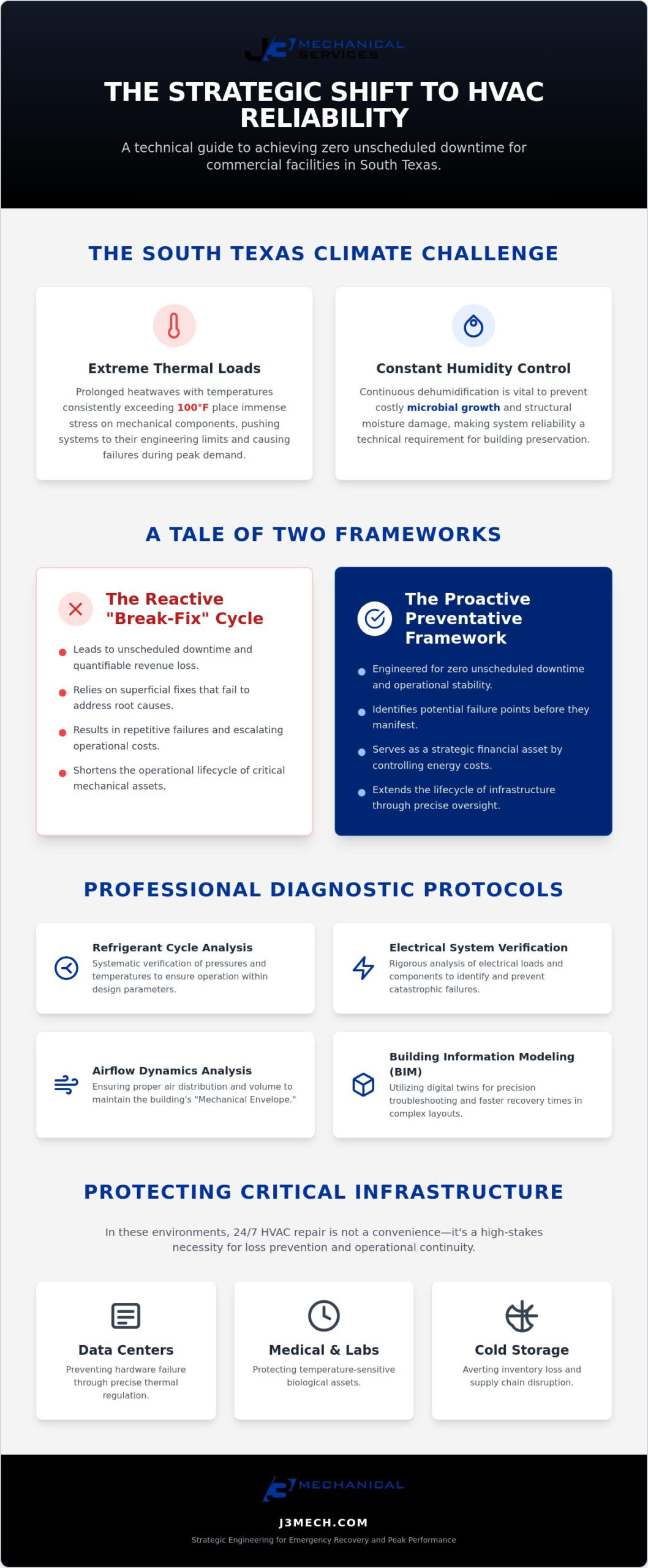
The climate in Central Texas presents unique challenges, specifically during prolonged heatwaves where temperatures consistently exceed 100°F. These extreme thermal loads place immense stress on mechanical components, often causing failures during peak demand hours when systems are pushed to their engineering limits. Humidity control is equally vital in this region. Without continuous dehumidification, commercial spaces risk microbial growth and structural moisture issues that are exceptionally costly to remediate. Reliability isn't a luxury in this context; it's a technical requirement for year round operational stability and building preservation.
Identifying Failure Points: Professional Diagnostic Protocols
Effective diagnostics for large scale infrastructure require a systematic departure from the trial and error methods often seen in residential services. When a facility manager requests 24/7 commercial HVAC repair San Antonio, the objective isn't just to restart the unit but to verify the integrity of the entire mechanical sequence. This involves a rigorous analysis of electrical loads, refrigerant pressures, and airflow dynamics to ensure the system operates within its original design parameters. By moving beyond superficial symptoms, technicians can identify the root cause of a malfunction, preventing the repetitive failures that drive up operational costs.
Utilizing Building Information Modeling (BIM) data has become a cornerstone of precision troubleshooting in complex mechanical layouts. These digital twins allow technicians to visualize the exact routing of concealed ductwork and piping, which is essential for identifying restrictions or leaks in multi story environments. This data driven approach ensures that even during a critical emergency, every action is calculated and verified against the building’s specific engineering model, reducing the time spent on manual discovery.
Electrical and Control System Integrity
Modern commercial systems rely on complex digital logic to maintain efficiency. Technicians must test Variable Frequency Drive (VFD) parameters to ensure motors aren't over amping and verify that the Building Automation System (BAS) is communicating accurate sensor data across the network. Early detection of contactor wear or loose terminal connections prevents the high voltage arcing that leads to catastrophic component failure. Establishing this level of precision is why many firms choose to partner with a specialized mechanical services provider for ongoing oversight and technical accountability.
Mechanical Component Assessment
The physical health of the compressor remains the heart of the operation. Beyond basic pressure readings, industrial diagnostics include vibration analysis to detect bearing fatigue and oil acidity tests to identify internal motor burnouts before they manifest as a total system shutdown. In the high particulate environments of San Antonio, condenser and evaporator coils must be scrutinized for thermal transfer efficiency. If a failure involves unique ductwork configurations, having access to in house fabrication allows for the rapid deployment of custom components that off the shelf parts cannot match, ensuring the system's airflow dynamics are fully restored.
Preventative Maintenance vs. Reactive Repair: A Financial Analysis
Transitioning from a reactive "break-fix" model to a disciplined preventative maintenance framework represents a fundamental shift in how an organization manages its mechanical assets. While 24/7 commercial HVAC repair San Antonio remains a critical safety net for unforeseen failures, relying on emergency response as a primary management strategy is fiscally irresponsible. Calculating the true cost of emergency-only service reveals a pattern of compounding losses that extend beyond the immediate repair invoice. These hidden costs include expedited shipping fees for critical components, premium labor rates for after-hours deployment, and the significant opportunity cost of operational downtime.
Lifecycle extension serves as a primary driver for strategic maintenance. Consistent oversight adds years to the operational life of expensive mechanical assets, such as rooftop units and centrifugal chillers, by ensuring that every component functions within its designed tolerances. When systems are neglected, minor issues like belt slippage or bearing friction escalate into major failures that necessitate premature asset retirement. By treating HVAC systems as a planned investment rather than an unforeseen expense, facility managers can stabilize their capital expenditure budgets and avoid the volatility of emergency replacements.
Energy optimization provides a direct and measurable return on investment through lower utility expenditures. There's a documented correlation between system cleanliness and electrical consumption; dirty condenser coils and obstructed filtration systems force motors to work harder, increasing amperage draw and accelerating wear. Precision calibration of control sequences ensures that the system doesn't overcool or short-cycle, further reducing energy waste. This technical rigor transforms the maintenance provider into a strategic partner who directly contributes to the facility's bottom line.
Total Cost of Ownership (TCO) in HVAC
Analyzing the Total Cost of Ownership involves comparing the predictable, structured cost of a quarterly preventative maintenance plan against the high-impact expense of a single emergency compressor swap. Beyond the immediate repair, a disciplined maintenance history reduces the frequency of costly change orders during future system upgrades because the existing infrastructure is well-documented and maintained. This data-driven approach allows for precision calibration that yields quantifiable energy savings over the lifecycle of the equipment.
Operational Reliability as a Competitive Advantage
Mechanical reliability directly influences tenant retention and employee productivity by maintaining a stable, optimized environment. For facility managers, automated maintenance scheduling reduces the mental load of tracking service intervals and mitigates the risk of human error. Furthermore, aligning mechanical performance with corporate sustainability goals demonstrates a commitment to environmental stewardship, as well as operational excellence, positioning the facility as a modern, high-performance asset in the San Antonio market.
The Commercial HVAC Preventative Maintenance Checklist for San Antonio
Maintaining a high capacity mechanical system requires a disciplined adherence to a technical schedule rather than a general list of tasks. While 24/7 commercial HVAC repair San Antonio provides the necessary response to sudden failures, the preventative maintenance (PM) checklist serves as the primary defense against such occurrences. In San Antonio, where environmental conditions fluctuate between extreme thermal loads and high humidity, the frequency and rigor of these inspections must match the local climate's demands. A structured framework ensures that every component, from the smallest sensor to the primary compressor, operates within its intended engineering specifications.
A comprehensive maintenance protocol involves several critical phases of verification and execution:
- Quarterly Filtration and Air Quality Audit: Systematic inspection of all filtration systems and air quality monitors is essential in high particulate environments. Clogged filters restrict airflow, forcing blower motors to over amp and reducing the system's ability to manage latent heat.
- Annual Chemical Coil Cleaning: Condenser and evaporator coils require professional chemical cleaning to remove mineral deposits and environmental debris. This process restores optimal thermal transfer efficiency, which is vital during prolonged 100°F+ heatwaves.
- Semi-Annual Sensor Calibration: Building automation sensors and thermostats must be calibrated twice yearly to ensure the logic within the control sequence remains accurate. Even a two degree variance can lead to significant energy waste and short cycling.
- Mechanical Assembly Service: Lubrication of bearings and tensioning of all drive belts prevents the friction based wear that leads to catastrophic failure of rotating assemblies.
- Refrigerant Charge Verification: Technicians must perform leak testing and charge verification to maintain compliance with EPA standards. For systems holding over 1,500 pounds of refrigerant, automatic leak monitoring is a regulatory requirement as of 2026.
Secure your facility's operational stability by establishing a comprehensive maintenance agreement that prioritizes technical accuracy over superficial audits.
Seasonal Readiness Protocols
In the spring, the focus shifts to peak load readiness, ensuring that the refrigerant cycle and condenser fans are capable of handling the upcoming summer demand. Fall inspections pivot toward heating system safety and boiler efficiency testing, verifying that combustion sequences and heat exchangers are secure. During the winter months, protecting external components from rare but damaging freeze events is a priority. This includes verifying the integrity of pipe insulation and heat tape to prevent burst lines that would necessitate immediate 24/7 commercial HVAC repair San Antonio.
Documentation and Compliance
Maintaining rigorous service logs is a non negotiable requirement for warranty preservation and insurance compliance. These records provide a transparent history of the system's health, allowing facility managers to project future capital expenditure needs with precision. When the data suggests that a system is approaching the end of its reliable service life, owners should consult a Strategic HVAC Replacement: Indicators for Large Facilities guide to plan for a seamless transition that avoids the chaos of emergency asset failure.
J3 Mechanical Services: Strategic Engineering for Emergency Recovery
J3 Mechanical Services views mechanical systems as critical infrastructure rather than isolated equipment. Our commitment to 24/7 commercial HVAC repair San Antonio is rooted in the understanding that any disruption to your mechanical envelope is a direct disruption to your bottom line. We maintain a constant state of readiness to ensure business continuity across Central Texas, providing a level of responsiveness that mirrors the high stakes of the industries we serve. This isn't merely a service offering; it's a strategic partnership designed to restore stability through disciplined engineering and technical mastery.
Our methodology utilizes Building Information Modeling (BIM) to create digital twins of complex mechanical environments, which serves as a vital asset during a crisis. During an emergency, this data allows for faster diagnostics by providing technicians with immediate visibility into concealed system architectures and logistical constraints. To further mitigate delays, our in-house fabrication facility produces custom sheet metal components on demand. This eliminates the lengthy lead times often associated with third party suppliers, allowing for the rapid restoration of airflow dynamics and structural integrity without the wait for external shipments.
Beyond technical proficiency, J3 Mechanical Services operates on faith based principles that instill a profound sense of professional accountability in every team member. We view our role through the lens of a "master builder" responsibility, where ethical consistency and meticulous preparation are as vital as the physical labor itself. This disciplined approach ensures that every repair is executed with precision, prioritizing the long term stability of your facility over temporary, superficial fixes that fail to address the root cause of mechanical distress.
Why Specialization Matters
J3 Mechanical Services maintains a strict commercial only focus, intentionally excluding residential services and general plumbing to dedicate our full resources to industrial scale mechanical projects. For specialized plumbing and sewer needs, companies like San Diego Drain Guys provide the same level of dedicated expertise for drainage infrastructure. This specialization ensures our technicians possess deep expertise in high capacity chillers, boilers, and rooftop units that define the San Antonio commercial landscape. We prioritize engineering precision over quick fixes, recognizing that the complexity of large scale systems requires a level of technical rigor that generalist contractors simply cannot provide.
Partnering for Long Term Infrastructure Health
We develop custom maintenance agreements that address the specific thermal loads and operational requirements of your facility. By identifying potential failure points before they manifest, we transition your mechanical management from a reactive struggle to a proactive, risk mitigated strategy. This methodical oversight secures your mechanical assets while optimizing energy expenditures and extending equipment life. Contact J3 Mechanical Services for 24/7 Emergency Service or a Custom Maintenance Quote to establish a foundation of operational excellence and technical reliability for your enterprise.
Securing Operational Stability Through Technical Precision
Transitioning from the tactical necessity of emergency response to a long-term strategic framework is the hallmark of sophisticated facility management. While the requirement for 24/7 commercial HVAC repair San Antonio remains constant, the ultimate objective is to minimize these interventions through the disciplined execution of the maintenance protocols discussed. This shift preserves capital and ensures that mechanical infrastructure remains a stable asset rather than a source of operational friction.
Partnering with a specialist who understands the extreme thermal loads of South Texas provides the accountability required for complex infrastructure. J3 Mechanical Services integrates advanced BIM coordination and in-house fabrication to deliver a level of precision that generalist providers cannot match. This approach doesn't just fix systems; it secures the entire mechanical environment against future risks through a transparent, logic-driven methodology.
Secure Your Facility with J3 Mechanical Services’ 24/7 Emergency Repair and Maintenance
We look forward to establishing a foundation of reliability and excellence for your mechanical systems.
Frequently Asked Questions
What is considered a commercial HVAC emergency in San Antonio?
A commercial HVAC emergency is defined as any mechanical failure that threatens critical operations, safety, or structural integrity. This includes the loss of cooling in data centers where hardware failure is imminent, or in medical facilities where temperature control is vital for biological assets. When these events occur, 24/7 commercial HVAC repair San Antonio becomes a tactical necessity to restore the mechanical envelope and prevent catastrophic revenue loss.
How often should a commercial building in Texas have HVAC maintenance performed?
Commercial facilities in Texas should ideally schedule preventative maintenance on a quarterly basis. The extreme thermal loads and high humidity of the region place significant stress on high capacity rooftop units and chillers. Four annual inspections allow for the precise calibration of control sequences and the regular cleaning of coils, ensuring the system remains compliant with 2026 refrigerant leak monitoring regulations.
Does J3 Mechanical Services provide 24/7 repair for all of Central Texas?
J3 Mechanical Services provides 24/7 emergency response for commercial facilities throughout San Antonio and the wider Central Texas region. Our logistical framework is designed to support large scale enterprises that cannot afford operational paralysis. By maintaining a constant state of readiness, we ensure that specialized technicians are available to manage complex mechanical failures at any hour, regardless of the facility's specific location in the region.
How does BIM technology help in repairing an existing HVAC system?
Building Information Modeling (BIM) facilitates faster repairs by providing a precise digital twin of a building's mechanical infrastructure. This technology allows technicians to visualize concealed ductwork and piping routes before physical intervention begins. During an emergency, BIM data eliminates the need for invasive discovery, allowing for a more accurate diagnostic process and a faster return to operational stability for the enterprise.
What are the most common causes of commercial AC failure in South Texas?
The most frequent causes of system failure in South Texas include electrical contactor wear, refrigerant leaks, and blower motor fatigue. High particulate levels often lead to obstructed filtration systems, which forces motors to over amp and increases the risk of a total shutdown. These issues are typically exacerbated during prolonged heatwaves when 24/7 commercial HVAC repair San Antonio is required because systems must operate at peak engineering capacity.
Can a preventative maintenance plan really lower my business's energy bills?
A disciplined preventative maintenance plan directly correlates with reduced energy expenditures. By performing annual chemical coil cleanings and verifying refrigerant charges, we ensure that the system operates at its intended efficiency. This technical rigor prevents motors from working harder than necessary, which lowers amperage draw and eliminates the energy waste associated with short cycling or poorly calibrated thermostats and sensors.
Why is in-house fabrication important for emergency HVAC repairs?
In-house sheet metal fabrication is essential because it removes the dependency on external suppliers for custom components. If an emergency repair requires a unique ductwork transition or specialized mechanical housing, we produce the part immediately. This capability drastically reduces downtime, as we don't have to wait for third party shipments to arrive before completing a critical system restoration and restoring the building's climate control.
Do you service boilers and industrial heating systems as well as AC?
Our specialized services extend beyond air conditioning to include high capacity boilers and industrial heating systems. J3 Mechanical Services manages the entire mechanical lifecycle, ensuring that heating infrastructure operates with the same precision and efficiency as cooling systems. We provide comprehensive repair and maintenance for all components within the mechanical envelope, including chillers, rooftop units, and complex boiler configurations common in industrial environments.
Need a hand with your building's HVAC?
Free quotes and honest answers from licensed commercial technicians across South Texas.