
Commercial Heat Pump Repair in San Antonio: How to Diagnose Heating Problems
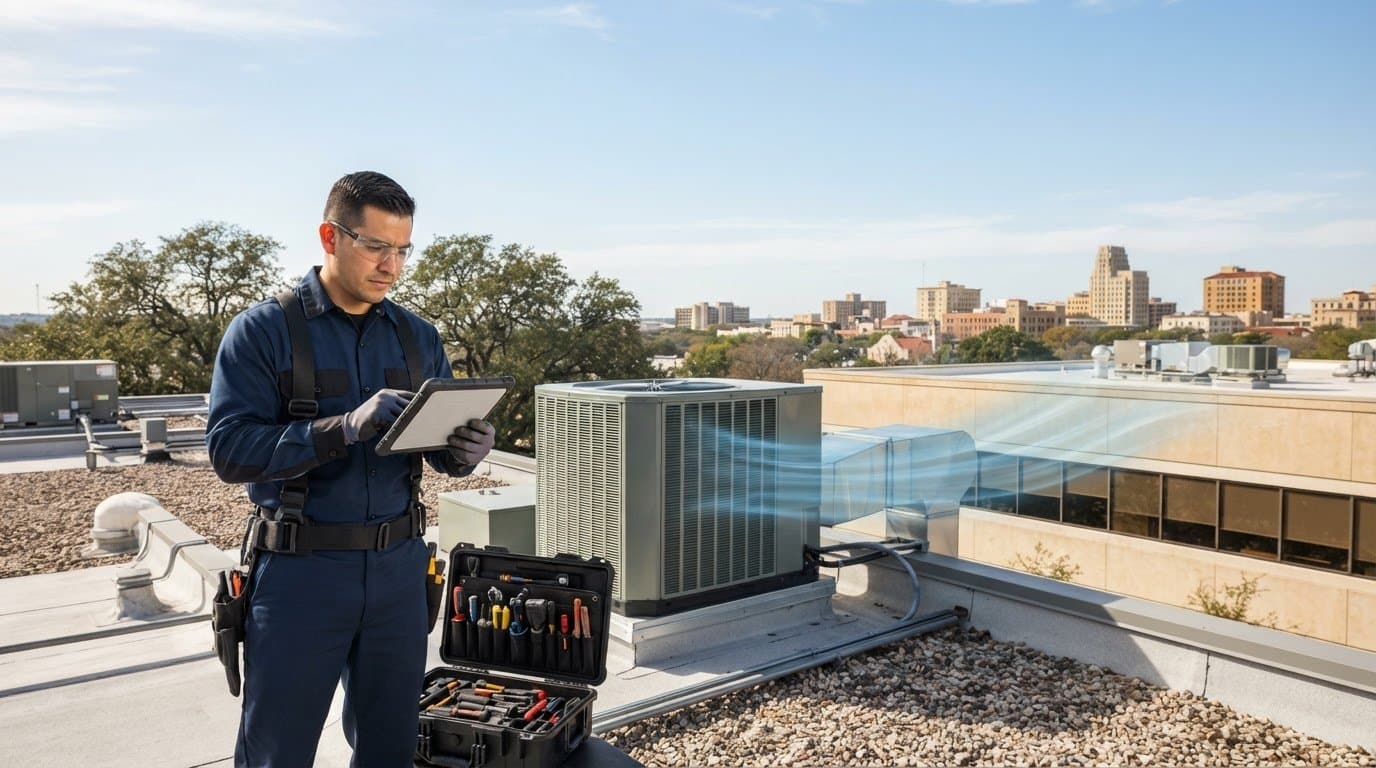
A commercial heat pump that runs without warming the building does not automatically have a major mechanical failure. In San Antonio, a heating issue may come from a control setting, schedule, restricted airflow, or equipment fault. Identifying which conditions can be safely observed, and knowing when diagnosis belongs to a technician, is the first step toward commercial heat pump repair San Antonio.
Before deciding what to do next, it helps to understand the symptom and whether continued operation could worsen a fault or disrupt business. This article covers safe checks facility staff can make without opening equipment, signs that call for professional assessment, and components a commercial HVAC technician may inspect to find the cause of inadequate heating. It also explains how to weigh repair against replacement based on the system’s condition and the facility’s needs.
Key Takeaways
- Weak airflow, cool supply air, unusual cycling, and temperature differences are useful clues, but none identifies the underlying fault on its own.
- Understanding how a commercial heat pump transfers heat can help explain which parts of its operating cycle may be interrupted.
- Use non-invasive checks to clarify the issue. Leave energized electrical work, refrigerant handling, and internal repairs to qualified technicians.
- For commercial heat pump repair San Antonio, learn what a diagnostic visit may involve and why tests depend on the equipment and site conditions.
- Compare repair and replacement based on system condition, reliability, operational risk, and lifecycle planning, not age or one symptom alone.
Commercial Heat Pump Not Heating in San Antonio? Start With the Symptoms
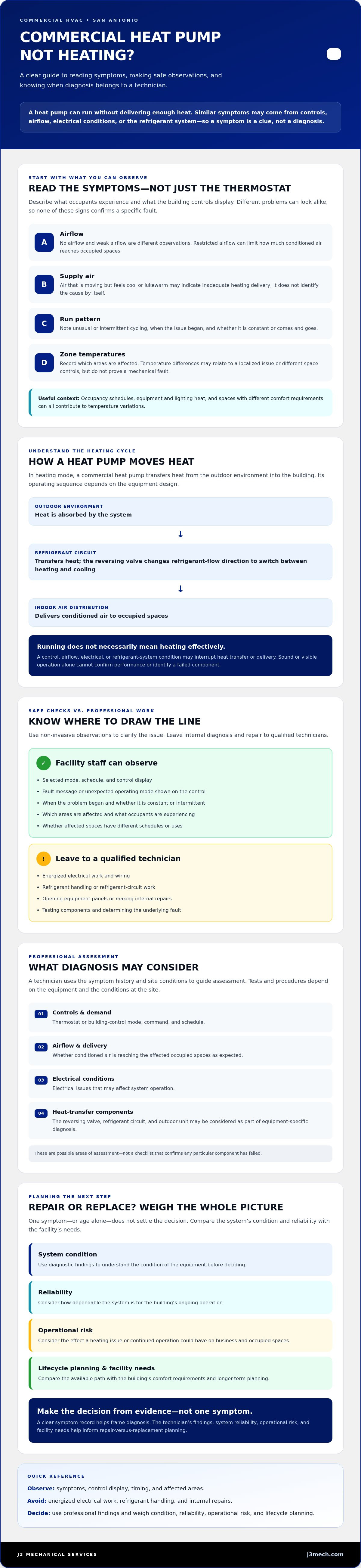
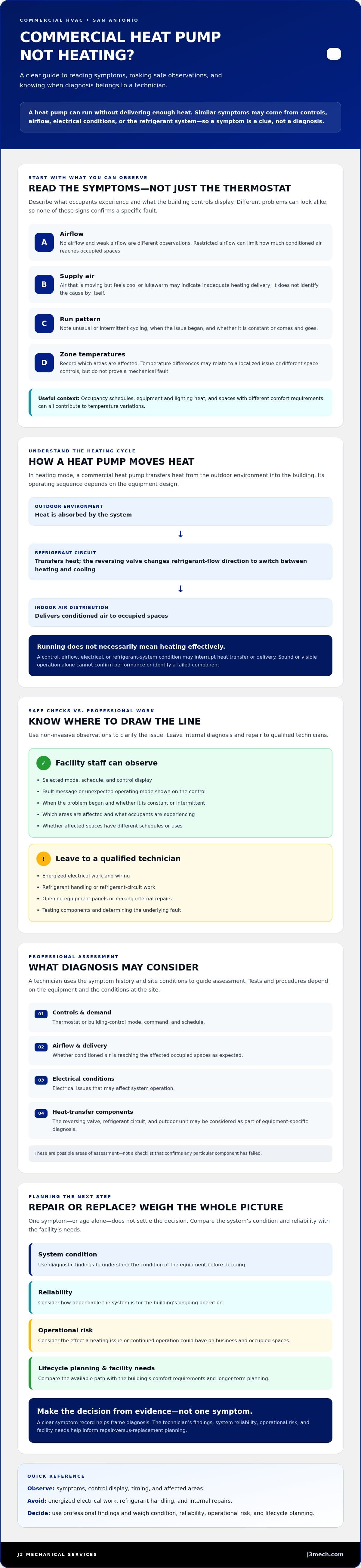
A loss of heat can affect staff, customers, and building operations, especially when different areas have different comfort requirements. Before assuming the equipment has failed, record what occupants are experiencing and what the controls display. Weak airflow, cool supply air, unusual cycling, and uneven temperatures are clues, not diagnoses. Several different operating or equipment conditions can cause similar symptoms.
A commercial heat pump has a no-heat symptom when the building does not receive the expected heating during a call for heat, but that observation alone does not identify the cause. In heating mode, a heat pump transfers heat into the building; in cooling mode, it removes heat from indoor spaces. Some systems also use auxiliary heat under certain operating conditions. A thermostat or building control may show the selected mode or supplemental operation, though the display and sequence vary by equipment.
What does “not heating” look like in a commercial building?
Describe the symptom precisely before arranging commercial heat pump repair San Antonio. No airflow is different from low airflow, and both differ from air that is moving but feels lukewarm. A temperature gap between zones may point to a localized issue or differences in how the spaces are controlled. It does not, by itself, confirm a mechanical fault.
Have facility staff note when the problem began, whether it is constant or intermittent, and which areas are affected. Check the thermostat or building control display for the selected mode, a fault message, or an unexpected operating mode. These observations give a technician a useful starting point without requiring staff to open equipment or make internal adjustments.
Why San Antonio conditions and building use matter
Outdoor conditions and the building’s heating load influence heat-pump performance, so consider indoor comfort alongside the equipment’s operating state. Occupancy schedules, heat from equipment and lighting, and spaces with different comfort requirements can all contribute to temperature variations. Do not assume that one outdoor condition or a reading from a single room explains the whole problem.
Track when the temperature difference occurs and compare affected areas with their schedules and use. A conference room occupied for part of the day may have a different comfort pattern from a continuously used work area. A heat pump transfers heat rather than producing it in the same way as combustion equipment. See how heat pumps transfer heat for an overview. These details help frame the symptoms; a technician can assess whether the cause involves controls, airflow, or equipment performance.
How a Commercial Heat Pump Heats, and What Can Interrupt the Cycle
A commercial heat pump moves heat between the outdoor environment and the building rather than producing heat through combustion. In heating mode, its refrigeration circuit absorbs heat outside and transfers it indoors. The reversing valve changes the direction of refrigerant flow so the system can switch between heating and cooling. The outdoor unit and indoor air-distribution components also support heat transfer. The exact operating sequence depends on the equipment design.
A heat pump can run but provide too little heat if a control, airflow, electrical, or refrigerant-system condition interrupts heat transfer or delivery. That is why sound or visible operation alone cannot confirm that the system is heating effectively or identify which component needs attention.
Which heat-pump components can affect heating?
The thermostat or building controls establish the heating demand and selected mode. If the command, schedule, or mode does not match the building’s needs, the system may not respond as expected. Restricted airflow can also limit how much conditioned air reaches occupied spaces, even when the equipment is operating. These are possible fault categories, not proof of a specific failure.
The reversing valve and refrigerant circuit are central to changing modes and transferring heat. The outdoor unit also plays a role in system operation. Diagnosing these components may require measurements and equipment-specific procedures, so facility staff should not open panels, handle wiring, or attempt refrigerant work.
Why does a heat pump run but still deliver little heat?
A running system may have a control issue, restricted airflow, an electrical problem, or a fault in the refrigerant circuit. Different issues can produce similar symptoms, and a component’s presence on this list does not mean it has failed. Weak delivery in occupied spaces could involve airflow, for example, while an incorrect mode or demand could involve controls. A technician needs to verify the evidence before reaching a conclusion.
Testing should reflect the equipment’s configuration, current operating conditions, and the symptoms staff have recorded. The applicable commercial energy efficiency standards may provide context if a facility later evaluates equipment options, but they do not diagnose a current heating problem.
For commercial heat pump repair San Antonio, a technician can assess the equipment and determine which tests are appropriate. Confirm that the contractor services the specific heat-pump type at your facility. J3 Mechanical Services provides commercial HVAC repair, and its commercial HVAC repair services may be relevant when a professional assessment is needed.
Commercial Heat Pump Troubleshooting: Safe Checks Versus Technician Diagnosis
Facility staff can gather useful information before requesting service, provided checks follow normal operating procedures and do not require opening equipment. The goal is to verify settings, observe accessible conditions, and record system behavior, not to identify or repair an internal fault. For a refresher on the equipment’s basic operation, Penn State Extension explains how a heat pump works.
What can facility staff check without opening the equipment?
Use a consistent sequence and follow facility procedures and equipment instructions:
- Check the control setting. Confirm that the thermostat or building control is calling for heat and has not been set to an unintended mode or schedule.
- Observe accessible airflow points. Check that vents are not visibly blocked. Inspect an accessible filter only if facility procedures and equipment instructions permit it. Do not remove panels or reach into equipment.
- Compare zones and equipment. Note which areas are affected and whether other zones or related equipment appear to operate normally.
- Record alerts and changes. Write down displayed fault messages, when the problem began, and any recent changes in settings or operation. Document alerts before clearing them.
Staff can observe and document system behavior, but equipment repair belongs to qualified technicians. This boundary helps protect personnel and preserves information that may guide diagnosis.
When should a commercial HVAC technician take over?
Request a professional assessment if a no-heat condition persists, equipment repeatedly shuts down, unusual sounds occur, or visible damage is present. If operation seems abnormal or a fault returns after a reset, do not keep resetting the system. Repeated attempts can obscure useful evidence and may allow an underlying issue to continue. Follow site safety procedures and keep personnel clear of visible damage.
Suspected electrical faults, refrigerant problems, compressor issues, or reversing-valve concerns require qualified diagnosis. Energized electrical work, refrigerant handling, and internal component repairs are not facility troubleshooting tasks. A technician can select tests based on the equipment design and the evidence staff have recorded, rather than treating a symptom as a confirmed cause.
When arranging commercial heat pump repair San Antonio, share the control settings, affected zones, alert messages, and timeline with the service provider. Confirm that the provider services the heat-pump type and equipment at your facility. This information supports a focused handoff while keeping staff within safe, non-invasive checks.
What to Expect From Commercial Heat Pump Repair in San Antonio
A coordinated service visit turns facility observations into a diagnostic plan. For commercial heat pump repair San Antonio, the process generally starts with the operating history: when the issue began, which areas are affected, what alerts appeared, and whether settings or schedules changed. This context helps the technician verify the symptom and focus on relevant controls, airflow, and equipment operation.
How does a technician diagnose a no-heat call?
After reviewing the history, the technician inspects the system and performs tests suited to its design and reported behavior. There is no single cause or standard test sequence for every no-heat condition. The diagnostic approach depends on the evidence, equipment access, and site conditions.
A useful service explanation separates confirmed findings from possible causes. Ask what the technician observed or measured, what remains uncertain, and what next steps are proposed. For broader context on commercial repair planning, review the commercial HVAC repair guide.
How can San Antonio facilities prepare for service?
Preparation helps the technician work within the facility’s operating constraints. Arrange access to relevant equipment and controls, identify a staff contact who can describe the symptoms, and share records of alerts, affected zones, and previous changes. Before work begins, communicate occupied areas, operational priorities, site access requirements, and applicable safety procedures.
Schedules matter, too. A service plan may need to account for spaces that remain occupied, areas with limited access, or operating windows that affect when equipment can be assessed. Discussing these conditions in advance supports coordination without assuming every repair follows the same timeline or sequence. For longer-term planning, see the commercial HVAC maintenance guide.
J3 Mechanical Services provides commercial HVAC repair. To discuss a facility’s heating issue, contact J3 Mechanical Services about commercial HVAC repair. Confirm that the specific heat-pump type and equipment can be serviced at your location.
Repair or Replace a Commercial Heat Pump? Plan the Next Step
Once a technician has documented the findings, consider more than the immediate symptom. Repair may make sense when the issue is clearly identified and addressing it fits the system’s overall condition and the facility’s operating needs. Consider replacement if faults recur, reliability is declining, or continued operation presents an unacceptable risk to business continuity. Neither age nor one episode of poor heating is enough, on its own, to determine the right choice.
Which factors belong in a repair-versus-replacement review?
Review the system’s condition alongside its service record. Ask whether similar faults have returned, whether maintenance history shows developing concerns, and whether needed parts are available. Then weigh those findings against the consequences of another interruption, the importance of the spaces served, and the facility’s equipment plans. A system supporting areas with strict operating requirements may call for a different risk assessment than equipment serving less critical spaces.
Ask the technician to explain confirmed findings, remaining uncertainties, and repair and replacement options in relation to your operating requirements. Consider the scope of work, the effect on operations, and how each option fits lifecycle planning. Avoid relying on an assumed lifespan, a single symptom, or an unverified cost comparison. Recommendations should be grounded in the equipment’s documented condition and the facility’s priorities.
How can maintenance reduce future heating disruptions?
Scheduled commercial HVAC maintenance gives facility teams a planned opportunity to review system condition and identify developing performance concerns before they become more urgent operational issues. Maintenance cannot guarantee that a breakdown will be prevented, but documented inspections and service history can help show how equipment has performed over time and support better-informed repair or replacement planning.
For more context on the role of a service partner in facility operations, read the commercial HVAC contractor overview. J3 Mechanical Services offers commercial HVAC repair, maintenance, installation, and replacement. San Antonio facility teams considering commercial heat pump repair should confirm that the specific equipment and customer location are within the contractor’s service scope.
To discuss the system, its operating history, and the facility’s priorities, contact J3 Mechanical Services about commercial heat-pump service.
Make the Next Heating Decision With Confidence
Reliable heating starts with treating symptoms as evidence, not as a diagnosis. Facility staff can safely document control settings, alerts, and affected areas. Electrical, refrigerant, and internal equipment checks belong to qualified technicians. Once findings are clear, weigh repair against replacement based on system condition, recurring faults, maintenance history, and the building’s operational needs.
For commercial heat pump repair San Antonio, J3 Mechanical Services specializes in commercial HVAC solutions, including commercial repair and maintenance. The company also lists 24/7 emergency repair service. Confirm availability for your location and the equipment at your facility.
Contact J3 Mechanical Services about commercial HVAC service to discuss your system and facility priorities. A methodical assessment can help your team make an informed decision about the next step and support dependable building operations.
Frequently Asked Questions
Why is my commercial heat pump running but not heating the building?
A commercial heat pump can run without delivering enough heat if a control, airflow, electrical, or refrigerant-system issue is affecting operation. Hearing the equipment run does not confirm that it is in heating mode or transferring heat effectively. Note whether airflow is absent, weak, or simply cool, and record which zones are affected. These observations help a technician investigate without assuming one cause fits every system.
What can facility staff safely check when a commercial heat pump is not heating?
Staff can verify that the thermostat or building control is calling for heat and that the selected mode and schedule are appropriate. They can inspect accessible vents and filters only as permitted by facility procedures and equipment instructions. Record displayed alerts, affected areas, and whether other zones operate normally. Do not open equipment, handle wiring or refrigerant, or attempt internal repairs. Those tasks require qualified technicians.
When should I call for commercial heat pump repair in San Antonio?
Arrange a professional assessment if the heating problem persists, equipment repeatedly shuts down, unusual sounds occur, or visible damage appears. Do not keep resetting the system when a fault returns or operation seems abnormal. For commercial heat pump repair San Antonio, share the symptom timeline, affected zones, control settings, and displayed alerts. Confirm that the service provider works on your equipment type and can serve your facility location.
Can a thermostat problem make a commercial heat pump stop heating?
Yes. A thermostat or building control can affect heating demand, selected mode, or schedule, so an incorrect setting or control issue may prevent expected heating. Check the displayed mode and whether the control indicates a call for heat, but do not assume the thermostat is the cause based on the screen alone. If settings appear correct and the issue continues, a technician can assess the control and equipment operation.
How does a technician diagnose a commercial heat pump that is not heating?
A technician typically reviews the operating history, verifies the reported symptom, inspects the equipment, and performs tests suited to the system and available evidence. The assessment may include controls, airflow, and equipment operation, but the checks vary with equipment design, access, and site conditions. Ask the technician to distinguish confirmed findings from suspected causes, explain what remains uncertain, and outline appropriate next steps.
Should a commercial heat pump be repaired or replaced?
The decision should reflect system condition, recurring faults, maintenance history, parts availability, reliability, and the operational consequences of another interruption. A single symptom or the equipment’s age alone does not establish that replacement is preferable. Ask for repair and replacement options to be explained in relation to the facility’s requirements, including confirmed findings and remaining risks. Avoid relying on assumed lifespan or unsupported savings projections.
Does J3 Mechanical Services provide 24/7 emergency commercial HVAC repair?
Yes. J3 Mechanical Services lists 24/7 emergency commercial HVAC repair. Its stated service locations include San Antonio, Selma, Seguin, Austin, Corpus Christi, Killeen, Joshua, Bandera, Beorne, New Braunfels, Edinburg, McAllen, Rio Grand Valley, Rockport, Pleasanton, San Marcos, and Round Rock. Confirm availability for your facility and heat-pump equipment, along with emergency service details, before arranging service.
Need a hand with your building's HVAC?
Free quotes and honest answers from licensed commercial technicians across South Texas.