
Optimizing Commercial Air Conditioning: A Strategic Guide for Texas Facilities
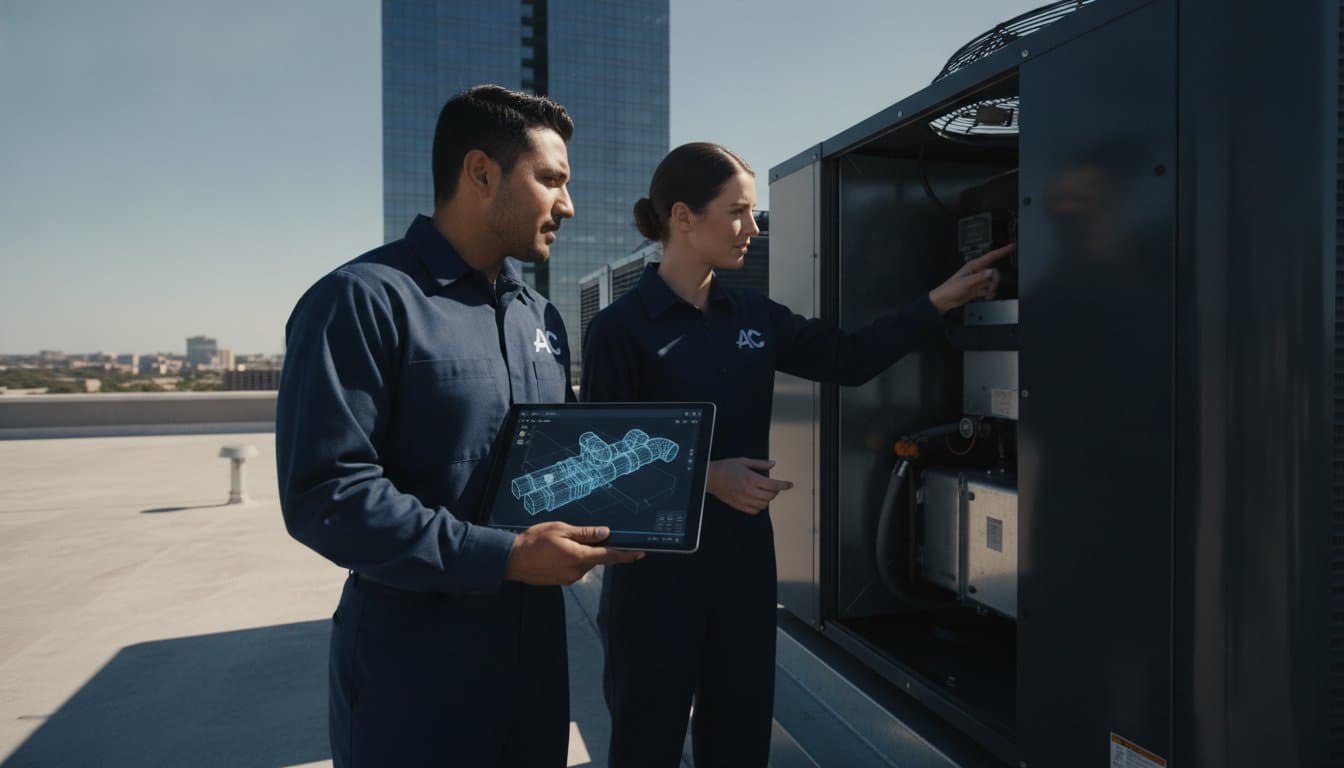
The integrity of a Texas facility's operations often rests on a single, complex variable: the sustained performance of its mechanical infrastructure during peak thermal loads. In this environment, a commercial air conditioning system isn't merely a utility; it's a critical asset that requires disciplined engineering to prevent the catastrophic failures that occur when design and installation lack coordination. You've likely felt the pressure of escalating energy costs or the operational risk of a system that struggles to maintain setpoints during a relentless heatwave. These challenges are often the consequence of reactive maintenance rather than a strategic, master-builder approach to mechanical management.
This guide provides the technical roadmap to master your facility's cooling requirements and ensure long-term mechanical reliability. You'll learn how to navigate the 2026 transition to low-GWP refrigerants and leverage precision strategies to secure zero downtime during the most demanding summer months. We'll examine the critical roles of Building Information Modeling (BIM) and in-house fabrication in creating a synchronized system that reduces energy expenditure and extends your equipment's lifecycle through every phase of operation.
Key Takeaways
- Identify the optimal mechanical configurations for commercial air conditioning systems, ranging from rooftop units to high-efficiency VRF technology, to ensure your infrastructure meets specific facility requirements.
- Implement rigorous thermal load analysis and building automation calibration to achieve measurable reductions in energy expenditure without compromising occupant comfort.
- Develop localized strategies to enhance thermal resilience against Texas heatwaves and manage the unique humidity challenges prevalent in coastal and metropolitan regions.
- Utilize Building Information Modeling (BIM) and in-house fabrication as risk-mitigation tools to ensure precision during the installation phase and extend the system's mechanical lifecycle.
- Adopt a disciplined lifecycle management approach that replaces reactive repairs with systematic oversight to eliminate operational downtime during high-demand summer periods.
Table of Contents
- Understanding Commercial Air Conditioning Systems: Types and Applications
- How to Optimize Commercial AC Performance for Efficiency
- Adapting HVAC Infrastructure for the Texas Climate
- The Role of BIM and Custom Fabrication in System Longevity
- Strategic Lifecycle Management: Beyond the Installation
Understanding Commercial Air Conditioning Systems: Types and Applications
Commercial air conditioning is not a mere luxury; it's a foundational mechanical infrastructure that ensures the operational continuity of high-stakes Texas facilities. These systems differ fundamentally from residential units in their scale, complexity, and duty cycles. While a home system might operate for limited hours, a commercial asset often runs continuously to mitigate the heat generated by industrial processes, dense occupancy, and large-scale electronics. This relentless demand requires a rigorous approach to tonnage calculation, which must precisely balance sensible heat against the high latent heat loads common in the Texas Gulf Coast and metropolitan corridors. Without this technical precision, a system will fail to manage humidity, leading to premature mechanical degradation and compromised indoor air quality.
A strategic understanding of air conditioning systems allows facility managers to select hardware that aligns with their building's specific architectural constraints. The choice between centralized and decentralized cooling impacts not only the initial installation but also the long-term maintenance lifecycle and energy expenditure of the property. By viewing these systems as integrated components of the building's overall performance, stakeholders can move beyond simple temperature control to achieve total environmental management.
Rooftop Units (RTU) and Packaged Systems
Rooftop units (RTU) and packaged systems offer a centralized cooling solution that's particularly effective for expansive, single-story footprints where a robust commercial air conditioning solution is required. These units integrate the compressor, condenser,
How to Optimize Commercial AC Performance for Efficiency
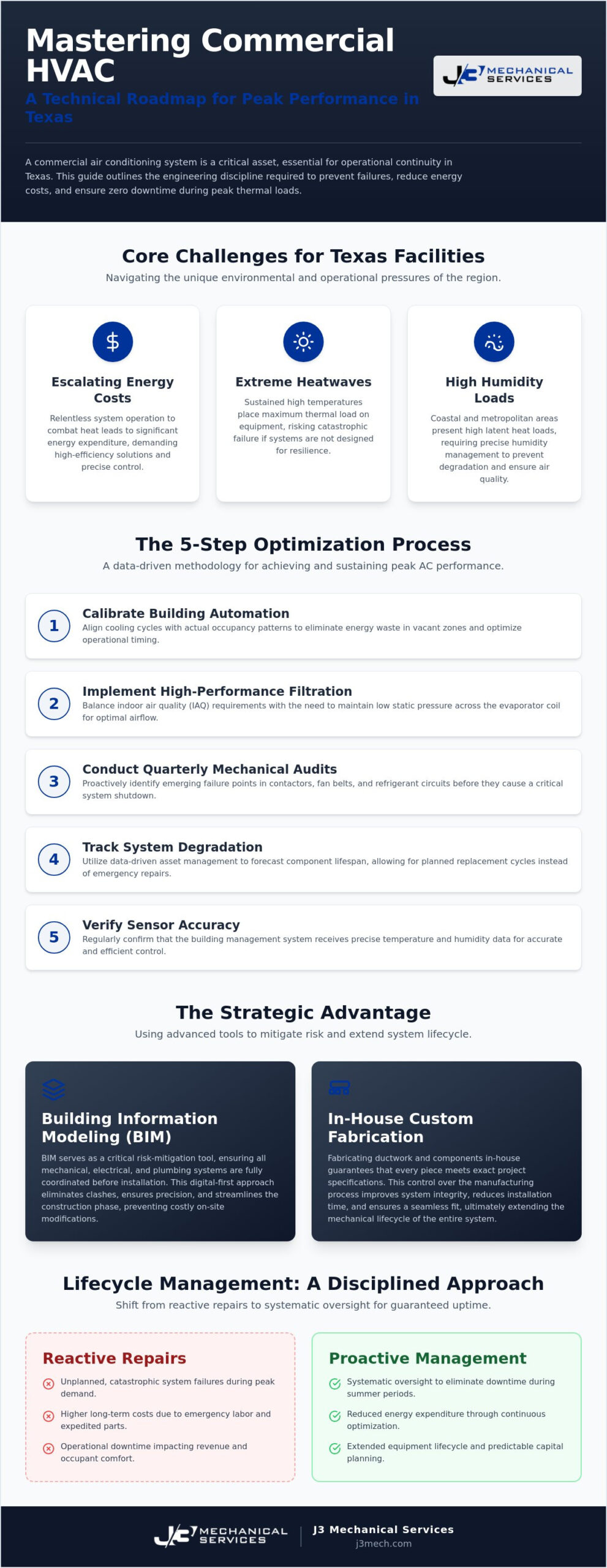
Optimizing the efficiency of a commercial air conditioning system requires a transition from reactive adjustments to a disciplined, data-driven methodology. Efficiency is not a static attribute defined solely by a manufacturer's rating; it is a dynamic outcome of precise engineering and ongoing mechanical oversight. To achieve peak performance in the demanding Texas climate, facility managers must follow a systematic progression of technical evaluations. This process begins with a comprehensive thermal load analysis that accounts for building orientation, insulation values, and internal heat generation from industrial equipment. By accurately quantifying these variables, you ensure the system is neither under-powered for July peaks nor oversized to the point of inefficient short-cycling.
Once the baseline load is established, the focus shifts to the integration of advanced mechanical standards and logistical controls. The U.S. Department of Energy provides rigorous benchmarks for Energy-Efficient Commercial HVAC equipment that should serve as the minimum threshold for any facility upgrade. Beyond equipment selection, optimization involves five critical steps:
- Calibrate building automation systems to align cooling cycles with actual occupancy patterns, preventing energy waste in vacant zones.
- Implement high-performance filtration that balances indoor air quality requirements with the need to maintain low static pressure across the evaporator coil.
- Conduct quarterly mechanical audits to identify emerging failure points in electrical contactors, fan belts, and refrigerant circuits before they trigger a system shutdown.
- Track system degradation through data-driven asset management, allowing for a planned replacement cycle rather than an emergency capital expenditure.
- Verify sensor accuracy regularly to ensure that the building management system receives precise data regarding ambient and discharge temperatures.
Establishing a consistent commercial HVAC maintenance schedule is the most effective way to ensure these technical optimizations are sustained throughout the year.
Balancing Airflow and Static Pressure
The integrity of the air distribution system directly dictates the workload placed on blower motors and compressors. When ductwork is poorly designed or suffers from leaks, the system must work harder to overcome resistance, which leads to increased energy consumption and premature motor failure. Utilizing precision-fabricated sheet metal for all transitions and plenums ensures that airflow remains laminar and unobstructed. Identifying and sealing thermal bypasses within the plenum space prevents the loss of conditioned air into unconditioned voids, preserving the total cooling capacity of the mechanical asset.
Building Automation and Control Integration
Modern commercial environments require a level of precision that manual controls cannot provide. Integrating smart sensors and thermostats into a centralized building management system (BMS) allows for real-time adjustments based on fluctuating environmental conditions. Automated scheduling protocols eliminate the human error associated with manual thermostat adjustments, ensuring that cooling energy is directed only to active zones during specific operational windows. This level of control not only reduces immediate energy expenditure but also minimizes the total runtime of the equipment, directly extending the mechanical lifecycle of the entire system.
Adapting HVAC Infrastructure for the Texas Climate
The Texas climate represents a unique mechanical challenge where standard, off-the-shelf commercial air conditioning configurations often fail to meet the demands of sustained, extreme thermal loads. In metropolitan corridors like San Antonio and Austin, ambient temperatures frequently exceed 100 degrees Fahrenheit, pushing condenser units to their physical limits. Maintaining thermal resilience in these environments requires more than just high-capacity hardware; it demands a systematic approach to heat rejection. This involves selecting condensers with increased surface area and high-static fans that can move sufficient air volumes even when the temperature delta between the refrigerant and the outdoor air is dangerously narrow. Without these localized adaptations, compressors experience excessive head pressure, leading to accelerated wear and catastrophic failure during peak summer months.
Geographic variation within the state further complicates the engineering requirements for a commercial air conditioning system. In coastal regions such as Corpus Christi and the Rio Grande Valley, the primary threat is not just the heat, but the chemical interaction between salt-laden air and mechanical components. Aluminum fins on standard condenser coils are susceptible to rapid galvanic corrosion in these environments. To mitigate this risk, facilities must specify corrosion-resistant coatings, such as factory-applied epoxy or phenolic treatments, during the procurement phase. These protective layers preserve the integrity of the heat transfer surfaces, ensuring that the system maintains its efficiency rating throughout its intended operational life.
Dehumidification and Latent Heat Management
In South Texas, the cooling challenge is split between sensible heat (temperature) and latent heat (humidity). Standard cooling cycles often reach their setpoint before they've sufficiently removed moisture from the air, resulting in a "cold and clammy" environment that encourages mold growth. Implementing Dedicated Outdoor Air Systems (DOAS) allows for the independent treatment of ventilation air, stripping away moisture before it enters the building envelope. This strategy is a cornerstone of effective HVAC for Texas Climate management, as it stabilizes indoor air quality and protects sensitive building materials from humidity-driven degradation.
Regional Service Standards: San Antonio to Austin
Mechanical installations in Central Texas must navigate a complex landscape of municipal code compliance and grid reliability concerns. Industrial HVAC systems in these high-growth areas are particularly vulnerable to power fluctuations and surges during periods of peak grid demand. A disciplined Commercial HVAC Asset Management program integrates advanced surge protection and phase monitors to safeguard expensive control boards and compressor motors. By prioritizing these localized resilience measures, facility managers can prevent the costly downtime that results from regional infrastructure instability. Facilities with high-output processes should also reference a comprehensive framework for industrial HVAC service to ensure their mechanical infrastructure meets the rigorous standards required for continuous operation.
The Role of BIM and Custom Fabrication in System Longevity
The operational lifespan of a commercial air conditioning system is determined long before the first piece of hardware is hoisted into position. In high-stakes industrial and corporate environments, longevity is a product of meticulous preparation and the mitigation of installation risks through advanced technology. Building Information Modeling (BIM) serves as the primary tool for this strategic oversight, allowing mechanical engineers to conduct virtual clash detection before construction begins. By identifying physical conflicts between HVAC ductwork, structural steel, and electrical conduits in a digital environment, we eliminate the field errors that typically lead to compromised airflow or restricted service access. This level of pre-coordinated mechanical design ensures that the final installation adheres to the original engineering specifications without the need for improvised, inefficient field adjustments.
Utilizing 3D modeling prevents the costly change orders that frequently derail new construction timelines and budgets. When mechanical systems are designed in isolation from other trades, the resulting conflicts often require restrictive ductwork bends or reduced equipment clearances to resolve. These compromises increase the static pressure within the system, forcing the commercial air conditioning components to work harder and fail sooner. A disciplined BIM process ensures that every cubic inch of the mechanical room is optimized for both performance and future serviceability, establishing a foundation for decades of reliable operation.
Precision Fabrication for Industrial Cooling
Off-the-shelf ducting components often fail to meet the rigorous standards required for industrial-grade air distribution, particularly in facilities with high-volume cooling needs. Standardized parts frequently lead to air leakage and turbulence, which significantly diminish the efficiency of the blower motor. By utilizing in-house sheet metal fabrication, we maintain total control over the gauge and integrity of the materials used in your facility's air path. Our commitment to in-house fabrication ensures that every component meets a master-builder level of quality, where precision is verified at the shop level rather than being compromised by improvised field modifications. This vertical integration allows for the creation of custom transitions that preserve laminar flow and reduce mechanical strain on the system's core assets.
BIM Coordination in New Construction Projects
Successful mechanical execution requires seamless collaboration with general contractors and other specialized trades through a unified digital model. This integrated approach allows for the logistical coordination of heavy equipment placement and the precise sequencing of ductwork installation. By resolving spatial conflicts in the design phase, we facilitate a more efficient Commercial HVAC Installation that minimizes on-site downtime. To ensure your next project benefits from this level of technical mastery, you can engage our team for specialized Building Information Modeling (BIM) coordination and fabrication services.
Strategic Lifecycle Management: Beyond the Installation
A disciplined approach to mechanical infrastructure requires a transition from reactive repair to proactive oversight. For many Texas facilities, the commercial air conditioning system represents one of the largest capital investments on the balance sheet, yet it's often managed through a "run-to-fail" philosophy that ignores the compounding costs of mechanical degradation. Deferred maintenance doesn't just lead to sudden system failures; it creates a persistent financial drain through increased energy consumption and the accelerated wear of secondary components. By establishing a systematic lifecycle management plan, facility managers can transform their HVAC assets from unpredictable liabilities into stable, high-performance infrastructure.
Strategic oversight involves the implementation of 24/7 emergency recovery protocols to safeguard critical operations. In industrial or data-sensitive environments, even a brief loss of climate control can result in significant operational losses. A robust management strategy ensures that technical resources are staged and ready for deployment before a crisis occurs. This level of preparation is the hallmark of an authoritative mechanical partnership, where the goal is the total elimination of unscheduled downtime. It's about maintaining a constant state of readiness rather than scrambling for solutions during a mid-summer heatwave.
Preventive Maintenance Protocols
A comprehensive commercial HVAC maintenance agreement serves as the primary mechanism for preserving system integrity. These protocols must go beyond superficial inspections to include the rigorous verification of refrigerant charges and the tightening of high-voltage electrical connections. In the dusty environments characteristic of West Texas and the construction-heavy corridors of San Antonio, regular coil cleaning is non-negotiable. Accumulated debris acts as a thermal insulator, forcing the compressor to run at higher temperatures and pressures, which directly shortens the mechanical lifespan of the unit. Systematic cleaning ensures that heat rejection remains efficient, preserving the system's ability to meet peak demand.
Planning for System Replacement
Identifying the "tipping point" where the cost of ongoing repair exceeds the value of the asset is a critical component of financial planning. As systems approach the end of their operational life, the ROI of a modern, high-efficiency upgrade becomes increasingly compelling. Newer units not only offer superior thermal resilience but also integrate more seamlessly with modern building automation systems. When evaluating your options among Commercial HVAC Companies in San Antonio, prioritize partners who provide data-driven assessments of your system's current health. This allows for a planned replacement schedule that aligns with your facility's long-term capital improvement goals rather than a forced purchase during a mechanical emergency.
Securing Mechanical Integrity in the Texas Industrial Landscape
Securing the operational stability of a Texas facility requires a transition from reactive maintenance to a disciplined mechanical strategy. We've examined how Building Information Modeling (BIM) and in-house fabrication serve as critical risk-mitigation tools during the installation phase; these processes ensure that your commercial air conditioning infrastructure is engineered for precision from the outset. By adapting your mechanical assets to the specific thermal and humidity profiles of the Texas climate, you protect your investment against the accelerated degradation caused by extreme environmental stress. Maintaining this level of performance demands a commitment to proactive lifecycle management and technical oversight rather than a reliance on temporary fixes.
Achieving long-term reliability and reduced energy expenditure is a direct outcome of prioritizing technical mastery over short-term adjustments. To secure your facility's future, Partner with J3 Mechanical for Strategic Commercial HVAC Solutions and benefit from our BIM-coordinated mechanical engineering and Texas-based industrial mastery. Our 24/7 emergency response infrastructure provides the steadfast reliability your critical operations require. We look forward to helping you master your facility's environmental control systems with precision and accountability.
Frequently Asked Questions
How often should a commercial air conditioning system be serviced in Texas?
A commercial air conditioning system in Texas requires professional service at least four times per year. This quarterly cadence allows for the proactive replacement of filters and the verification of refrigerant levels before peak thermal loads occur. In environments with high particulate matter or coastal salt spray, more frequent inspections ensure that coil integrity isn't compromised by environmental buildup.
What is the average lifespan of a commercial rooftop unit (RTU)?
A standard commercial rooftop unit typically maintains an operational lifespan of 15 to 20 years when supported by disciplined maintenance protocols. In the intense Texas climate, units that lack regular oversight often see this lifecycle reduced to 10 or 12 years due to compressor strain. Strategic lifecycle management involves tracking this degradation to plan for a modern replacement before catastrophic failure occurs.
How does BIM modeling reduce costs for commercial HVAC installation?
Building Information Modeling (BIM) reduces installation costs by identifying spatial conflicts between mechanical, electrical, and structural systems in a digital environment. Resolving these clashes during the design phase eliminates the need for expensive field modifications and change orders during construction. This systematic coordination ensures that physical labor remains efficient and that the final installation adheres to the engineered specifications.
What are the signs that my business needs a commercial AC replacement?
The most reliable signs that your facility requires a commercial air conditioning replacement include a measurable increase in energy expenditure and a rising frequency of mechanical failures. When the cost of annual repairs approaches a significant percentage of the unit's total value, the ROI of a new system becomes clear. Inability to maintain humidity levels or consistent setpoints during summer months also indicates the system has reached its tipping point.
Can custom ductwork fabrication improve my building's energy efficiency?
Precision-fabricated ductwork significantly improves energy efficiency by minimizing air leakage and reducing static pressure throughout the distribution path. Custom transitions ensure that airflow remains laminar, which reduces the workload on blower motors and compressors. Unlike off-the-shelf components, in-house fabrication allows for a master-builder level of fit that preserves the total cooling capacity of your mechanical assets.
Is 24/7 emergency service necessary for commercial facilities?
24/7 emergency service is essential for facilities where climate control is critical to operational continuity or inventory protection. Texas heatwaves create high-stakes environments where a system failure can lead to rapid thermal gain and equipment damage. Having an established emergency recovery protocol ensures that technical experts are available to restore mechanical function at any hour, mitigating the risk of costly downtime.
What is the difference between residential and commercial air conditioning?
Commercial systems differ from residential units in their scale, complexity, and continuous duty cycles. While residential units focus on comfort cooling for small footprints, commercial infrastructure must manage massive thermal loads from industrial processes and high occupancy. These systems utilize more sophisticated controls, such as variable frequency drives and building automation, to maintain efficiency across large-scale mechanical configurations.
How does humidity affect commercial HVAC performance in South Texas?
High humidity in South Texas increases the latent heat load, forcing the system to work harder to remove moisture before it can effectively lower the air temperature. If the system isn't specifically engineered for dehumidification, it may cycle off before the humidity is managed, leading to mold growth and poor air quality. Implementing dedicated outdoor air systems (DOAS) is a standard strategy to maintain environmental control in high-moisture zones.
Need a hand with your building's HVAC?
Free quotes and honest answers from licensed commercial technicians across South Texas.