
Value Engineering HVAC in San Antonio for Right-Sized Systems
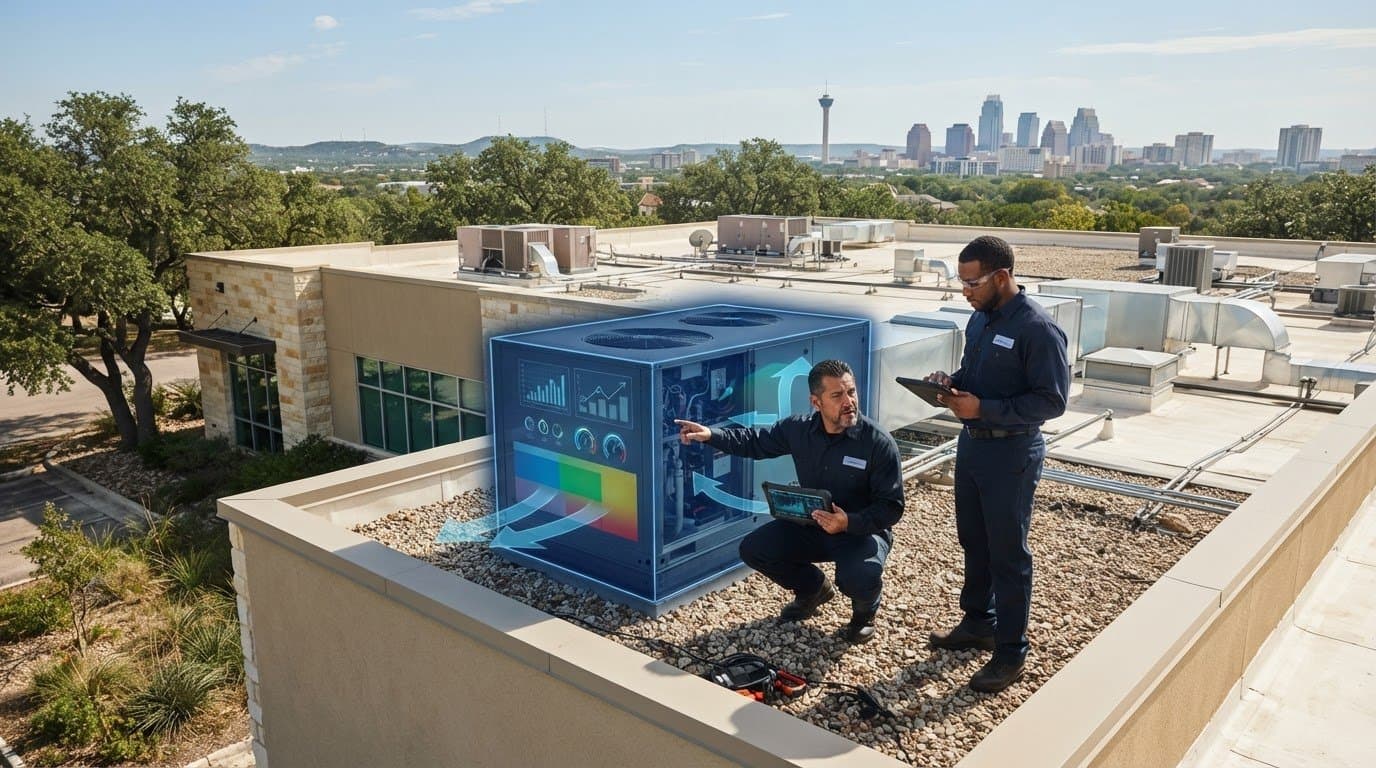
An oversized HVAC system is not automatically safer, and an undersized one is not automatically less costly. Value engineering HVAC in San Antonio compares a commercial building’s heating and cooling needs with system capacity, then evaluates equipment, air distribution, controls, and project constraints to identify a right-sized design. The goal is not simply to reduce equipment, but to match performance requirements with a practical, coordinated system. Oversizing can lead to short cycling, while undersizing can leave spaces short of capacity during peak demand.
Facility owners are right to question recurring comfort problems, uneven temperatures, or equipment that seems mismatched to how a building operates. This guide explains how oversized and undersized systems affect performance, what a thorough value-engineering review examines, and what to look for in commercial HVAC providers serving the San Antonio area. It also covers how project coordination, fabrication, installation, and maintenance contribute to sound system decisions.
Key Takeaways
- Compare system capacity with the building’s actual heating and cooling demands before deciding whether equipment is oversized or undersized.
- Review comfort patterns, equipment operation, and air distribution together to identify what may be driving performance problems.
- Assess San Antonio-area providers by how clearly they explain their sizing rationale and coordinate design decisions with installation.
- When a commercial system needs replacement or a new installation, J3 Mechanical Services can support the project with Commercial HVAC Installation & Replacement.
Oversized and undersized HVAC systems
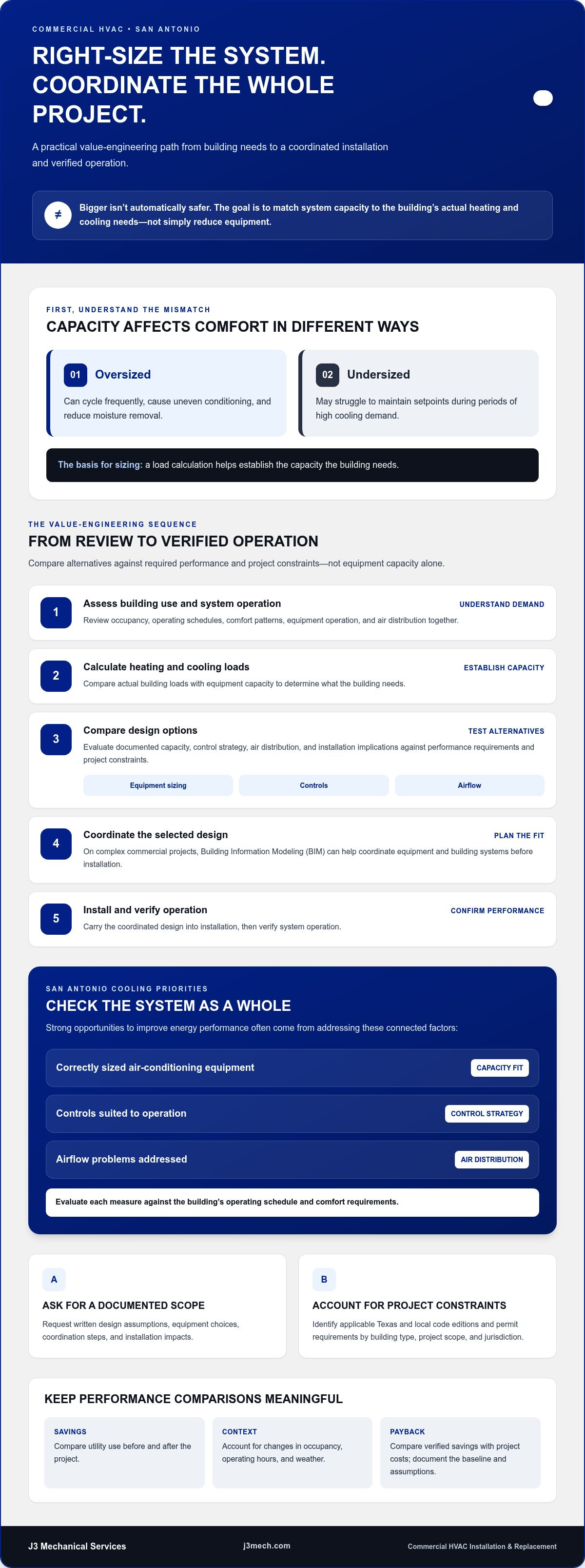
An oversized system can cycle frequently, causing uneven conditioning and reducing moisture removal. An undersized system may struggle to maintain setpoints during high cooling demand. HVAC value engineering in San Antonio starts by comparing actual building loads with equipment capacity, occupancy, operating schedules, and air distribution. A load calculation helps establish the capacity the building needs.
For San Antonio’s cooling demands, strong opportunities to improve energy performance often come from correctly sizing air-conditioning equipment, improving controls, and addressing airflow problems. Evaluate each measure against the building’s operating schedule and comfort requirements, rather than choosing equipment by capacity alone.
A traditional design may carry forward existing assumptions, while a value-engineering proposal tests alternatives against required performance and project constraints. Compare documented capacity, control strategy, air distribution, and installation implications, not just the equipment selected.
The process moves from review to installation in clear steps: assess building use and system operation, calculate heating and cooling loads, compare design options, coordinate the selected design, then install and verify system operation. On complex commercial projects, Building Information Modeling (BIM) can help coordinate equipment and building systems before installation.
San Antonio-area HVAC service providers
San Antonio’s HVAC engineering directory lists 50 firms with 1-10 employees, 33 with 11-50, 11 with 51-200, and one with 201-500, as of Sep 16, 2026. These figures describe directory categories, not project capability; assess the provider’s experience coordinating commercial heating systems, design, and installation.
For a San Antonio project, identify the applicable Texas and local code editions and permit requirements based on the building type, project scope, and jurisdiction before finalizing the design. The work involved, such as equipment replacement versus broader system changes, determines the review and permit path.
HVAC value-engineering costs depend on the audit scope, engineering analysis, coordination needs, and proposed system changes. The price depends on the case and is provided after a quote request, with scope and project complexity among the cost factors.
Rebates or incentives depend on the program, equipment, and eligibility criteria. Evaluate current program terms against the proposed upgrade rather than assuming a particular incentive applies.
Measure savings by comparing utility use before and after the project, while accounting for changes in occupancy, operating hours, and weather. Estimate payback by comparing verified savings with project costs. Document the baseline and assumptions to keep the comparison meaningful.
For a practical provider evaluation, request a written scope showing design assumptions, equipment choices, coordination steps, and installation impacts. Commercial HVAC project coordination using Building Information Modeling can help align system plans with building components.
J3 Mechanical Services: Commercial HVAC Installation & Replacement
J3 Mechanical Services provides Commercial HVAC Installation & Replacement for businesses planning a system upgrade, replacing aging equipment, or addressing capacity concerns through a coordinated project. Aligning the installation scope with the building’s operational needs helps carry value-engineering decisions into the completed system.
For ongoing system performance, Commercial HVAC Maintenance supports planned upkeep, while Commercial HVAC Repair addresses equipment problems. When an urgent commercial system failure disrupts operations, 24/7 Emergency Service is also available.
Contact J3 Mechanical Services to discuss your commercial HVAC project.
Set the Next Project Decision in Motion
Right-sizing a commercial HVAC system is not only an equipment decision; it is an opportunity to align building performance with operational priorities. A focused value engineering HVAC review in San Antonio can help frame the next project around the conditions that matter most, including system reliability, comfort, and how the facility is used. The appropriate path may involve Commercial HVAC Installation & Replacement, planned Commercial HVAC Maintenance, or Commercial HVAC Repair, depending on the system’s needs.
J3 Mechanical Services can help you move from evaluation toward a defined commercial HVAC scope. Discuss your commercial HVAC project and take the next step with a clear basis for planning.
Frequently Asked Questions
How much does HVAC value engineering cost in San Antonio?
HVAC value-engineering costs depend on the audit scope, engineering analysis, coordination needs, and proposed system changes. A quote is provided after a request, based on the project’s scope and complexity.
What risks can HVAC cost-cutting create for comfort, indoor air quality, and equipment life?
Cost-cutting that leaves a system oversized can lead to frequent cycling, uneven conditioning, and reduced moisture removal. An undersized system may struggle to maintain setpoints during high cooling demand. Specific effects on indoor air quality or equipment life are not established.
Need a hand with your building's HVAC?
Free quotes and honest answers from licensed commercial technicians across South Texas.