
Warehouse Heating Solutions in Seguin: A 2026 Commercial Buying Guide
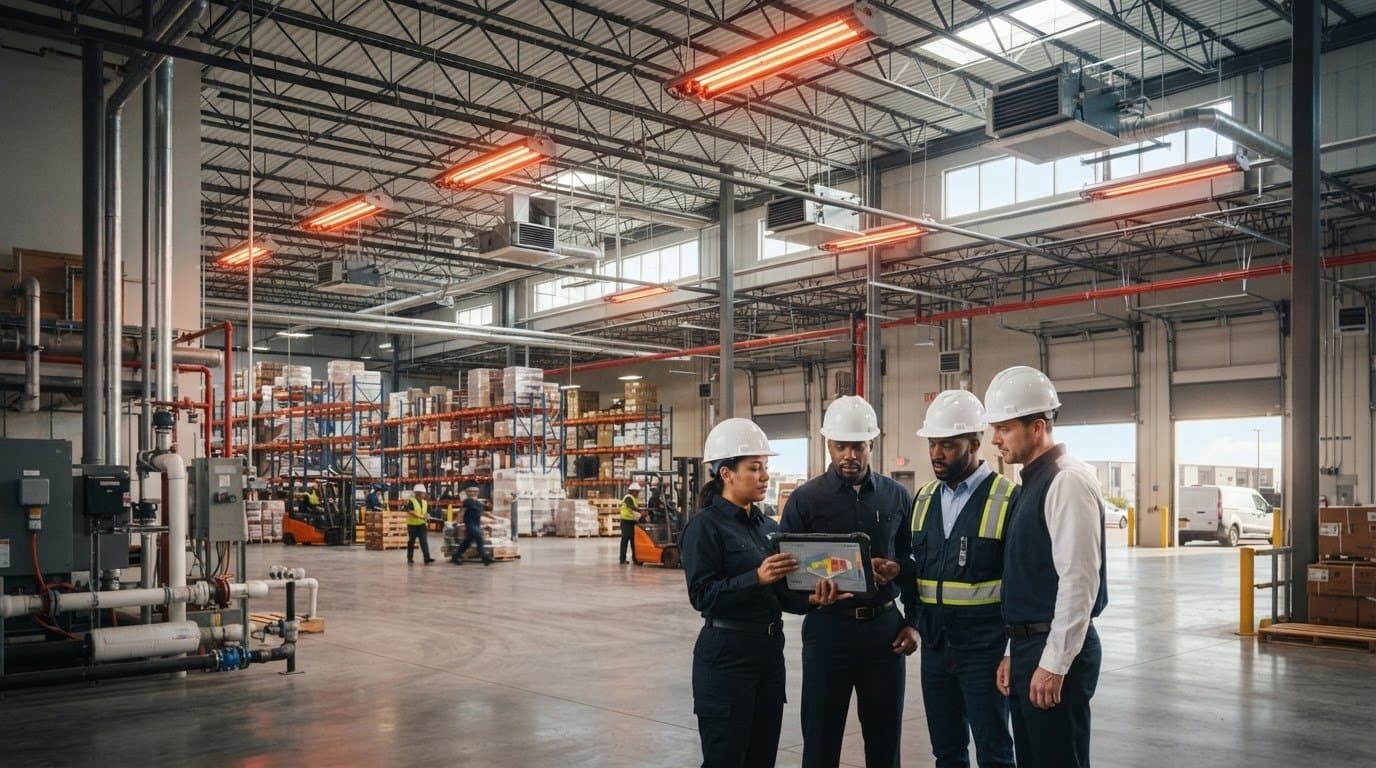
The belief that industrial climate control is merely a scaled-up version of commercial HVAC often results in significant energy waste and compromised structural efficiency. You've likely recognized that maintaining a stable thermal environment in a high-ceiling facility requires more than just raw BTU output; it demands a disciplined approach to mechanical coordination. As Seguin continues its growth as a regional manufacturing hub, implementing the right warehouse heating solutions Seguin facilities need involves navigating the 2026 shift to low-GWP A2L refrigerants and the rigorous standards of the 2021 International Mechanical Code.
Achieving this level of precision requires a transition from reactive repairs to a master builder methodology where Building Information Modeling and in-house fabrication eliminate the risks of installation delays. This guide details the technical criteria for system selection, the impact of current energy conservation standards, and the logistical advantages of using digital modeling to ensure long-term operational stability for your facility. By prioritizing technical mastery over quick fixes, you can maintain both employee comfort and product integrity while minimizing the high operational costs associated with inefficient thermal management.
Key Takeaways
- Understand how Seguin’s specific industrial expansion and regional climate volatility necessitate high-performance thermal systems to protect inventory integrity.
- Evaluate the mechanical advantages of various technologies, such as infrared radiant heating, to achieve targeted floor-level warmth in high-ceiling environments.
- Transition from a CAPEX-focused procurement strategy to a comprehensive lifecycle analysis that balances initial installation costs with long-term energy efficiency.
- Discover how professional coordination through Building Information Modeling (BIM) and in-house fabrication ensures the precise installation of warehouse heating solutions Seguin facilities require for operational stability.
- Implement a proactive asset management plan backed by 24/7 emergency support to safeguard critical logistics operations against unexpected mechanical failure.
The Seguin Industrial Landscape: Thermal Challenges for Modern Warehousing
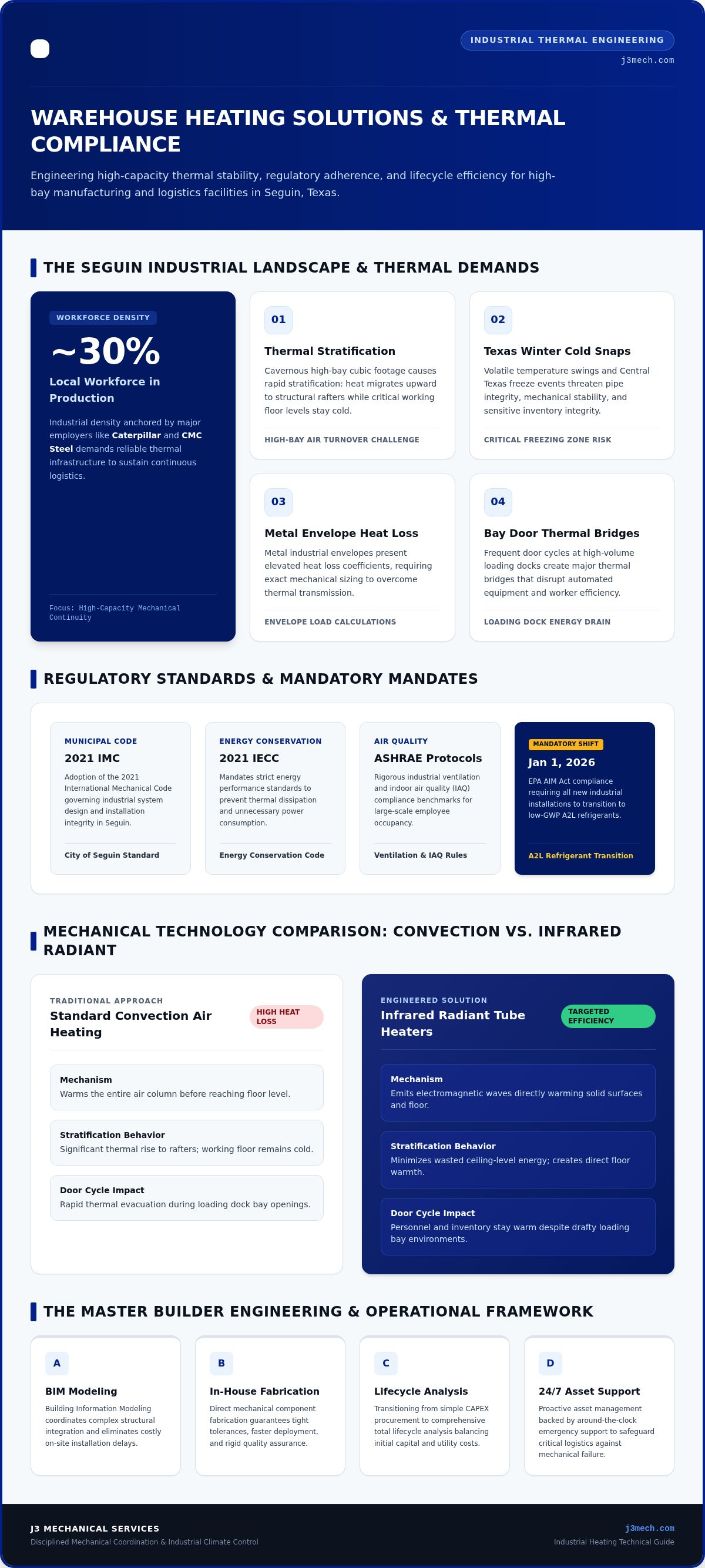
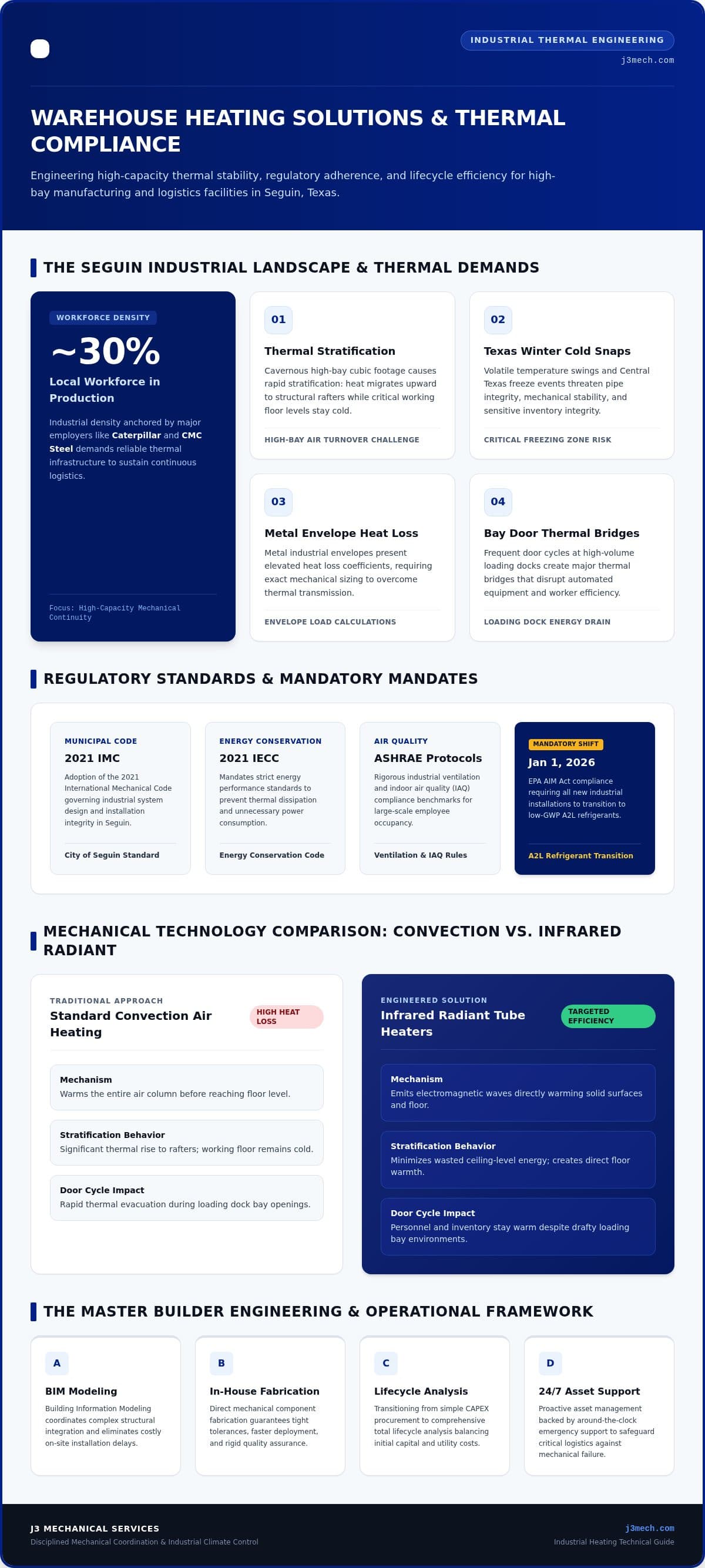
Seguin has established itself as a regional manufacturing powerhouse, with nearly 30% of its local workforce dedicated to the production sector. This industrial density, anchored by major facilities for employers like Caterpillar and CMC Steel, creates a high demand for specialized warehouse heating solutions Seguin operators can rely on for uninterrupted logistics. Unlike standard commercial spaces, these massive facilities present unique thermal challenges that residential-grade units simply cannot address. The sheer volume of air within a high-bay facility leads to rapid thermal stratification, where heat rises to the rafters while the working floor remains dangerously cold. Achieving a stable environment requires a disciplined approach to mechanical design that accounts for the massive cubic footage and high-volume air exchange characteristic of modern industrial parks.
Local Climate Factors and Industrial Thermal Loads
The Central Texas climate is characterized by high humidity levels and volatile temperature swings that can compromise sensitive inventory and equipment longevity. While many associate the region primarily with heat, the "Texas Winter" often brings extreme cold snaps that threaten pipe integrity and mechanical stability. Industrial facilities in Seguin, often constructed with metal envelopes, suffer from high heat loss coefficients that require precise engineering to mitigate. Strategic placement of heating assets is essential to counteract the significant energy drain caused by large bay doors, which act as thermal bridges during loading operations. Without a disciplined mechanical design, these openings can cause localized freezing zones that disrupt automated systems and employee productivity.
Regulatory and Compliance Standards for Seguin Facilities
Maintaining a compliant industrial environment involves adhering to rigorous Heating, ventilation, and air conditioning (HVAC) standards, including those set by ASHRAE for industrial ventilation and indoor air quality. The City of Seguin has adopted the 2021 International Mechanical Code and the 2021 International Energy Conservation Code, necessitating a higher level of technical mastery during the design and installation phases. As of January 1, 2026, all new installations must also transition to low-global warming potential (GWP) A2L refrigerants to meet EPA mandates under the AIM Act. Professional engineering is not merely a legal requirement; it's a strategic necessity to ensure that industrial thermal loads are calculated with the accuracy required by modern Texas mechanical codes, preventing the costly oversight of undersized or inefficient systems.
Primary Warehouse Heating Technologies: Systems for Large-Scale Facilities
Industrial thermal management for large-scale facilities requires a departure from light-commercial standards, focusing instead on high-capacity systems capable of maintaining stability in cavernous environments. Selecting the appropriate warehouse heating solutions Seguin facility managers need involves a rigorous evaluation of heat delivery methods, fuel efficiency, and air turnover rates. By adhering to industrial heating best practices, engineers can design systems that mitigate the stratification issues common in Central Texas industrial parks. This technical selection process is the foundation of a reliable mechanical infrastructure that supports both personnel productivity and equipment longevity.
Infrared Radiant Tube Heaters
Radiant technology operates on a principle distinct from traditional convection by emitting electromagnetic waves that directly warm solid objects rather than the surrounding air column. This method is exceptionally effective in high-bay storage areas and loading docks where frequent door cycles would otherwise lead to massive heat loss. Because these heaters warm the floor and inventory directly, they significantly minimize the energy wasted at the ceiling level, ensuring that personnel remain comfortable even in drafty environments. This targeted approach allows for lower thermostat settings while maintaining perceived comfort, which directly reduces monthly operational expenditures and carbon footprints.
Gas-Fired Forced Air Systems
Forced air unit heaters remain a versatile choice for rapid volume heating, especially when configured as high-efficiency condensing units that capture latent heat from combustion gases. These systems can be installed in horizontal or vertical configurations to suit specific facility layouts and clearance requirements. Precision in ductwork design is critical; without systematic air distribution, large floor plans will suffer from persistent cold spots that compromise product integrity. Our team utilizes advanced mechanical coordination to map these airflow patterns before a single component is fabricated in-house, ensuring that every mount and duct run is optimized for the specific geometry of your building.
Beyond standard heating, the role of Makeup Air Units (MAUs) is vital for maintaining warehouse air quality. In facilities where manufacturing processes or logistics equipment generate exhaust, MAUs replace contaminated air with tempered outside air. This maintains positive building pressure, which prevents the infiltration of untreated air through bay doors and structural gaps. Integrating these units into a cohesive mechanical strategy ensures that your heating solution addresses both thermal stability and environmental safety, providing a comprehensive approach to industrial climate control that stands up to the demands of 24/7 operations.
Comparative Analysis: Selecting the Optimal Heating Solution
Selecting the appropriate warehouse heating solutions Seguin facilities require involves a rigorous evaluation of thermodynamic response and lifecycle economics. It's not enough to simply match BTU requirements to square footage; one must analyze how system longevity and maintenance cycles impact the bottom line over a fifteen-year horizon. High-performance HVAC equipment can yield energy savings between 10% and 40%, yet these gains are only realized through precise sizing and installation. A systematic comparison between initial capital expenditure (CAPEX) and ongoing operational expenditure (OPEX) reveals that the cheapest installation often becomes the most expensive asset due to frequent component failures or excessive fuel consumption. The warm-up time is another critical metric; systems that respond slowly to temperature shifts can lead to product degradation or worker discomfort during Seguin's volatile winter mornings.
Operational Efficiency and Fuel Source Evaluation
In Seguin industrial parks, the choice between natural gas and electric heating systems hinges on a cost-per-BTU analysis tailored to local utility rates. Natural gas systems typically offer faster warm-up times, which is vital for facilities with high activity levels and frequent bay door cycles. However, electric heat pumps are increasingly viable as efficiency ratings improve and local regulations shift toward electrification. Maintenance cycles represent a critical failure point; gas-fired units require rigorous heat exchanger inspections to prevent safety risks, while electric systems demand precise refrigerant management and compressor oversight. Identifying these mechanical vulnerabilities early ensures that your facility maintains employee productivity without the risk of sudden thermal collapse.
Zoning Strategies for Complex Warehouse Layouts
Complex warehouse layouts benefit from multi-zone controls that allow for reduced heating in unoccupied storage aisles while maintaining precise temperatures in active workstations. Automated thermal management, driven by strategically placed sensors and thermostats, prevents the energy waste associated with heating the entire facility to a uniform standard. High-volume, low-speed (HVLS) fans play a supplementary role by pushing trapped heat from the ceiling back down to the floor, effectively mitigating the stratification issues discussed in previous sections. This integrated approach ensures that thermal energy is deployed exactly where it's needed, maximizing the effectiveness of the primary mechanical infrastructure. By coordinating these systems through professional engineering, facility managers can achieve a level of control that generic contractors cannot provide.
The Buying Guide: Engineering Precision and Installation Protocols
The procurement of industrial heating infrastructure is a high-stakes undertaking that requires a shift from commodity-based bidding to a focus on engineering precision. For a facility manager, selecting the right warehouse heating solutions Seguin depends on vetting contractors who possess the specialized industrial capacity to manage large-scale mechanical loads. This process begins with a comprehensive needs analysis and moves into a phase of rigorous digital planning, ensuring that the final installation aligns with the 2021 International Mechanical Code standards adopted by the city. By prioritizing a contractor with a master builder mindset, you mitigate the risks of installation delays and long-term mechanical instability. Securing warehouse heating solutions Seguin requires a procurement strategy that prioritizes engineering over simple bidding.
Leveraging BIM for Mechanical Coordination
Building Information Modeling (BIM) isn't merely a drafting tool; it's a critical coordination protocol that eliminates field clashes before a single piece of equipment arrives on-site. In the dense environment of a modern warehouse, heating systems must compete for space with fire suppression pipes, electrical conduits, and structural steel. By creating a digital twin of the facility, engineers can optimize heat distribution patterns and identify spatial conflicts in a virtual environment. This level of preparation reduces change orders, which often account for significant budget overruns in less disciplined projects. You can see how HVAC sheet metal fabrication benefits from BIM by allowing for the exact pre-planning of complex duct runs, ensuring that every component fits perfectly within the existing structural framework.
The Value of In-House Fabrication
Off-site manufacturing provides a level of quality control and logistical efficiency that field-built systems can't match. In-house fabrication allows for the creation of custom mounting solutions designed to support heavy industrial heaters, ensuring structural integrity that meets strict safety standards. When components are manufactured in a controlled environment, they're delivered to the Seguin job site ready for immediate integration, which significantly accelerates the installation schedule. This proactive approach minimizes the downtime that often plagues new construction and retrofits. Learn about our commercial HVAC fabrication in San Antonio to understand how localized production improves project outcomes. If you're ready to secure a precisely engineered thermal system, schedule a consultation with our industrial mechanical team to discuss your facility's requirements.
Strategic Implementation: Partnering for Industrial Reliability
The completion of a mechanical installation represents the beginning of a critical asset lifecycle rather than the conclusion of a project. Maintaining the warehouse heating solutions Seguin facilities rely on requires a transition from procurement to active, disciplined oversight. A "set and forget" mentality is a liability in industrial environments where thermal instability can lead to catastrophic inventory loss or operational shutdowns. Specialized commercial contractors provide a level of technical mastery that general residential providers cannot match, as they understand the complexities of high-output systems and the rigorous demands of industrial infrastructure. By partnering with an entity that prioritizes accountability and systematic execution, you ensure that your facility remains a stable link in the regional supply chain.
24/7 Emergency Recovery for Industrial Systems
In the high-stakes world of Seguin logistics, where major employers manage 24/7 operations, even a brief mechanical failure during a winter weather event can disrupt critical distribution schedules. Rapid response times are a logistical necessity to maintain climate stability and protect sensitive equipment from sudden temperature drops. Our protocols for commercial HVAC repair focus on precision recovery, utilizing advanced diagnostics to restore system integrity without the friction of prolonged downtime. This proactive readiness acts as a risk mitigation strategy, providing facility managers with the quiet confidence that their infrastructure is backed by a partner capable of managing high-stakes environments under pressure.
Preventive Maintenance as Asset Protection
Preventive maintenance is a strategic protocol designed to identify mechanical fatigue before it manifests as a systemic failure. For gas-fired unit heaters and complex radiant systems, this involves rigorous combustion analysis and the verification of safety sensors to ensure compliance with the 2021 International Mechanical Code. Exploring the strategy behind commercial HVAC maintenance reveals that disciplined, scheduled inspections are the only effective way to safeguard a mechanical investment against the volatile Central Texas climate. By documenting system performance and performing precise adjustments, you extend the operational life of your assets and maintain the energy efficiency gains achieved through modern engineering and BIM coordination. This methodical approach to oversight ensures that your warehouse heating solutions Seguin installations continue to perform at their designed capacity for years to come.
Securing Long-Term Operational Stability for Seguin Industrial Facilities
Transitioning from generic HVAC services to the specialized warehouse heating solutions Seguin requires involves a meticulous integration of engineering and execution. The success of these high-stakes mechanical projects depends on the proactive mitigation of risks through BIM-coordinated precision and the quality control inherent in in-house mechanical fabrication. By prioritizing lifecycle management over initial capital expenditure, facility managers can safeguard their infrastructure against the volatile Central Texas climate. It's a strategic investment that pays dividends in both reliability and long-term efficiency.
A disciplined partnership ensures that your critical logistics operations are supported by a 24/7 industrial emergency response, providing stability when weather events threaten productivity. This methodical approach to thermal management protects both your personnel and your product integrity through every season. Don't let thermal stratification or inefficient systems compromise your bottom line. To implement a professional-grade mechanical strategy, Request a Consultation for Your Seguin Warehouse Heating Project and ensure your facility meets the highest standards of industrial excellence. Your commitment to technical mastery today establishes the foundation for a resilient and productive operation tomorrow.
Frequently Asked Questions
What is the most energy-efficient heating solution for a Seguin warehouse?
Infrared radiant heaters represent the most energy-efficient warehouse heating solutions Seguin facilities can implement due to their direct thermal transfer methodology. By warming the floor and inventory rather than the air column, these systems eliminate the energy waste associated with ceiling-level heat accumulation. High-efficiency condensing units also serve as a viable alternative for rapid volume heating, provided they're engineered to meet the 2021 International Energy Conservation Code standards adopted by the city.
How do I calculate the BTU requirements for a high-bay industrial facility?
Calculating BTU requirements involves a rigorous analysis of the facility's cubic volume, building envelope U-factors, and anticipated air infiltration rates. You start by determining the heat loss through walls and roofs, then add the load required to temper incoming air from frequent bay door cycles. Professional mechanical coordination is essential to ensure that these calculations account for the unique thermal stratification patterns found in high-bay industrial environments common to Seguin.
Can I integrate warehouse heating with my existing building management system (BMS)?
Integration with an existing Building Management System (BMS) is standard for modern industrial mechanical infrastructure. Most high-performance units utilize standardized communication protocols to allow for real-time monitoring of thermal loads and energy consumption. This connectivity enables facility managers to implement precise zoning strategies and automated setbacks, which significantly reduces long-term operational expenditures. It's a proactive approach that ensures your heating assets remain a coordinated part of your building's critical infrastructure.
What are the advantages of infrared heating over forced air in loading dock areas?
Infrared heating offers a distinct advantage in loading docks because the radiant energy warms solid objects directly without being displaced by drafts. Forced air systems struggle in these zones because the heated air is immediately sucked out when bay doors open. By maintaining the floor temperature, radiant systems provide a stable working environment for personnel and prevent the formation of localized cold zones that can compromise sensitive inventory or automated logistics equipment.
How long does a typical industrial warehouse heating installation take?
The duration of a typical installation depends on the project's complexity and the degree of pre-construction preparation. By arriving on-site with ready-to-install components from our in-house fabrication facility, we significantly reduce the physical labor hours required at the job site. While a standard industrial retrofit may span two to four weeks, new construction projects are meticulously paced to align with the overarching structural and electrical timelines defined during the BIM coordination phase.
Why is BIM coordination important for HVAC installation in new warehouse construction?
BIM coordination is vital because it creates a digital twin that identifies spatial conflicts between HVAC ductwork, structural steel, and fire suppression systems. This level of digital modeling ensures that every fabricated mount and duct run fits perfectly upon delivery, which prevents the costly change orders that frequently plague uncoordinated projects. For new Seguin construction, this disciplined methodology is the only way to ensure that the mechanical infrastructure is integrated without friction.
Do you provide emergency repair services for industrial heating systems in Seguin?
J3 Mechanical Services maintains a 24/7 emergency response protocol specifically for industrial and commercial heating systems in Seguin and Central Texas. We recognize that mechanical failures during extreme cold snaps represent a critical threat to logistics reliability and product integrity. Our technicians are trained to handle high-capacity industrial systems, providing a level of technical mastery that ensures your facility returns to operational stability as quickly as possible, regardless of the hour.
What are the common signs that a warehouse heating system needs full replacement?
Frequent mechanical fatigue, rising energy consumption, and the inability to maintain thermal setpoints are primary indicators that a system has reached the end of its reliable lifecycle. If your current equipment relies on obsolete refrigerants or shows signs of heat exchanger corrosion, a full replacement is often more cost-effective than continued reactive repairs. Modern warehouse heating solutions Seguin facilities adopt today offer superior efficiency and compliance with 2026 environmental standards, ensuring long-term stability.
Need a hand with your building's HVAC?
Free quotes and honest answers from licensed commercial technicians across South Texas.