
Commercial AC Not Cooling in Your Office Building? Find the Causes
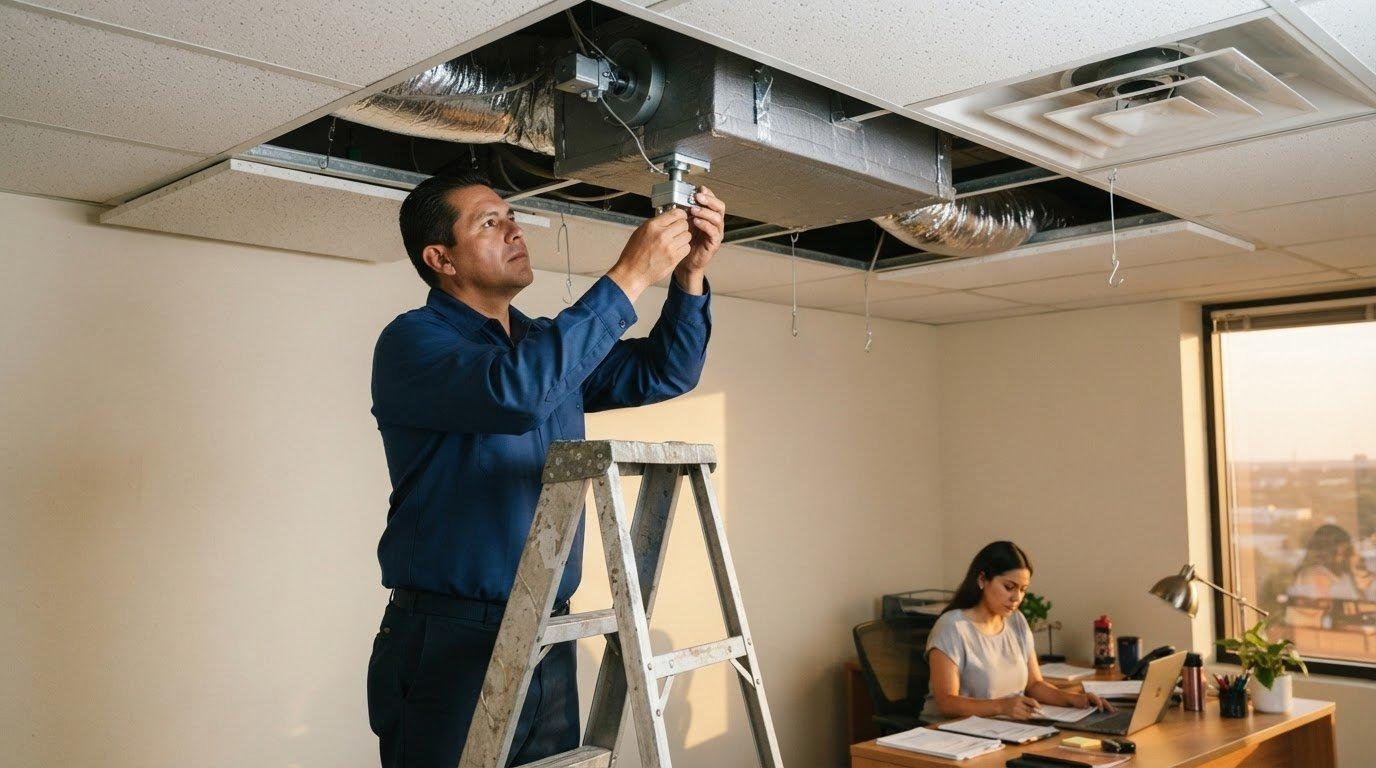
Uneven cooling is more than a thermostat inconvenience. If a commercial AC is not cooling an office building evenly, the cause may involve airflow, controls, zoning, or ductwork. A failed compressor or fan motor also needs professional assessment. Seek urgent service if cooling loss disrupts work or creates a health or safety risk.
It is reasonable to suspect the thermostat when one area feels comfortable and another does not. But the thermostat responds only to conditions where it is installed. A cool hallway or shaded location can therefore reduce cooling before warmer offices reach a comfortable temperature.
This guide explains why office temperatures vary, which signs call for professional evaluation, and how maintenance supports commercial HVAC performance. You will also learn which details about affected rooms, timing, thermostat settings, occupancy, and building changes can help clarify the issue. The goal is to distinguish a localized comfort problem from symptoms that call for a broader system assessment.
Key Takeaways
- Track which rooms are uncomfortable and when; patterns in occupancy, thermostat settings, or building use can help narrow the cause.
- Widespread cooling loss, work disruption, or safety concerns are signs to seek professional assessment rather than attempt equipment repairs.
- Thermostat placement, airflow, zoning, and ductwork can all contribute to temperature differences between offices.
- Water leaks or ceiling stains may point to a clogged or damaged condensate drain line that needs attention.
- Structured maintenance helps identify developing system problems, while Building Information Modeling can support coordinated HVAC project planning.
1. How Can You Prevent Common Commercial HVAC Problems?
Loss of cooling during hot weather can put occupants at risk, particularly when heat interferes with safe work. A building-wide cooling failure or conditions that threaten occupant safety call for urgent professional attention.
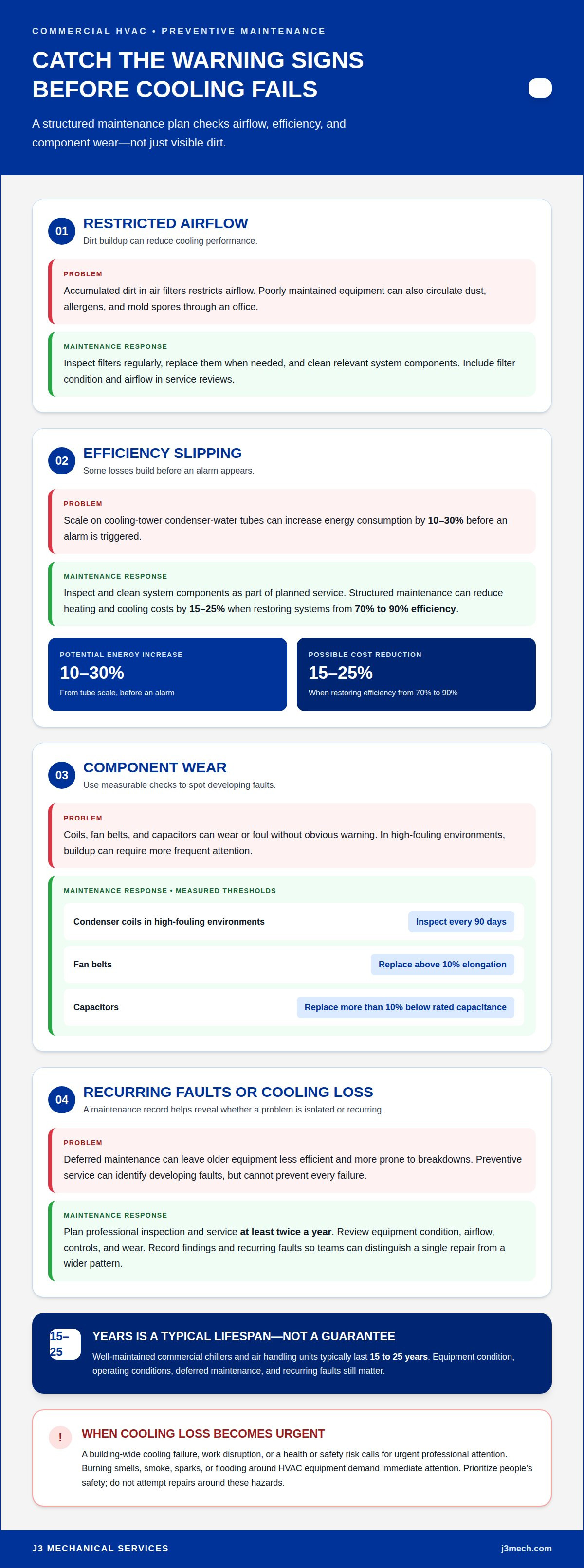
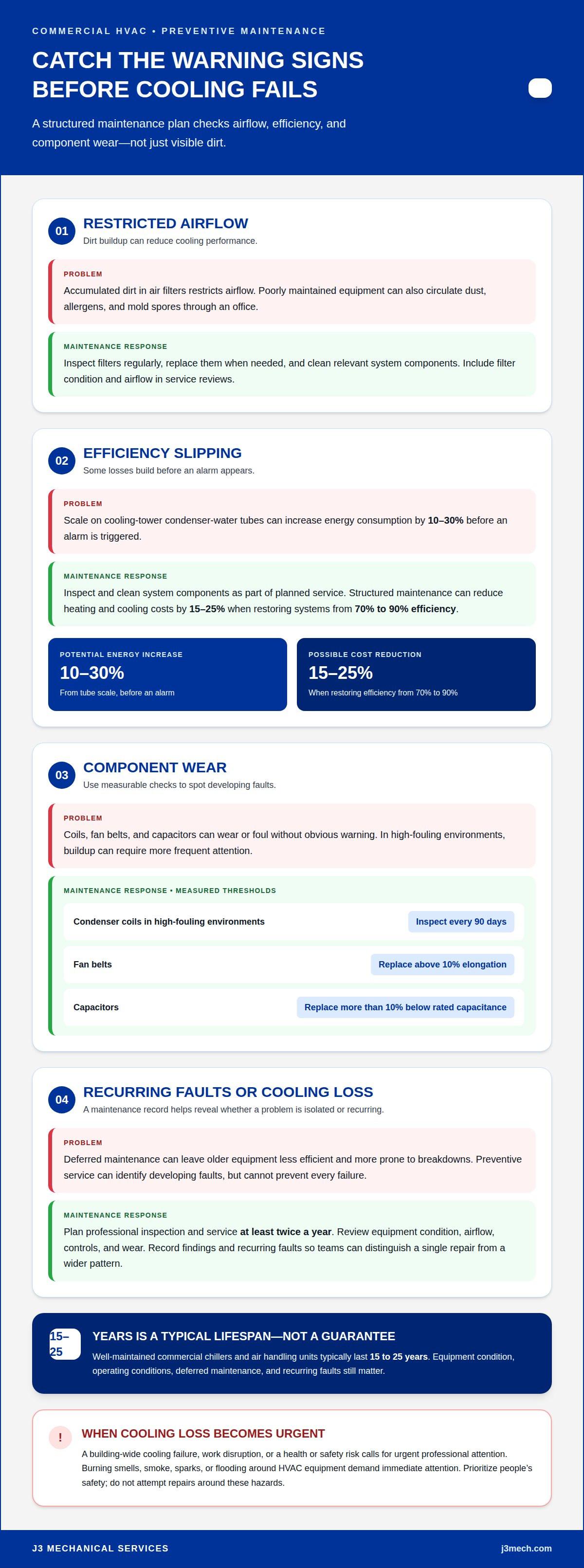
Preventive maintenance can identify developing faults before they cause system failure or interrupt cooling, though it cannot prevent every failure. Most commercial HVAC systems should receive professional inspection and service at least twice a year. A technician can assess equipment condition, airflow, controls, and wear, then address issues before peak cooling demand places added strain on the system.
Air filters need regular attention because accumulated dirt restricts airflow and can reduce cooling performance. Maintenance should include inspecting filters and replacing them when needed, as well as cleaning relevant system components. Poorly maintained equipment can circulate dust, allergens, and mold spores through an office, so filter condition also matters for indoor air quality.
Efficiency depends on more than filter replacement. Structured commercial HVAC maintenance can reduce heating and cooling costs by 15 to 25% when restoring systems from 70% to 90% efficiency. Scale on cooling-tower condenser-water tubes can increase energy consumption by 10 to 30% before an alarm is triggered, making inspection and cleaning important parts of system oversight.
Maintenance checks should examine components that can disrupt operation, not just visible dirt. In high-fouling environments, inspect condenser coils every 90 days during peak cooling operation. Replace fan belts when elongation exceeds 10%. A capacitor should be replaced when its measured capacitance is more than 10% below its rated value. These measured checks help identify wear before it contributes to poor performance or a breakdown.
Deferred maintenance can leave older equipment less efficient and more prone to breakdowns. Well-maintained commercial chillers and air handling units typically last 15 to 25 years, while aging equipment may require closer attention as faults accumulate. Maintenance records help teams identify recurring issues, track completed work, and distinguish an isolated repair from a pattern that calls for broader assessment.
Use a planned maintenance schedule rather than waiting for cooling to weaken. Record inspection findings and recurring faults, and include cleaning, filter condition, airflow, and component wear in service reviews. This approach supports reliable system operation, helps protect indoor air quality, and gives facility teams clearer information when deciding whether equipment needs repair or replacement.
Unsafe heat can affect occupants and interfere with their ability to work safely.
2. When should a commercial HVAC professional evaluate uneven cooling?
Call a commercial HVAC professional when complaints affect several rooms, persist after basic control checks, or disrupt normal work. A system-wide loss of cooling may point to a fault beyond one thermostat or office, such as a failed compressor or fan motor. These components need professional assessment and repair, not improvised adjustments by building occupants.
Prompt evaluation matters when airflow drops across multiple zones or the HVAC system stops maintaining cooling during hot weather. In a 50,000-square-foot office building, compressor failure can affect hundreds of occupants. Widespread temperature complaints, rising room temperatures, and reduced productivity help show that the problem reaches beyond an isolated comfort issue.
Emergency service is appropriate when a lack of air conditioning stops work or threatens occupant health or safety. Electrical burning smells, smoke, sparks, or flooding around HVAC equipment demand immediate attention. Prioritize people’s safety and contact the appropriate emergency service, utility, or qualified professional. Do not attempt repairs around these hazards.
For less urgent problems, record the affected areas, when cooling weakened, and whether the issue is consistent across zones. These observations can help a professional assess system operation, airflow, controls, thermostats, zoning, accessible ductwork, or other components. For example, cooling loss across several floors calls for a different investigation than one warm conference room while other areas stay comfortable.
Replacement becomes a consideration when repair needs recur and equipment is older. Office HVAC equipment over 10-15 years old may warrant replacement consideration when repairs are becoming frequent. Age alone does not establish the decision; the pattern of faults and the equipment’s current operation also matter. A professional assessment can clarify whether repair addresses the underlying issue or repeated failures indicate a broader replacement need.
Well-maintained commercial chillers and air handling units typically last 15 to 25 years, but that lifespan is not a guarantee for every unit. Deferred maintenance, operating conditions, and recurring faults affect equipment condition. If cooling complaints return after repair, a system-level review can help identify whether a single component or wider performance issue remains.
When equipment failure is affecting comfort or operations, commercial HVAC repair can address faults that require technical diagnosis. Describe the pattern of cooling loss and any immediate safety hazards so the response can focus on the building’s operational needs.
3. Why Does a Commercial HVAC System Cool Some Offices but Not Others?
A thermostat responds to the temperature where it is installed, not to every room in the building. If it sits in a cool hallway or shaded interior area, it may reduce cooling before warmer offices reach a comfortable temperature. A west-facing office with several computers can heat up faster in the afternoon than an interior office used by one person. That difference can persist even when the commercial HVAC system is operating normally.
No single indoor temperature suits every office. Occupancy, activity, clothing, humidity, and room conditions all affect comfort, so assess the affected spaces rather than applying one setpoint everywhere.
Start with the thermostat serving the uncomfortable area. Confirm that it is set to cooling, not heating, and that its target temperature is below the room temperature. A thermostat set to heat, or to a temperature above the room temperature, will not call for cooling. Check whether the display is active and whether the setting changes when adjusted through the building controls.
Next, compare affected rooms with rooms that feel comfortable. If several offices on one zone share the problem, a zoning or control fault may be involved. If only one room is warm, consider its local thermostat, temperature reading, and airflow. Building-control schedules can also affect when cooling runs, so note whether the problem follows a particular time or operating schedule.
Basic checks can narrow the issue without opening equipment. Record the room temperature and thermostat setting, confirm the control mode, and observe whether the system responds. Check that nearby supply outlets are unobstructed. If the thermostat calls for cooling but airflow remains weak, a separate airflow issue, such as a dirty filter, may need evaluation.
Do not remove covers or handle electrical components to test a thermostat. Wiring faults, damaged components, or a control that fails to respond need professional diagnosis and repair. A commercial HVAC professional can evaluate thermostat operation alongside zoning, controls, and system performance, rather than replacing a control before identifying the cause.
Useful records make an investigation more precise. Note which offices are uncomfortable, when the issue occurs, thermostat settings, occupancy patterns, renovations, and changes in equipment or office use. For example, a problem that began after a room layout changed may relate to altered heat loads or control coverage. These observations help distinguish a local thermostat fault from a broader building-control problem.
4. Clogged or leaking condensate drain lines
Cooling removes moisture from indoor air, and the resulting condensate must drain away from the HVAC equipment. A clogged or cracked drain line can let water escape instead of flowing along its intended route. In an office, this may appear as a ceiling stain below equipment or moisture near an air-handling unit. The cooling problem may seem localized, while the water points to a separate drainage fault.
Look for a pattern, not just one damp spot. A recurring stain, water near the same unit, or moisture that appears while cooling operates can help link the symptom to condensate drainage. Clogged or cracked lines can lead to leaks, mold growth, or structural damage. For example, a leak above a ceiling tile needs attention even if nearby offices stay at their usual temperature.
A professional assessment can trace the drain route, identify whether a blockage or damaged section is responsible, and evaluate related equipment operation. The technician can also determine whether water has affected nearby components. Do not treat a stain as only a building-finish issue: the line may keep leaking whenever cooling produces condensate. Prompt diagnosis helps identify the source before repairs target the wrong part of the system.
Dirty rooftop condenser coils create a different cooling concern. Dust and other buildup on coil surfaces interfere with heat transfer, which can reduce the system’s ability to reject heat outdoors. The equipment may keep running while indoor temperatures rise or cooling becomes uneven. A rooftop unit with visible fouling should be assessed as part of the cooling system, not judged only by whether its fan is turning.
Cleaning should suit the coil and equipment condition. A technician can inspect the condenser coil, identify accumulated debris, and determine an appropriate cleaning method. The coil’s condition affects how effectively the unit transfers heat during cooling. Dirty air filters are a separate airflow concern, and replacing filters does not remove fouling from a rooftop condenser coil.
A failed condenser fan can also impair heat rejection. If the fan motor or related components fail, the unit may not move air across the coil correctly, affecting cooling performance. Unusual operation or poor cooling alongside a fan that is not running calls for professional evaluation, not attempts to handle electrical components. A technician can distinguish fan failure from coil fouling or another equipment fault.
These symptoms can overlap, so connect each observation to its location and timing. Note whether water appears during cooling, whether a rooftop coil looks dirty, and whether the condenser fan runs. Comparing the issue with the building’s heating operation may also clarify whether it is specific to cooling equipment. Together, these details can direct diagnosis toward drainage, coil condition, fan operation, or another cause.
5. Uneven office cooling causes
Common causes of commercial AC problems include restricted airflow from clogged filters, thermostat or control faults, refrigerant leaks, and ductwork issues. These can reduce cooling across an office or affect selected rooms, depending on the equipment and air distribution. Low refrigerant usually indicates a leak, not refrigerant that has simply run out. Identifying the cause requires examining indoor temperature patterns and system operation.
Duct leakage can waste conditioned air before it reaches occupied spaces. Commercial building duct leakage typically accounts for 20 to 30% of conditioned-air loss. A room at the end of a duct run may receive less cooling than a nearby office, especially when airflow is already restricted. Uneven temperatures therefore can signal duct or airflow problems, rather than a need to lower the thermostat for the entire building. Similar distribution principles apply across larger industrial and commercial footprints, where practical guides on warehouse ventilation systems South Africa show how proper ductwork design and mechanical air movement help maintain balanced temperatures across expansive facilities.
Closing vents in cold offices is not a reliable way to balance temperatures. It may interfere with the airflow a commercial HVAC system was designed to deliver, shifting the problem rather than correcting it. For example, closing a vent may alter air distribution to connected rooms. A professional can assess airflow and duct conditions to determine why some zones receive less conditioned air.
Room heat loads also vary. A west-facing office with several computers can warm faster in the afternoon than an interior office used by one person. Sun exposure, equipment, occupancy, and office use affect how quickly each space gains heat. If discomfort follows a daily pattern, record the affected room and timing. That information helps distinguish a load difference from an equipment fault.
Thermostat location can add to those differences. A sensor in a cool hallway may reduce cooling while sunlit offices remain warm. Compare the areas served by each control and note whether complaints follow a particular zone. If one office stays uncomfortable while nearby rooms feel consistent, its airflow path or local heat load may differ from that of surrounding spaces.
Refrigerant leaks, dirty filters, and control malfunctions can contribute to short cycling, when equipment repeatedly starts and stops. Frequent cycling can raise energy bills and put extra stress on HVAC equipment. Note whether the system stops and restarts often, cooling changes across several areas, or comfort worsens during operation. These observations help frame the issue for technical diagnosis.
The useful takeaway is to connect symptoms to location, timing, and system behavior, rather than adjusting one setting across the building. If uneven temperatures persist, request an assessment of office cooling to help identify whether airflow, duct leakage, heat loads, refrigerant, or controls are driving the problem.
J3 Mechanical Services: Building Information Modeling (BIM)
J3 Mechanical Services uses Building Information Modeling (BIM) to support precise, coordinated results for commercial HVAC projects. When uneven cooling reveals broader system or layout concerns, BIM can support planning for HVAC installation, replacement, or new construction. This approach is relevant when a project requires coordination across complex mechanical systems, rather than a standalone repair alone.
For existing buildings, Commercial HVAC Repair addresses equipment faults, while Commercial HVAC Preventive Maintenance supports ongoing system care. If recurring cooling problems point to a larger project, BIM coordination can support planning before installation or replacement work proceeds. The right next step depends on whether the building needs diagnosis, maintenance, or a project-level solution.
Contact J3 Mechanical Services to discuss your building’s cooling issue and the work it may require.
Set a Clear Next Step for Your Building
If a commercial AC is not cooling your office building, use the recurring comfort issue to clarify what the building needs next. A focused assessment can help determine whether the right path is repair, planned maintenance, or a larger equipment project. The decision should reflect the system’s condition and the operational needs of the spaces it serves.
J3 Mechanical Services provides Commercial HVAC Repair, Commercial HVAC Maintenance, and Commercial HVAC Installation & Replacement for commercial buildings. Share what you have observed, including which areas are affected and how the problem changes during operation. This gives the conversation a practical starting point and helps connect the issue to an appropriate scope of work.
Contact J3 Mechanical Services to discuss your building’s HVAC needs and determine a suitable next step. A deliberate evaluation can put your team in a stronger position to plan reliable office cooling.
Frequently Asked Questions
When should a commercial HVAC professional evaluate uneven cooling?
Arrange a professional evaluation when cooling complaints persist, spread across zones, or interfere with building operations. Smoke, sparks, electrical burning smells, or flooding around HVAC equipment call for immediate safety action. Do not attempt repairs. A useful first distinction is whether the symptom affects one space or several, which helps determine whether to begin with local air delivery or system-wide equipment and controls.
Why Does a Commercial HVAC System Cool Some Offices but Not Others?
Different room conditions and air distribution can produce different temperatures under one system. For example, a west-facing office with computers may gain heat faster than an interior office with less equipment. Thermostat placement also affects when cooling runs because the control responds to conditions around its sensor. Comparing affected spaces by time of day and use can help distinguish these causes.
Can a dirty filter make a commercial building feel hot?
Yes. A dirty filter can restrict airflow, reducing the conditioned air delivered through the system and leaving occupied areas warm. The effect may be more noticeable in rooms that already receive limited airflow. Filter condition is only one possible cause. If replacing a filter does not restore airflow or comfort, a technician can investigate other restrictions or equipment faults instead of assuming the filter was the only problem.
Does uneven cooling mean the HVAC system needs to be replaced?
No. Uneven temperatures alone do not mean replacement is necessary; a localized airflow, control, or duct problem may be repairable. Replacement may be worth considering when equipment is older and repairs are becoming frequent, particularly if the same operational problems keep returning. A professional assessment can weigh equipment condition, repair history, and the scope of the affected system to determine whether repair or replacement is more suitable.
How Can You Prevent Common Commercial HVAC Problems?
Use a planned maintenance schedule that includes professional inspection, filter assessment, cleaning, and a review of system operation. Most commercial HVAC systems should be professionally inspected and serviced at least twice a year. Records of recurring faults and completed work can reveal patterns that a single visit might not show. This supports earlier attention to developing problems, though maintenance cannot prevent every failure.
How can a facility manager help a technician diagnose the problem?
Provide a concise record of the affected rooms, when discomfort occurs, and whether it changes with occupancy or equipment use. Include thermostat settings, recent renovations, and changes in how the space is used. For example, noting that a meeting room gets warm only during heavily attended sessions gives useful context about changing room conditions. Clear observations help focus the assessment without requiring staff to inspect mechanical components.
What is the most common cause of a rooftop unit not cooling?
That symptom alone does not identify a single cause. A dirty condenser coil can impair heat transfer, while a failed fan can prevent air from moving across the coil. Restricted airflow or a control fault may also affect cooling. Whether the unit runs, airflow is weak, or other areas are affected can help narrow the possibilities. Electrical or mechanical testing belongs to a qualified professional.
Why is a commercial AC system not cooling an office building?
When a commercial AC is not cooling an office building, note whether one zone or several are affected; that pattern helps distinguish local airflow or heat-load issues from broader equipment faults. Possible causes include dirty filters, thermostat problems, duct leakage, refrigerant leaks, or failing components. For facilities in San Antonio, Selma, Seguin, Austin, Corpus Christi, Killeen, Joshua, Bandera, Beorne, New Braunfels, Edinburg, Mccallen, Rio Grand Valley, Rockport, Pleasanton, San Marcos, or Round Rock, exact coverage and availability must be confirmed for every request.
Need a hand with your building's HVAC?
Free quotes and honest answers from licensed commercial technicians across South Texas.