
Commercial HVAC High Energy Bills: Check Airflow, Controls, and Equipment
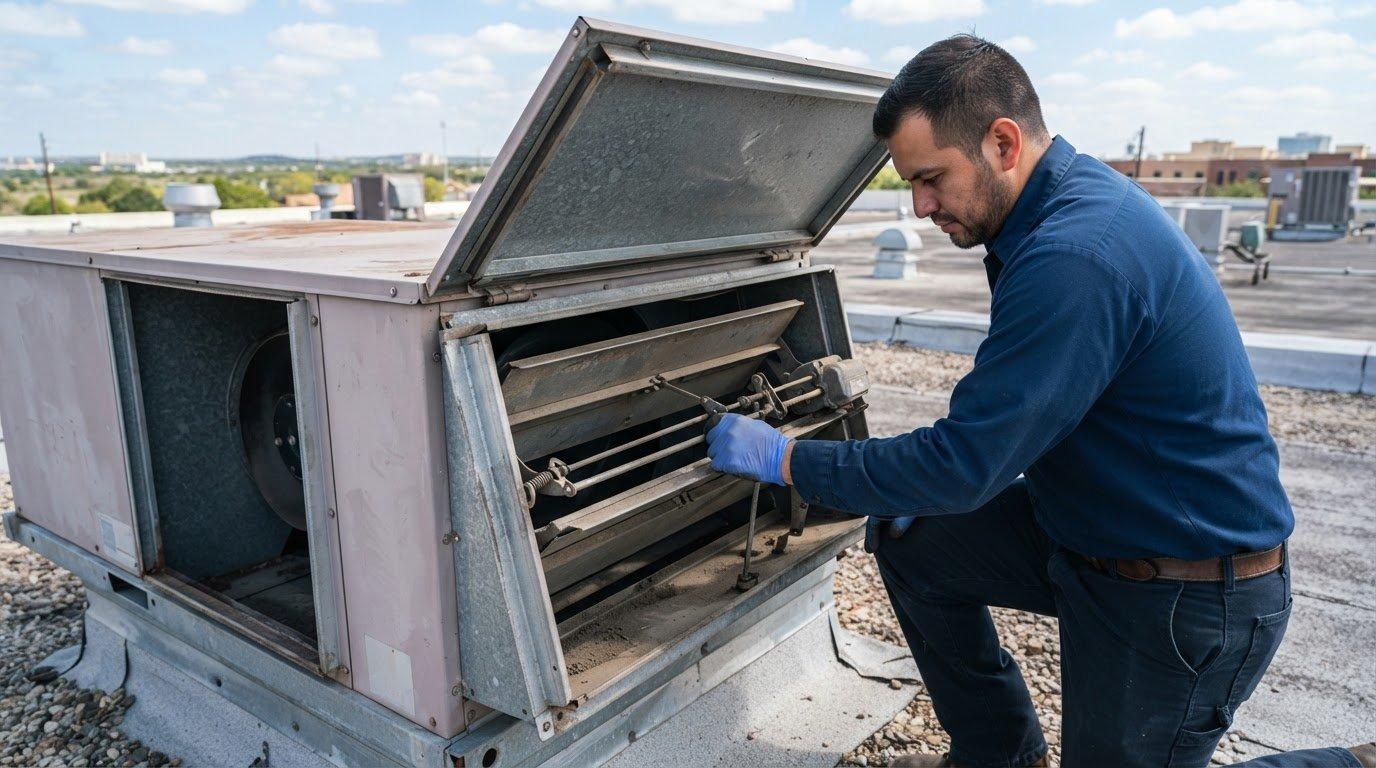
A fall electric bill can rise because of weather, billing dates, or a change in HVAC performance, so the increase alone does not identify the cause. When energy use is 30% higher than the previous year while temperatures are roughly identical, mechanical trouble is a possibility. A commercial HVAC diagnosis of high energy bills should compare the billing period and operating conditions, then trace the system’s airflow, controls, and equipment.
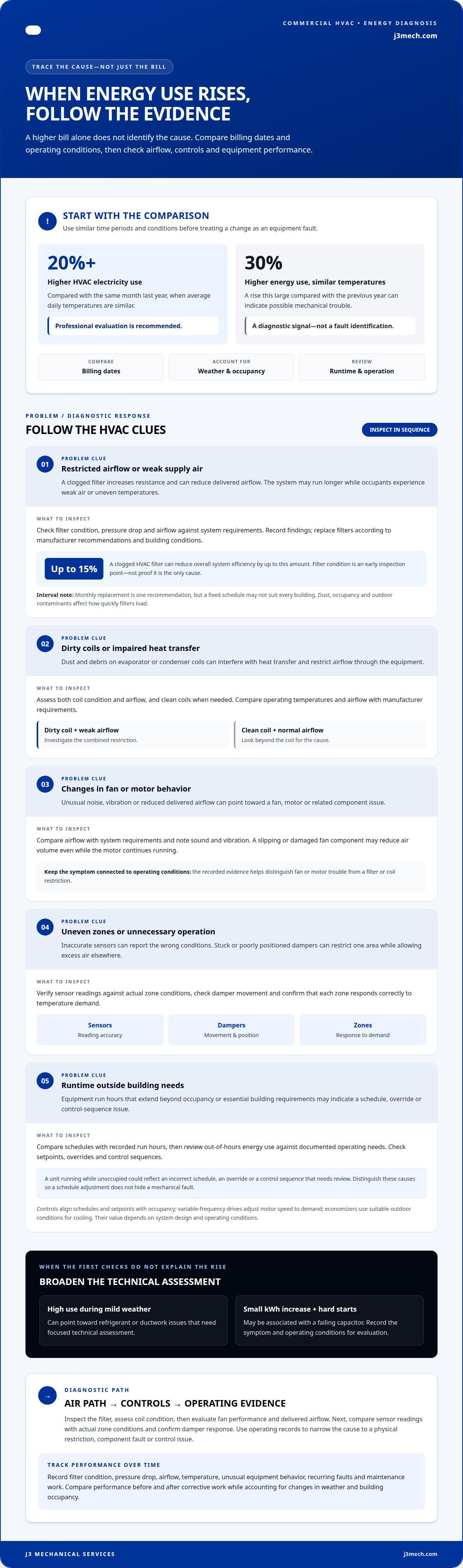
It is reasonable to look first at colder weather or longer operating hours, but those explanations do not account for every increase. This article explains how to assess the bill against weather and occupancy, identify signs of airflow or control problems, and recognize equipment or refrigerant faults that warrant professional evaluation. If HVAC electricity use is at least 20% higher than the same month last year and average daily temperatures are similar, professional evaluation is recommended. The sections that follow show how inspection findings connect the energy-use change to a specific cause, and how to assess performance after corrective work.
Key Takeaways
- Compare energy use with billing dates, weather, and occupancy to distinguish seasonal demand from a possible equipment problem.
- Filter condition, coil performance, airflow changes, and unusual fan or motor behavior can help narrow down where efficiency is being lost.
- Review sensor accuracy, control settings, equipment runtime, and heating and cooling schedules to identify avoidable operation.
- High energy use during mild weather can point toward refrigerant or ductwork issues that require a focused technical assessment.
- Compare system performance before and after corrective work while accounting for changes in weather and building occupancy.
Filters, coils, fans, motors, sensors, and dampers
Commercial HVAC problems that drive unusually high energy use include restricted airflow, dirty coils, inefficient fan operation, and inaccurate controls. These faults can keep equipment running longer while rooms still miss their target temperature. A commercial HVAC high energy bills diagnosis should connect the increase to operating evidence, rather than assume one component explains every symptom.
A clogged filter obstructs air movement, increasing resistance across the system and reducing delivered airflow. The system may then run longer to meet demand, while occupants experience weak supply air or uneven temperatures. A clogged HVAC filter can reduce overall system efficiency by up to 15%. That figure makes filter condition a useful early inspection point, not proof that the filter is the only cause.
Filter checks should assess visible condition, pressure drop, and airflow against system requirements. Replace filters according to manufacturer recommendations and building conditions, since construction dust, occupancy, and outdoor contaminants affect how quickly they load. A monthly replacement schedule is one recommendation, but a fixed interval may not suit every commercial building. Record filter condition and measured pressure drop so later inspections can reveal recurring restrictions.
Inspect evaporator and condenser coils, and clean them when needed. Dust or debris can interfere with heat transfer and restrict airflow through the equipment. A technician can assess coil condition, airflow, and operating temperatures against manufacturer requirements. For example, a dirty evaporator coil paired with weak airflow calls for a different response than a clean coil with normal airflow.
Fans and motors turn mechanical power into airflow, so changes in sound, vibration, or delivered airflow warrant attention. A slipping or damaged fan component may reduce air volume even while the motor continues running. Inspection should compare airflow with system requirements and identify unusual noise or vibration. These clues help distinguish a fan problem from a filter or coil restriction.
Sensors and dampers affect where air travels and how the system responds to temperature demand. An inaccurate sensor can report the wrong conditions, prompting unnecessary operation or uneven zone temperatures. A stuck or poorly positioned damper may restrict airflow to one area while allowing excess air elsewhere. Inspection should verify sensor readings, damper movement, and zone response as connected parts of the same control sequence.
A useful diagnostic sequence starts with the air path: inspect the filter, assess coil condition, then evaluate fan performance and delivered airflow. Next, compare sensor readings with actual zone conditions and confirm that dampers respond correctly. This sequence helps identify whether the cause is a physical restriction, failed component, or control issue. It also gives maintenance records a clear basis for tracking recurring problems.
Equipment refrigerants and related controls require disciplined handling during service. According to U.S. Congress, the American Innovation and Manufacturing Act is a U.S. law from 2020. In routine commercial HVAC maintenance, filter and coil findings should be recorded alongside airflow, temperature, and unusual equipment behavior. A consistent record makes later comparisons more useful and helps isolate the fault behind increased energy use.
Airflow, controls, and equipment troubleshooting
Controls, variable-frequency drives (VFDs), and economizers can reduce unnecessary operation when selected and configured correctly. Controls align schedules and setpoints with occupancy, VFDs adjust motor speed to demand, and economizers use suitable outdoor conditions for cooling. Their value depends on system design and operating conditions, so evaluate how each component works in the building.
Runtime records can reveal equipment operating outside occupancy or essential building requirements. Compare schedules with equipment run hours, then review out-of-hours energy use against documented operating needs. For example, a unit running during an unoccupied period may reflect an incorrect schedule, an override, or a control sequence that needs review. Distinguishing these causes prevents a schedule adjustment from hiding a mechanical fault.
Control accuracy matters across zones. Check sensor readings against actual conditions, then review setpoints, overrides, and control sequences. If a cooling zone keeps operating after reaching its target temperature, the issue may involve a sensor, override, or sequence. Heating and cooling operating against each other can also waste energy, particularly when separate zones respond to conflicting signals.
Compare energy use with weather before treating a rise as equipment failure. A 30% spike in energy use when temperatures are roughly identical to the previous year indicates possible mechanical trouble. That comparison is a diagnostic signal, not a fault identification: runtime, occupancy, and equipment performance still need review. Record recurring faults, maintenance work, and operating data to distinguish a new issue from a longstanding pattern.
Equipment uptime depends on identifying developing faults before they cause repeated interruptions. Unusual noise, vibration, or airflow changes can help direct inspection toward a fan, motor, control, or related component. A slight increase in kWh may be associated with a failing capacitor causing hard starts. Recording the symptom and operating conditions gives technicians evidence to connect intermittent performance problems with energy use.
Age can inform replacement planning, but it does not establish that replacement is necessary. Older HVAC systems can use two to three times as much energy as new models. Consider an ENERGY STAR HVAC system upgrade when a unit is 10 or more years old, while weighing its condition, recurring faults, and operating performance. Compare the case for repair with replacement rather than treating age alone as the deciding factor.
A disciplined troubleshooting review connects meter trends to schedules, zone temperatures, runtime, and fault history. First, identify when energy use rises; then compare that period with occupancy and equipment operation. Next, inspect sensor accuracy and control sequences, and assess whether system faults affect multiple zones. This evidence helps determine whether adjustments, corrective work, or equipment replacement best addresses the observed problem.
For recurring control or runtime issues, commercial HVAC maintenance can help assess equipment operation and identify faults affecting reliable service.
Comparing performance before and after corrective work
A useful before-and-after comparison accounts for weather, occupancy, billing periods, and the corrective work completed. Energy use intensity (EUI) adds building floor area to the analysis, helping put energy consumption in context.
Utility Usage Comparisons
Compare electricity in kilowatt-hours (kWh) and gas in therms across comparable periods. This matters because HVAC corrections may affect electric cooling and gas heating differently. Compare readings before and after the work, using equivalent billing periods and noting weather and occupancy changes. A lower kWh total alongside a higher therm total needs separate interpretation, not a single combined bill figure.
Record the work date and identify the equipment or control changes made, then compare the next relevant billing periods with the baseline. A utility bill labeled September may cover August 15th to September 15th, rather than the calendar month. Matching actual service dates avoids comparing mismatched periods. For example, a post-repair period containing more hot days may increase cooling demand even if system performance improved.
Keep therms and kWh as separate measures because they represent different energy sources and equipment loads. If corrective work targets a heating issue, examine gas use alongside outdoor temperature and occupied hours. If it targets cooling or fans, examine electricity use and equipment runtime. This attribution helps establish whether the measured change aligns with the repair.
Historical Energy-Use Comparisons
Historical comparison puts current kWh use beside prior periods, while considering the price per kWh separately. This matters because a higher bill can reflect a changed rate, increased consumption, or both. Track usage and unit price as distinct values: total dollars alone cannot show whether HVAC operation changed.
Use the same month from the previous year as a reference, then account for average temperatures and building occupancy. A 10% increase in energy use is described as normal when the average temperature is significantly colder than the previous September. That comparison illustrates why weather context matters before attributing a rise to equipment performance.
After corrective work, examine successive bills rather than relying on one reading. Record billing dates, kWh, therms, rate changes, and operating conditions together. If electricity consumption falls but the price per kWh rises, the bill may still increase. Separating these signals clarifies whether the repair affected usage.
Energy Use and EUI Benchmarks
Energy use intensity, or EUI, compares a building’s energy consumption with its floor area. It matters because a larger facility may use more total energy without using more energy relative to its size.
Compare EUI across consistent periods and building-use conditions, then interpret the result alongside HVAC runtime, weather, and occupancy. A benchmark is a point of comparison, not a diagnosis on its own. Changes in tenant activity or operating schedules can affect the result even when equipment stays the same.
For a post-correction review, keep the same floor-area basis and account for relevant changes in building operation. Use the EUI trend with utility records and comfort observations to assess whether the building’s overall energy pattern changed. This layered comparison helps distinguish system performance from changes in how the property was used.
Refrigerant leaks or incorrect charge
High energy use during mild weather may point to a refrigerant leak or disconnected ductwork. Either fault can leave a commercial HVAC system running longer without delivering expected cooling. The energy pattern warrants investigation, but it cannot identify the fault by itself. A technician needs to assess system operation and inspect the relevant components.
Refrigerant supports heat transfer through the cooling cycle. A leak can reduce the system’s ability to move heat, while an incorrect charge can also impair operation. In either case, equipment may struggle to meet cooling demand and keep running. Longer operation can coincide with higher electricity use, but temperature, occupancy, and schedules also affect consumption.
A qualified technician should investigate suspected refrigerant leaks in commercial HVAC systems. The assessment should consider operating symptoms and system measurements against equipment requirements, rather than relying on one sign. Commercial mechanical contractors like Branch Mechanical point out that weak cooling, extended run times, or inconsistent zone conditions can guide the inspection, but none alone proves a leak. If a leak or charge problem is found, corrective work should address both the source and the system condition.
Inspect ductwork alongside refrigerant-related concerns, since disconnected or leaking sections can lose conditioned air before it reaches occupied spaces. Check accessible ducts, joints, and insulation for visible damage or separation. For example, a loose joint above a ceiling may release cooled air into an unoccupied plenum while a conference room stays warm. The system may keep running to meet zone demand, increasing energy use without resolving the delivery problem.
Damaged insulation can also affect the air delivered through ducts. A technician can examine accessible insulation for gaps, deterioration, or moisture, then relate the findings to airflow and temperature conditions. Document the location: a leak near a branch serving one zone may cause localized discomfort, while a larger duct fault can affect several spaces. This helps distinguish distribution losses from equipment problems.
Condensate issues call for a separate inspection. During cooling, moisture removed from indoor air should drain through the condensate system. A blocked or damaged drain can cause standing water, visible leakage, or moisture near equipment and surrounding materials. These signs do not establish a refrigerant fault, so trace the drain, pan, and surrounding area instead of treating every sign of moisture as evidence of low charge.
Useful diagnosis connects each observation to the equipment’s operating record. Note when cooling weakens, which zones are affected, whether the system keeps running, and whether moisture or duct damage is visible. Compare those observations with energy use and the timing of the complaint. This sequence helps distinguish refrigerant performance, duct distribution, and condensate drainage issues, giving corrective work a defined technical target.
Commercial HVAC inspections and diagnostics
A focused inspection connects utility trends with system operation and building demand. The diagnostic process should produce evidence for corrective work, not just a list of possible faults.
Diagnosing High Energy Bills
Diagnosing a high HVAC bill means comparing energy use with weather, occupancy, operating hours, and equipment condition. This matters because the same increase can result from higher demand, extended runtime, or a mechanical fault.
Professional evaluation is recommended when HVAC electricity use is at least 20% higher than the same month last year and average daily temperatures are similar. Start by matching utility billing dates, then compare system operating hours with actual building occupancy. Review energy records alongside maintenance work and recurring faults, so the investigation follows measurable changes rather than assumptions.
Inspection findings should connect symptoms with system behavior. For example, out-of-hours runtime alongside unoccupied spaces may indicate a schedule or override issue. An increase across several zones may point to a shared system fault or heating and cooling operating against each other. Record findings and operating conditions to establish a useful baseline for corrective decisions.
Energy Audits and Payback
An energy audit assesses building energy use and identifies opportunities to improve system performance. Its value lies in prioritizing actions according to measured demand, rather than treating every possible upgrade as equally beneficial.
Audit costs depend on the assessment scope, building systems, and information required. Payback depends on verified energy reduction, implementation costs, utility rates, operating schedules, and how consistently the building uses the affected equipment. Track these factors before estimating whether a proposed measure is financially justified.
A useful assessment separates immediate operational corrections from larger equipment decisions. For example, correcting unnecessary runtime may call for a different investment than replacing equipment with recurring faults. Compare each measure’s expected energy impact with its costs and operating effects, then prioritize work that aligns with the facility’s performance objectives.
Maintenance for Lower Energy Bills
A maintenance checklist documents the review of components and operating conditions that affect HVAC energy use. Consistent records help identify developing faults and recurring inefficiencies.
The inspection should include accessible ductwork, joints, and insulation for damage or leaks, as well as equipment runtime compared with occupancy. Review sensor accuracy, setpoints, overrides, and control sequences. Check for unusual noise, vibration, or airflow changes, and document maintenance work and recurring faults. These observations help connect service findings with energy consumption and building demand.
Maintenance frequency depends on equipment, building conditions, manufacturer recommendations, and system use. A facility with changing occupancy or demanding operating conditions may need a different schedule from a building with stable use. In demanding cooling environments, commercial property maintenance specialists like RBZ Technical Services LLC routinely incorporate detailed HVAC checks into their servicing routines. Documented reviews also help determine whether corrective work restored expected operation or further diagnosis is needed.
For a system-level assessment of recurring energy issues, request commercial HVAC repair based on the inspection findings.
J3 Mechanical Services
J3 Mechanical Services helps commercial facilities connect high energy use with HVAC system condition and operating performance. When utility comparisons point to extended runtime, recurring faults, or equipment that no longer meets building demand, its commercial HVAC maintenance and repair services provide a path to technical assessment and corrective work. If inspection findings indicate replacement is the more appropriate response, commercial HVAC installation and replacement are also available. For urgent system failures, 24/7 emergency service supports commercial HVAC repair needs.
Share the relevant billing periods, energy-use records, occupancy changes, and known equipment symptoms to give the assessment useful context. Contact J3 Mechanical Services to discuss your commercial HVAC concerns.
Turn Energy Findings Into a Clear Next Step
A commercial HVAC high energy bills diagnosis is most useful when it leads to a defined decision: monitor system performance, correct a fault, or plan for equipment replacement. Keep energy records and inspection findings together so facility teams can track whether the chosen response addresses the underlying issue and supports reliable building operation.
J3 Mechanical Services provides commercial HVAC maintenance and repair, along with installation and replacement when equipment decisions call for a broader solution. Share the relevant operating concerns and energy-use records to begin a focused discussion about your system’s needs.
Contact J3 Mechanical Services to discuss the next step for your commercial HVAC system.
Frequently Asked Questions
Why is my electric bill so high in the fall?
An electric bill may rise in fall as building HVAC operation shifts between cooling and heating modes. If both modes operate during changing outdoor conditions, energy use can increase without a simple seasonal explanation. Compare electricity use with the building’s operating calendar, HVAC schedules, and changes in occupied areas. Also distinguish increased consumption from a higher charge per kilowatt-hour.
Can a bad furnace cause high electric bills?
Yes. A furnace can raise electricity use if its blower runs excessively or a fault causes repeated starts and operation. A gas furnace may also use more therms, so compare electric and gas consumption separately. A dirty flame sensor may be associated with furnace short-cycling and a moderate increase in therms. The pattern across both utility measures can help identify which part of furnace operation needs evaluation.
Does weather affect my bill?
Yes. Colder fall conditions can increase heating demand, while warm periods can extend cooling operation. Compare utility periods with local temperature patterns and the building’s actual occupied hours, rather than relying only on the month printed on a bill. For example, a cold snap during a billing period can increase heating use even if the rest of the month stayed mild.
How can I tell if my high bill is due to rates or usage?
Compare the bill’s total kilowatt-hours with the price charged per kilowatt-hour. If consumption is similar but the unit price increased, the rate contributes to the higher bill; if the rate is similar but kilowatt-hours rose, usage contributes. Check the number of billed days as well, since periods of different lengths can make monthly totals misleading. Review gas therms separately.
How can facilities managers identify HVAC energy waste?
Facilities managers can look for equipment running outside occupancy hours or beyond essential operating needs. Compare operating logs with the building calendar and note areas that are unoccupied while their equipment keeps running. Record repeated overrides, unexpected starts, or differences between scheduled and actual operation. These records give the maintenance team specific times and zones to investigate, rather than relying on the total utility bill alone.
How do I know if my HVAC is using too much electricity?
Compare HVAC electricity use with a similar period, then account for weather, occupancy, and operating hours. A dedicated HVAC meter, where installed, can help separate system consumption from lighting, office equipment, and other building loads. If the whole-building meter shows higher use but HVAC data remains steady, the increase may come from elsewhere. If both rise, examine system runtime and recent operating changes.
What should be checked during commercial HVAC maintenance?
Maintenance should assess components against manufacturer recommendations and building operating conditions. A useful service record identifies the equipment inspected, its observed condition, work completed, and any follow-up needed. Include recurring faults and changes in noise, vibration, or airflow, then compare those notes with earlier service records. This history helps distinguish a new issue from a recurring condition and supports more targeted maintenance planning.
Need a hand with your building's HVAC?
Free quotes and honest answers from licensed commercial technicians across South Texas.