
Commercial Rooftop Unit Not Heating? Checks and Repairs to Consider
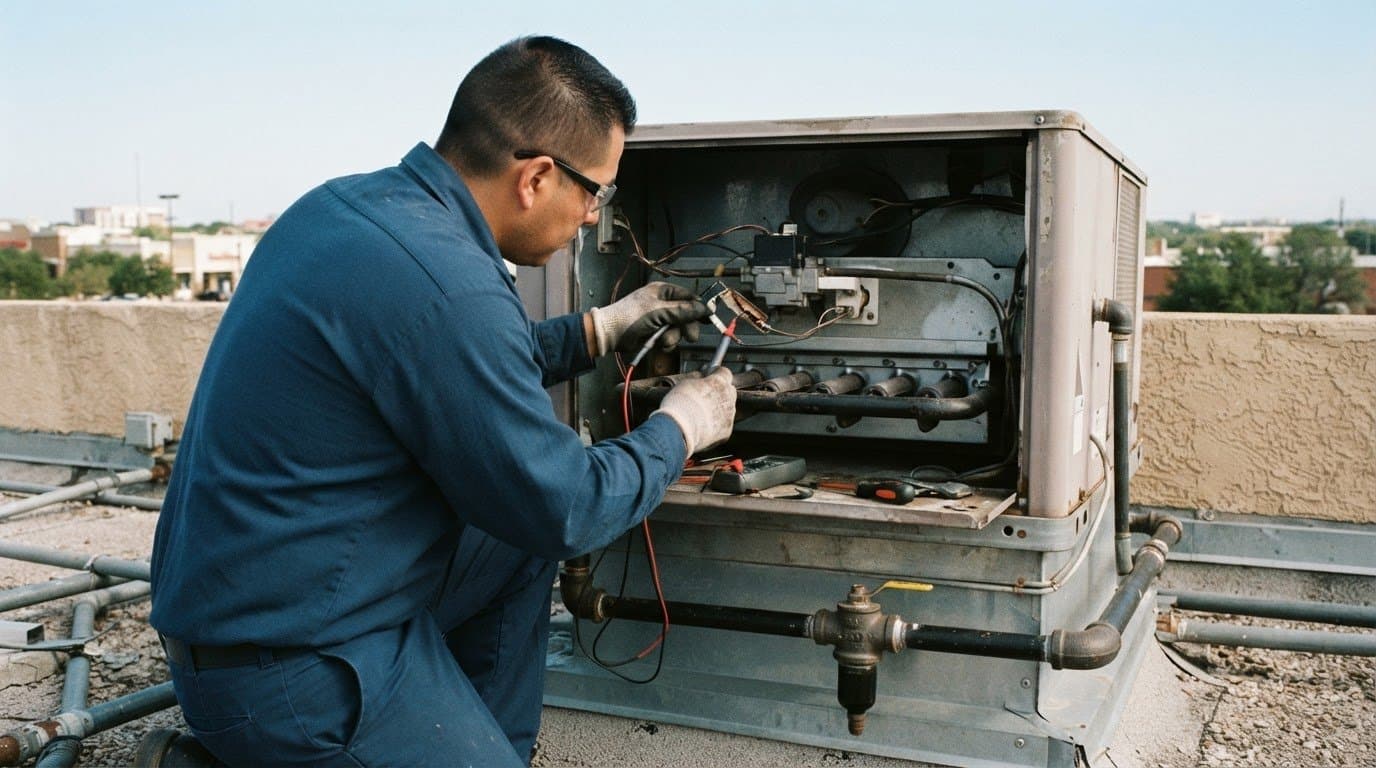
A rooftop unit that runs is not necessarily producing heat. When a commercial rooftop unit is not heating, the cause may be a thermostat or zone sensor setting, a power interruption, restricted airflow, or a fault in the heating components. First note whether the problem affects one zone or the whole building. That pattern helps narrow down the cause.
It’s understandable to expect the system to respond when heat is called for, especially when indoor conditions affect daily operations. This guide explains how rooftop units produce heat, which common faults can interrupt the process, and what basic checks can help distinguish a control or airflow issue from a repair need. You’ll also learn when to stop troubleshooting and have a commercial HVAC technician assess the equipment, so the next step is based on the symptoms rather than guesswork.
Key Takeaways
- Understand how rooftop unit controls, airflow, and heating components work together to deliver warmth through a building’s ductwork.
- Learn how common faults can affect heating performance and which repairs may address the underlying cause.
- Use basic checks to narrow down the problem, while recognizing when rooftop access or equipment work calls for professional attention.
- Compare how gas heat, electric heat, and heat pumps produce warmth, and what that means for diagnosing a heating problem.
- See when commercial HVAC repair, maintenance, or replacement may be the appropriate next step for restoring reliable operation.
Why Is the Rooftop HVAC Unit Not Heating?
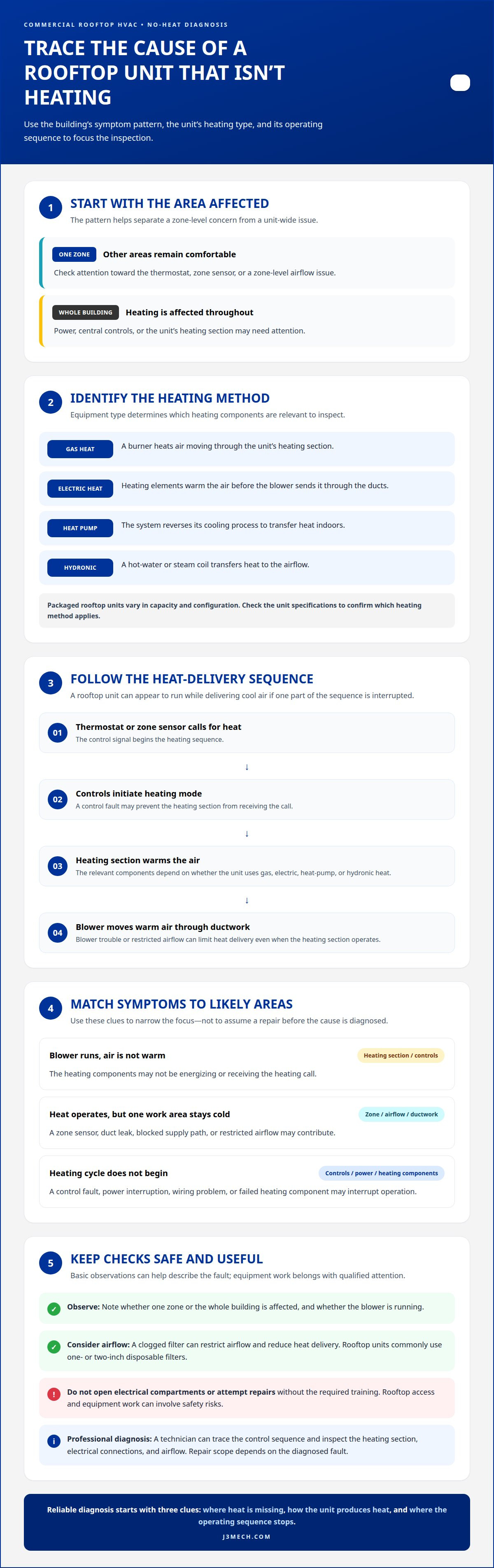
If a commercial rooftop unit is not heating, the fault may involve its controls, airflow, or heating section. The unit can appear to run while delivering cool air because these components must operate in sequence. A thermostat or zone sensor calls for heat, the controls initiate heating mode, and the blower distributes warm air through the connected ductwork.
A packaged rooftop unit combines major HVAC components in one cabinet, often including the compressor, condenser, evaporator coil, blower, and controls. Its blower moves air across the heating section and into the building. Packaged commercial units are available across capacities from 1½ tons to over 100 tons, so component arrangements and heating methods vary by equipment.
The heating method is central to diagnosis. A rooftop unit may use electric heating elements, a gas burner, a heat pump, or hydronic heat from hot-water or steam coils. Packaged equipment can use different heating configurations, so check the unit’s specifications to determine which applies. The equipment type determines which heating components need inspection.
- Gas heat: A burner heats air moving through the unit’s heating section.
- Electric heat: Heating elements warm air before the blower sends it through the ducts.
- Heat pump: The system reverses its cooling process to transfer heat indoors.
- Hydronic heat: A hot-water or steam coil transfers heat to the airflow.
A failure at any point in that sequence can interrupt heat delivery. For example, a control fault may prevent a burner from receiving a heating call, while a blower problem can limit airflow even when the heating section operates. A clogged filter can also restrict airflow through the unit and reduce heat delivery to occupied areas.
Controls may include a standalone thermostat, a zone sensor, or a building controls system. If one zone feels cold while others remain comfortable, a sensor or zone-level issue may be involved. If the whole building is affected, the unit’s power, central controls, or heating section may need attention. These patterns help distinguish a local airflow problem from a unit-wide fault.
For commercial rooftop unit repairs in the United States, applicable licensing, code, and safety requirements depend on the state, local jurisdiction, and work being performed. The repair scope and equipment determine which technical procedures and approvals apply.
Start by identifying the unit’s heating type and whether the problem affects one zone or the whole building. This directs attention to the relevant components instead of treating every no-heat condition as the same mechanical failure.
Common rooftop unit issues and repairs
Rooftop HVAC faults can arise in electrical controls, heating components, airflow paths, or ductwork serving occupied spaces. Matching the symptoms to the affected part of the system helps narrow the repair scope.
Common Rooftop Unit Repairs
Common repairs address failed controls, damaged wiring, restricted airflow, or worn heating components. The specific fault matters: a rooftop unit may run its blower while delivering little heat, or it may not begin a heating cycle at all.
For example, a technician may trace a no-heat call through the controls, then inspect the heating section and electrical connections. If the unit heats but a work area stays cold, duct leaks or blocked supply paths may be contributing. Repairs should address the diagnosed cause, not simply restart the equipment.
Commercial Unit Repair Costs
The average repair cost depends on the failure and the work needed to restore safe, reliable heating. Repair pricing depends on the fault and is provided after a quote request; labor, replacement parts, rooftop access, and diagnostic work shape the estimate.
A control adjustment and a failed heating component require different work, so a single average would not accurately describe every repair. The technician’s findings, affected components, and repair scope determine the appropriate work. This helps building operators compare the repair plan with the actual symptoms.
Electric Heat and Heat Strip Failures
Electric heat or heat strips can fail if an element, electrical connection, or control needed for the heating sequence stops working. The unit may still circulate air, but that air will not warm if the elements do not energize.
Restricted airflow can also strain the heating system, while loose or damaged wiring can interrupt power to a component. A qualified technician can test the control sequence and inspect the elements and connections. Avoid opening electrical compartments or attempting repairs without the required training.
Preventing Heating Failures Through Maintenance
Regular maintenance helps identify airflow restrictions and developing component problems before they disrupt heating, though it cannot prevent every failure. Professional rooftop HVAC maintenance is often scheduled before heating season and again before cooling season.
A maintenance visit can include checking filters, electrical connections, controls, and the heating section. Rooftop units commonly use one- or two-inch disposable filters; a technician can inspect their condition and replace them when needed. Clear filters support airflow through the unit and into the ductwork.
Rooftop location adds a practical consideration: maintenance and repairs can be difficult or dangerous in bad weather. Scheduling inspections before seasonal demand rises gives time to consider access and operating conditions. Maintenance records can also help identify recurring faults, such as repeated control interruptions or airflow problems. Similarly, for residential heating and cooling systems, routine preventative maintenance from professional teams like Caribbean Heating & Cooling helps catch component wear and airflow restrictions before seasonal temperature drops arrive.
Basic troubleshooting steps
Start by checking the thermostat, airflow, and visible unit indicators before considering a restart. These checks can help distinguish a control setting from a problem that requires rooftop access or electrical work.
Inspecting Gas Supply, Ignition, and Burners
A safe preliminary inspection looks for visible signs of trouble without opening gas or electrical compartments. This matters because ignition and burner repairs involve components that should not be adjusted during basic troubleshooting.
From a safe position, note whether the unit appears to start and whether an indicator shows a fault. Do not touch gas piping, remove access panels, or attempt to light a burner. If you smell gas, see smoke, or notice scorching, leave the area and do not restart the equipment.
Airflow Problems and Heating
Restricted airflow limits how effectively the unit distributes heat through the building. A dirty filter, blocked return, or closed supply vent can reduce airflow to occupied rooms, even when the heating section is operating.
Check accessible vents for obstructions and make sure supply openings are not covered by stored materials. Rooftop units commonly use one- or two-inch disposable filters, but reaching them may require opening equipment panels. Replace only filters designed for the unit and accessible without entering hazardous areas. Leave rooftop or internal access to trained personnel.
Heating Error Codes and Diagnostic Lights
Error codes and diagnostic lights indicate that a control has detected an operating fault, but their meaning depends on the rooftop unit’s make and model. The same light pattern does not necessarily indicate the same fault across different equipment.
Record the displayed code or count the flashes, then compare the pattern with the unit’s information label or operating manual. Note, for example, whether a light stays solid or flashes in a repeated sequence. Avoid clearing a code before recording it, since the pattern can help identify the failed stage.
Restarting and Safety Risks
Reset the unit only if there are no signs of immediate danger and its instructions permit it. Do not restart equipment if you notice a gas odor, smoke, sparking, exposed wiring, or water near electrical components.
For a routine reset, turn the system off at the thermostat, wait five minutes, then turn it back on. Observe the next heating call instead of repeatedly cycling the controls. If a breaker trips again, a fault returns, or abnormal noise or a burning odor appears, stop operating the unit and arrange qualified service.
Cooling and heating performance
A rooftop unit’s heating and cooling performance depends on its operating mode, airflow, controls, and condition. A heat pump produces heat by reversing the cooling process and transferring heat into the building instead of removing it. As a result, a system that cools effectively may still have a heating-side fault.
In cooling mode, refrigerant carries heat through the system as the indoor coil absorbs heat and the outdoor condenser releases it. In heat-pump heating mode, the refrigeration cycle reverses and moves heat indoors. If the unit cannot complete that transfer, indoor spaces may remain cool even when the equipment starts and runs.
Compare conditions across zones before drawing conclusions about overall unit performance. If one space feels cold while nearby areas remain comfortable, airflow distribution or zone controls may be contributing. If several spaces served by the same unit have similar symptoms, the heating mode or a shared system component needs closer assessment.
Efficiency ratings describe different operating functions. SEER2 measures cooling efficiency, while HSPF2 measures heating efficiency for heat pump systems. These ratings help characterize equipment performance, but they do not identify a current fault. For example, a high cooling rating cannot establish whether a heat pump is transferring heat properly during a heating call.
Outdoor conditions and building heating demand also affect heat-pump performance. When selecting a rooftop heat pump for a very cold region or special application, the contractor should review heating load, backup heat needs, and local code requirements. These factors shape how the system is expected to serve the building under its operating conditions.
- Cooling: Refrigerant absorbs heat indoors and releases it through the condenser.
- Heat-pump heating: The cycle reverses to transfer heat into the building.
- Performance ratings: SEER2 applies to cooling efficiency; HSPF2 applies to heat-pump heating efficiency.
Air delivery is also part of the performance picture. A rooftop unit may produce heat, yet poor distribution can leave some spaces uncomfortable. Compare supply conditions in affected areas and note whether the problem follows one zone or occurs throughout the building. This pattern helps distinguish a localized delivery issue from a broader heating-performance concern.
Cooling performance alone does not show that heating components are working correctly. A unit may cool during one season but struggle to heat when its operating mode changes. Reviewing the heat-pump type, heating demand, zone pattern, and relevant efficiency rating provides a clearer framework for interpreting symptoms and directing further diagnosis.
How do you safely inspect commercial rooftop unit gas supply, ignition, and burners?
A safe inspection starts with observation, not opening the rooftop unit or adjusting its gas train. Gas piping, ignition controls, and burners require qualified service because faults in these components can affect heating and safe operation.
From a safe, accessible position, note whether the unit appears to start when the thermostat calls for heat. Record any diagnostic light or error code, and check for visible damage around the cabinet. Do not remove access panels, touch wiring, operate gas valves, or try to light a burner. These actions go beyond a basic visual check.
If you smell gas near the unit, stop inspecting it and do not restart the equipment. Avoid operating switches or creating an ignition source in the affected area. Move away and follow the building’s emergency procedures. If you see smoke, scorching, or sparking, leave the unit off until qualified personnel assess it.
A technician can trace the heating sequence systematically, starting with the call for heat and moving through the ignition controls, gas supply, and burner operation. As heating and gas specialists like Prodigy Mechanical point out, a failed ignition signal can prevent the burner from operating even when the thermostat is calling. A supply interruption or burner fault can cause similar symptoms, so the symptom alone does not identify the failed component.
During professional diagnosis, the technician can inspect the unit’s connections and components, then test whether each stage responds as designed. The appropriate checks depend on the rooftop unit’s configuration and the fault observed. Avoid cleaning, repositioning, or replacing burner parts yourself, since changing their placement can affect combustion and equipment operation.
- Observe: Note the thermostat call, visible unit status, and any diagnostic indicator.
- Keep clear: Do not open gas or electrical compartments or adjust supply valves.
- Stop for warning signs: Leave the area if you detect gas odor, smoke, scorching, or sparking.
- Share observations: Give the technician the recorded code and the symptoms noticed during operation.
These observations help distinguish a control or ignition issue from a gas-supply or burner fault, without exposing building staff to internal equipment work. If the unit has no heat and a gas or ignition fault is suspected, arrange commercial HVAC repair rather than attempting to relight or reset the burner.
J3 Mechanical Services: Commercial HVAC Installation & Replacement
J3 Mechanical Services provides commercial HVAC repair when a rooftop unit’s heating fault requires professional diagnosis and corrective work. If recurring failures or equipment condition point beyond a repair, its commercial HVAC installation and replacement service can address the system’s next stage. Commercial HVAC maintenance supports ongoing equipment care and helps identify developing issues before they interrupt operation.
For a no-heat condition, share the symptoms, affected areas, and any diagnostic codes you recorded. That information can help focus the service assessment on the unit’s controls, heating components, or airflow. For urgent repair needs, J3 Mechanical Services also offers 24/7 emergency service.
Contact J3 Mechanical Services or visit j3mech.com to discuss your commercial rooftop unit.
Set a Clear Path Toward Reliable Building Comfort
If a commercial rooftop unit is not heating, turn the symptoms into a focused service decision. Consider which areas are affected, whether the problem recurs, and how the unit’s operation affects building use. This context helps frame the issue beyond immediate discomfort and supports a more informed discussion about the equipment’s needs.
For a system that has stopped providing heat, ongoing faults, or equipment that may need a broader assessment, J3 Mechanical Services can help identify an appropriate commercial HVAC path. The priority is a clear diagnosis and a response aligned with the condition of the system, rather than repeated resets that leave the underlying issue unresolved.
Bring your observations and the unit’s recorded diagnostic information into the conversation, then contact J3 Mechanical Services to discuss the next step. A considered decision can put your building on a steadier course toward dependable heating.
Frequently Asked Questions
Why is my rooftop unit blowing cold air instead of heat?
A rooftop unit may blow cold air if heating mode has not engaged or the heat-producing component is not operating. On a heat pump, cooling and heating use reversed refrigerant flow, so a fault affecting that change can leave the unit circulating unheated air. Compare the thermostat’s call with the air from several supply grilles. If the unit serves multiple areas, note whether they all have the same problem.
Do rooftop units provide heat?
Yes, rooftop units can provide heating, but the method depends on the equipment configuration. A commercial unit may use gas heat, electric elements, a heat pump, or hot-water or steam coils. Some packaged air conditioners provide cooling only unless fitted with a heating option. Check the unit’s nameplate and controls documentation to identify its configuration before interpreting a heating call or planning a repair.
What Are The Signs My Rooftop Unit Needs Replacement?
Replacement deserves consideration when a rooftop unit has recurring operational failures or faces a major repair that affects essential components. Age is also relevant: rooftop HVAC systems typically last 10 to 15 years with proper maintenance, and replacement is worth considering when a unit is over 15 years old and needs a major repair, such as compressor or heat exchanger replacement. Evaluate condition and repair scope together.
What are the most common causes of a commercial rooftop HVAC unit not heating?
Common causes include a control that does not initiate heating, a failed heating component, an electrical interruption, or reduced airflow. The heating method narrows the likely fault: a gas-fired unit has different components from an electric heater or heat pump. The failure pattern is also a useful clue. One affected unit points to its equipment or served area, while multiple units may indicate a broader control issue.
How can you troubleshoot a commercial rooftop unit that is blowing cold air?
Record what the system is doing instead of repeatedly changing settings. Note the thermostat mode, whether the fan runs, which spaces receive cold air, and any displayed fault indicator. Compare the affected area with a space served by separate equipment. This record helps distinguish a localized distribution problem from a unit-wide heating failure and gives a technician useful context.
What rooftop unit thermostat settings and controls should be checked when there is no heat?
Confirm that the thermostat is set to Heat, not Cool or Fan, and that the displayed temperature is below the current setpoint. For systems connected to building automation, check whether an operating schedule, occupancy setting, or control override is affecting the heating call. Compare the zone sensor reading with room conditions. A mismatch can make the control respond differently than occupants expect.
When is it better to repair versus replace a commercial rooftop unit?
Repair is generally the more direct option when diagnosis identifies an isolated fault and the remaining equipment condition supports continued operation. Replacement becomes more relevant when the system has repeated failures, major component damage, or substantial age. In particular, consider replacement for a unit over 15 years old that needs a major repair, such as a compressor or heat exchanger. The decision should account for fault scope and overall condition.
Need a hand with your building's HVAC?
Free quotes and honest answers from licensed commercial technicians across South Texas.