
Hotel HVAC Repair and Maintenance in Austin with Upfront Pricing
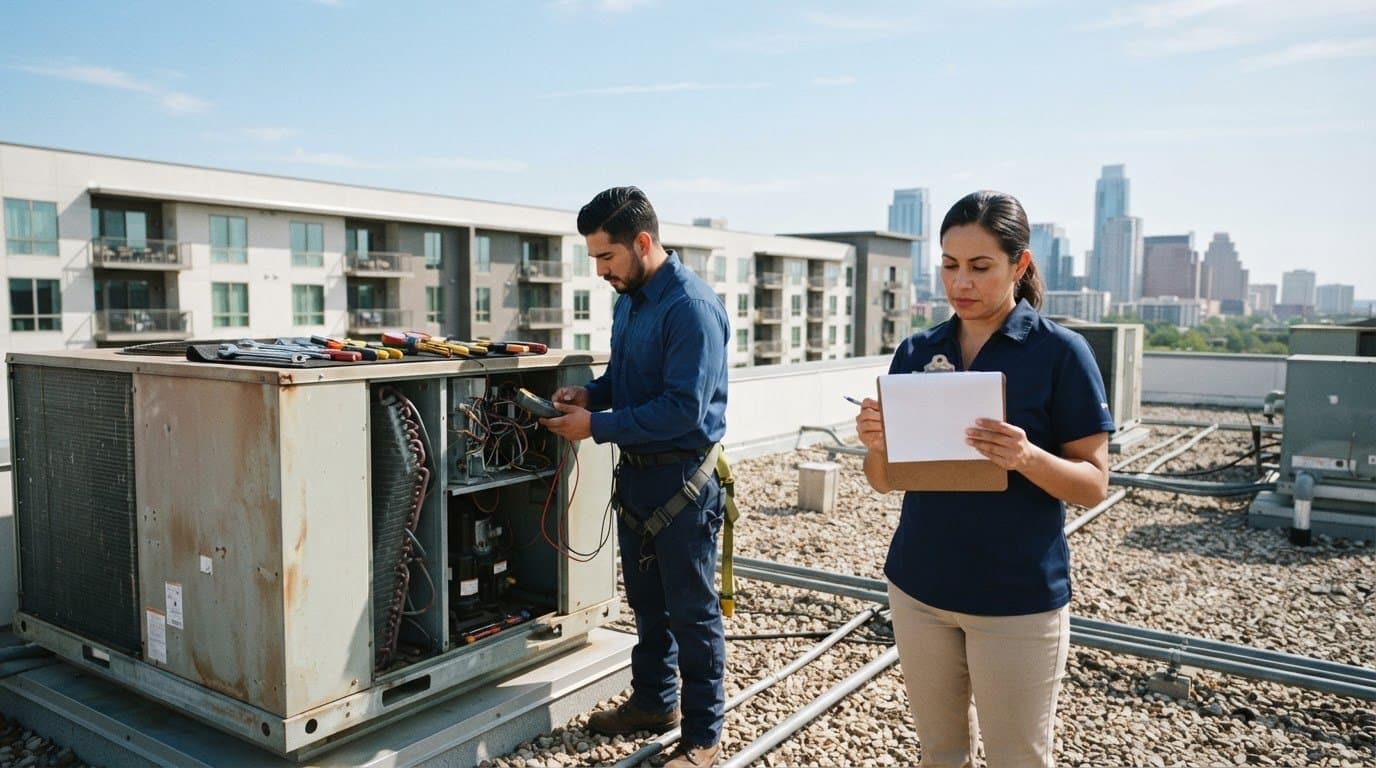
A hotel HVAC service request is most useful when it starts with the operational impact, not just a thermostat reading. For hotel HVAC repair and maintenance in Austin, describe whether heating or cooling is affected, what symptoms staff have observed, and how the issue affects guests or building operations. Clear details help define the service need and guide next steps.
It’s reasonable to want a clear scope and cost before repair work begins. A service price depends on the case and is provided after a quote request; the equipment, fault, parts, and site conditions shape the quote.
This guide explains how to request hotel heating or AC service, what commercial repairs and scheduled maintenance can cover, and which details affect a quote. It also explains how to review financing terms as a separate payment consideration, helping you assess proposed work and costs more clearly.
Key Takeaways
- When requesting hotel HVAC service, describe the affected area, heating or cooling symptoms, and operational impact to help define the repair need.
- Repair scope and upfront pricing depend on the equipment, diagnosed fault, required parts, and site conditions.
- Build routine maintenance around system condition and filter care; the U.S. Environmental Protection Agency (ENERGY STAR) recommends changing HVAC filters at least every 3 months.
- Review financing terms alongside the proposed work so you can understand how payment arrangements fit your project budget.
- Use the guide to distinguish an urgent repair from a maintenance need or a system replacement decision.
Emergency repair service and replacement parts
Hotel emergency HVAC response starts with identifying the affected equipment, guest areas, and operational impact. In Austin, clear information helps technicians prioritize diagnosis and determine which parts may be needed.
Same-Day Service Availability
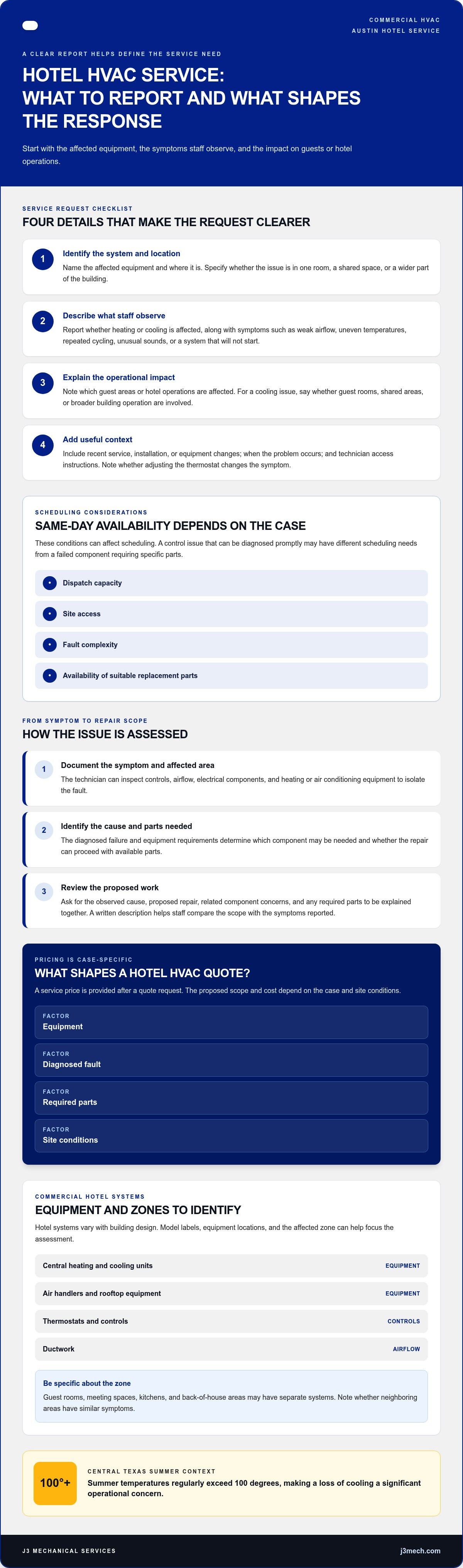
Same-day HVAC service depends on dispatch capacity, site access, the fault’s complexity, and whether suitable replacement parts are available. A control issue that can be diagnosed promptly presents different scheduling needs from a failed component requiring specific parts.
When reporting a problem, provide the property address, equipment location, symptoms, and any recent changes. Include whether the issue affects one room, a shared area, or the building’s wider heating or cooling operation. These details help establish the request’s scope.
Emergency HVAC Response
An emergency response begins with communicating the equipment failure and its effect on hotel operations. For example, report whether cooling has stopped in guest rooms, whether the system is cycling abnormally, or whether staff have noticed unusual sounds.
Central Texas summer temperatures regularly exceed 100 degrees, making a loss of cooling a significant operational concern. Technicians diagnose the system, identify the failed component, and determine whether a repair or replacement part is needed. A clear record of findings helps staff coordinate the next step.
Replacement parts depend on the diagnosed failure and equipment requirements. A technician may need to identify the affected component, check compatibility, and determine whether the repair can proceed with available parts. If different parts are needed, that can affect the repair sequence and any return visit. Review any written guarantee terms carefully, including covered work and limitations.
To compare Austin HVAC contractors, review documented commercial experience, relevant certifications, response commitments, and reviews describing similar hotel work. Prioritize evidence about communication, diagnosis, and completed repairs rather than broad claims.
For an Austin hotel upgrade, evaluate rebates or incentives against the proposed equipment, project scope, and applicable program criteria. Include an incentive in the financial plan only after eligibility and required documentation are established.
Prepare these details before requesting emergency service:
- Identify the affected system and hotel areas.
- Describe symptoms, including noises or interrupted heating and cooling.
- Note recent service, installation, or equipment changes.
- Record the operational impact and access instructions for technicians.
Commercial heating and air conditioning repairs
Hotel HVAC problems in Austin can include weak airflow, uneven temperatures, system cycling, or heating and cooling that stop working. Dirty filters, control faults, restricted airflow, and worn electrical or mechanical components can contribute to these symptoms.
Heating and AC Diagnostics
Diagnosis begins with documenting the symptom, affected area, and equipment behavior. A technician can inspect controls, airflow, electrical components, and heating or air conditioning equipment to isolate the fault. For example, a thermostat reading that differs from room conditions points to a different diagnostic path than a system that will not start.
Ask for the observed cause, proposed repair, and related component concerns to be explained together. This helps distinguish an immediate correction from work that may require follow-up and gives hotel staff a record for tracking repeat issues.
Serviced HVAC Equipment
Commercial hotel equipment may include central heating and cooling units, air handlers, rooftop equipment, thermostats, controls, and ductwork. The building’s design determines which systems are present, so identify model labels or equipment locations when reporting a fault. A clear description helps focus the assessment on the right system rather than treating every comfort complaint as the same problem.
Hotels may have separate systems serving guest rooms, meeting spaces, kitchens, or back-of-house areas. Note which zone is affected and whether neighboring areas have similar symptoms. That distinction helps determine whether the cause may be local to one unit or involve shared equipment.
Common Hotel HVAC Problems
Uneven room temperatures can arise from restricted airflow, control settings, or equipment faults; unusual noises can point to loose or worn components. A system that starts and stops repeatedly may involve controls, airflow, or mechanical performance. Staff observations help connect symptoms to the equipment’s operating pattern.
Record when the issue occurs, which rooms are affected, and whether it changes after adjusting the thermostat. These details help distinguish a recurring system fault from a localized comfort concern and give maintenance staff useful history for future diagnosis.
Heating and furnace service follows the same diagnostic process as air conditioning repair: identify the affected equipment, inspect its controls and components, then define the repair scope. If a furnace does not start or delivers inconsistent heat, report its operating condition and the areas affected. If a complaint also involves a water leak, describe its location separately so staff can distinguish an HVAC issue from a plumbing service need.
Before authorizing repair, request a written description of the fault, the work proposed, and any parts required. Compare that scope with the symptoms staff reported, then document the completed work and equipment behavior afterward. For persistent faults or systems nearing replacement, commercial HVAC repair information can help frame the next service discussion.
- Record the affected zone and equipment behavior.
- Share thermostat readings and staff observations.
- Track recurring symptoms after repair.
Commercial HVAC repair and maintenance
A hotel maintenance plan should connect inspections, filter care, repair records, and system-specific tasks. For Austin properties, this structure helps staff track central heating and cooling equipment through demanding operating periods.
Commercial HVAC systems contain moving and electrical parts, so regular maintenance can identify developing issues before they disrupt operations. Austin-area air-conditioning systems run 14-18 hours per day during peak summer heat, making inspection of operating condition, airflow, controls, and visible wear especially relevant to hotel planning.
The U.S. Environmental Protection Agency (ENERGY STAR) recommends changing HVAC filters at least every 3 months. Hotels using gaseous filters should include their regular replacement or regeneration in the maintenance plan, according to the U.S. Environmental Protection Agency. Filter type and equipment design help determine the specific task and service record staff should maintain.
A useful hotel HVAC maintenance agreement should define the covered equipment, scheduled inspection tasks, service documentation, and how repair recommendations are communicated. It should also clarify how urgent issues are reported, how follow-up work is authorized, and what records the property receives after each visit.
- Equipment scope: Identify the systems and zones included, such as central air handlers, rooftop units, or guest-room equipment.
- Maintenance tasks: Specify filter service, inspection of electrical and moving parts, and review of operating performance.
- Records: Document findings, completed work, recurring symptoms, and recommended next steps.
- Repair process: Set out how a technician reports a fault and how hotel staff approve corrective work.
For Austin and Texas licensing, permits, and inspections, requirements depend on the work scope and the authority governing the project. Distinguish a repair from equipment replacement or a new installation, then identify the applicable licensing, permit, and inspection steps for that scope before work begins.
That distinction also improves maintenance planning. A recurring control fault may call for diagnosis and repair, while repeated performance problems across a system may justify evaluating replacement. Tie both decisions to recorded symptoms, inspection findings, and the equipment affected.
Use a consistent service log for each visit. Record the date, equipment location, reported issue, inspection findings, work completed, and outstanding recommendations. For example, if the same guest-room zone repeatedly has weak airflow, the record can show when the symptom began and whether previous service addressed it.
Regular maintenance does not replace repair when equipment develops a fault, and it cannot guarantee uptime or prevent every failure. Document and assess unusual noises, inconsistent heating and cooling, or repeated system interruptions rather than treating them as routine filter work. A clear maintenance process helps hotel operations staff distinguish these concerns.
Financing and upfront pricing
For a hotel, an HVAC quote is useful when it connects proposed work to equipment, site conditions, and operational priorities. Separate an immediate cooling or heating repair from longer-term replacement planning so decision-makers can assess scope and payment options clearly.
The price depends on the case and is given after a quote request; equipment type, diagnosed fault, required parts, access conditions, and project scope shape the quote. For example, correcting a control fault differs from replacing a major system component, so the written proposal should identify the work included rather than relying on a broad service description.
Review the proposal by matching each task to a hotel need. If a guest-room area has inconsistent cooling, confirm that the scope addresses the affected equipment and its operating controls. If a project also targets more efficient operation or indoor air quality, treat those as distinct project considerations, not assumed outcomes of unrelated repair work.
Before authorizing work, ask for the scope, exclusions, parts, labor, and payment timing to appear in the proposal. A clear change process matters too: if diagnosis reveals another fault, the hotel should understand how revised work will be described and approved before it proceeds. Keep that record so accounting can compare the original approval with the completed repair.
Financing is a payment arrangement, not a change to the HVAC work itself. If financing terms are presented for a project, review the amount financed, interest rate, fees, payment schedule, repayment period, and total repayment together. A lower scheduled payment can extend repayment, so compare the full obligation rather than assessing one payment figure alone.
- Scope: Match each repair or installation task to the equipment and hotel area affected.
- Quote: Identify parts, labor, access requirements, and any conditions that could change the work.
- Financing: Compare the repayment period, fees, rate, payment timing, and total amount due.
- Approval: Record who can authorize revised work and how the revised scope will be documented.
For a replacement project, compare repair needs with the system’s operating condition and the hotel’s long-term plans. A proposal can distinguish immediate corrective work from installation planning, allowing managers to evaluate each decision within its own budget cycle. Keep cooling requirements, equipment access, and indoor air quality objectives in view.
Retain the approved quote, financing documents, and service record together. This gives hotel management and accounting a clear basis for reviewing the work, payment obligations, and any scope changes.
What HVAC systems and equipment do Austin hotel maintenance providers service?
A hotel’s HVAC inventory can span central equipment, guest-room units, controls, and air distribution. Build a system-by-system list before arranging maintenance so reported issues connect to specific equipment and building areas.
Central heating and cooling equipment may include rooftop units, chillers, boilers, air handlers, and heat pumps. The building’s design determines which systems are present and how they serve guest rooms, lobbies, meeting spaces, or back-of-house areas. For example, a lobby air handler may serve a different zone from individual guest-room units.
Air distribution components matter too. Ductwork, dampers, grilles, and diffusers move conditioned air through the property, while thermostats and control systems manage operation across designated areas. If one meeting room feels different from adjacent spaces, note its control setting and supply-air location. That information helps connect the comfort complaint to the correct zone.
Hotels can organize equipment records by system function:
- Heating: Boilers, furnaces, heat pumps, and their associated controls.
- Cooling: Chillers, rooftop units, condensers, and packaged or split systems.
- Air movement: Air handlers, fans, ductwork, dampers, grilles, and filters.
- Controls: Thermostats, sensors, and building-level control interfaces.
This inventory is a working reference, not a substitute for inspecting the actual equipment. Record each unit’s location, equipment label, served area, and known operating concern. A note such as “north meeting room, weak airflow at ceiling diffuser” is more useful than “HVAC issue upstairs.” Include recent repairs or control changes when staff have that history.
System boundaries can affect diagnosis and maintenance planning. A single central unit may serve several rooms, while separate equipment can serve individual zones. If complaints arise in multiple areas at once, record whether those spaces share equipment. If only one area is affected, identify its thermostat and nearest air outlet. These distinctions help staff describe the problem accurately.
Include filters, electrical components, moving parts, and visible control devices in the equipment record. Maintenance can address these components as part of supporting system operation, while unusual noise or recurring airflow issues warrant attention as separate service concerns. A clear asset list also helps hotel staff track which equipment received work during each visit.
Use the inventory to define a maintenance scope that reflects the property’s actual systems and spaces, rather than relying on a generic equipment description. For hotel equipment planning and ongoing care, request commercial HVAC maintenance as the next step.
J3 Mechanical Services: Commercial HVAC Installation & Replacement
J3 Mechanical Services can help Austin hotel operators address repair needs, maintain commercial systems, or plan equipment replacement. Turn to its commercial HVAC repair service when equipment faults disrupt heating or cooling, and consider installation and replacement when project planning calls for a broader system change.
For ongoing equipment care, commercial HVAC maintenance supports a planned approach to inspections and service. The company also provides 24/7 Emergency Service for urgent commercial HVAC needs. Sharing the affected equipment, hotel areas, observed symptoms, and operational impact gives the service discussion a clear starting point.
For hotel HVAC work in Austin, contact J3 Mechanical Services to discuss the property’s repair, maintenance, or replacement needs, or visit j3mech.com.
Set the Next HVAC Priority
Connect building operations with upcoming equipment decisions. Identify which system priorities need attention first, who will coordinate access, and how proposed work will be evaluated alongside hotel schedules. This preparation can make a discussion about hotel HVAC repair and maintenance in Austin more focused on the property’s practical needs.
J3 Mechanical Services provides commercial HVAC repair, maintenance, and installation and replacement. These services support different stages of a system’s lifecycle, from addressing a current fault to planning a broader equipment change. Bring forward the building details and operational priorities that will help frame the discussion.
Contact J3 Mechanical Services to discuss the hotel’s HVAC needs and determine a practical next step. A clear conversation can help your team move forward with an informed plan.
Frequently Asked Questions
How can I request AC or heating service?
For hotel HVAC repair and maintenance in Austin, submit the request through the contractor’s commercial service channel and describe the property, equipment, symptoms, affected zones, and operational impact. Include access instructions and a responsible on-site contact. For a heating issue, note whether one room or several areas are affected; for cooling, report unusual cycling or airflow changes. These observations help define the request before technical assessment.
How many hotel HVAC contractors are there based in Austin, United States?
RevenueBase reports 32 Austin hotel HVAC contractor companies in the 1-10 employee category and 19 in the 11-50 employee category. These figures describe two employee-size groups, rather than a total count of every contractor serving hotels in Austin. Company records and operating businesses may also differ in scope. Use the figures as market context, then assess whether a contractor’s commercial experience matches your hotel’s equipment and service needs.
Which HVAC companies in Austin specialize in hotel repair and maintenance?
J3 Mechanical Services provides commercial HVAC repair and maintenance, along with installation and replacement, making it relevant to hotel operators with commercial building systems. Its work focuses on commercial HVAC rather than residential service. For a particular Austin property, exact coverage and availability must be confirmed for every request. Evaluate fit by comparing the property’s equipment, operational requirements, and proposed work scope with the contractor’s commercial services.
Do Austin HVAC contractors offer 24/7 emergency service for hotels?
Some contractors offer emergency service, and J3 Mechanical Services lists 24/7 Emergency Service for commercial HVAC. After-hours availability is confirmed by phone; the call does not guarantee a live answer, dispatch, or response time. Provide the address, facility, equipment, alarms, safety condition, access details, operating impact, and responsible contact. Coverage and next steps are confirmed after the call, helping establish the request’s immediate requirements.
What is the typical cost of hotel HVAC repair in Austin?
Hotel HVAC repair pricing depends on the diagnosed fault, system type, required parts, site access, and scope of work. The price is determined case by case and provided after a quote request, rather than reliably inferred from a general market average. Ask for a written scope separating diagnosis, corrective work, replacement parts, and approved changes. That detail helps hotel operations and accounting assess what the proposed work covers.
How much do hotel HVAC preventive maintenance plans cost in Austin?
Preventive maintenance plan pricing depends on equipment type, service scope, access conditions, and the tasks included. The cost is case-specific and provided after a quote request. Review the proposed inspection tasks, filter responsibilities, reporting, and repair authorization process alongside the price. For a property with central equipment and separate guest-room systems, the equipment included in the plan shapes its scope more than a generic building label.
How often should hotels schedule HVAC preventive maintenance in Austin's climate?
Set maintenance timing around the hotel’s equipment, operating demand, condition, and seasonal transition into Austin’s cooling period. The U.S. Environmental Protection Agency (ENERGY STAR) recommends changing HVAC filters at least every 3 months. That interval provides a specific filter-care reference, while other inspection tasks should reflect installed systems and their operating records. Track recurring faults and use them to prioritize maintenance planning.
What questions should an Austin hotel ask before hiring an HVAC repair and maintenance contractor?
Ask what commercial equipment the proposed scope covers, how findings and recommendations are documented, and how additional work receives approval. For license verification, use the exact Texas Department of Licensing and Regulation number, #TACLA00116129E. Request insurance and safety documentation through the contractor’s commercial trust process. Also clarify how parts, rates, and completion depend on diagnosis, equipment, authorization, and the written agreement before approving work.
Need a hand with your building's HVAC?
Free quotes and honest answers from licensed commercial technicians across South Texas.