
Questions to Ask Commercial HVAC Companies About Costs
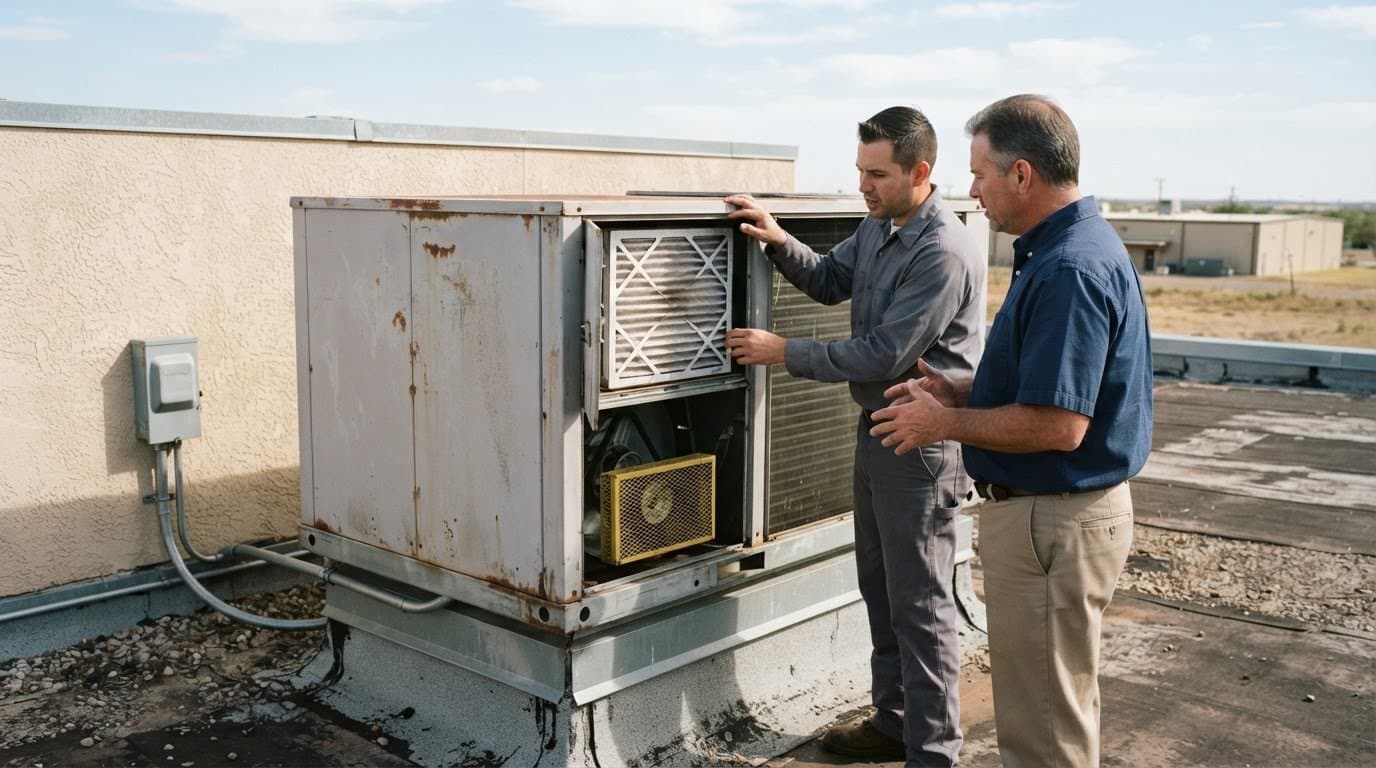
The most useful questions to ask commercial HVAC companies cover what happens between service calls, not just the installation. Ask about comparable commercial projects, installation scope, technician experience, service agreement coverage, energy use, and preventive maintenance, including how filter replacement is handled. These questions clarify the work and its ongoing operational implications.
Upfront cost matters when planning HVAC work, but so do the proposal’s scope and the system’s care over time. A maintenance plan should state which tasks are scheduled and what condition information you receive after each visit. Professional inspections are commonly recommended twice a year, at the start of each heating or cooling season. The right filter schedule depends on the equipment and operating conditions.
This guide covers practical questions about comparable projects, installation and system performance, technician readiness, contract terms, energy use, and maintenance. It explains why preventive care and filter replacement deserve specific attention, helping you assess both the immediate work and the system’s ongoing operation.
Key Takeaways
- Use comparable commercial projects to assess whether a proposed approach fits your building’s requirements and operating conditions.
- Clarify installation scope, system sizing, ductwork considerations, and how system performance will be evaluated after the work.
- Explore how technicians diagnose issues, apply safety judgment, and coordinate with building teams during service.
- Review what a service contract covers, including scheduled tasks, documentation, and procedures for unexpected repairs.
- Connect energy recommendations and preventive maintenance to your building’s equipment, usage patterns, and long-term operating needs.
1. Installation, retrofits, system balancing, and maintenance
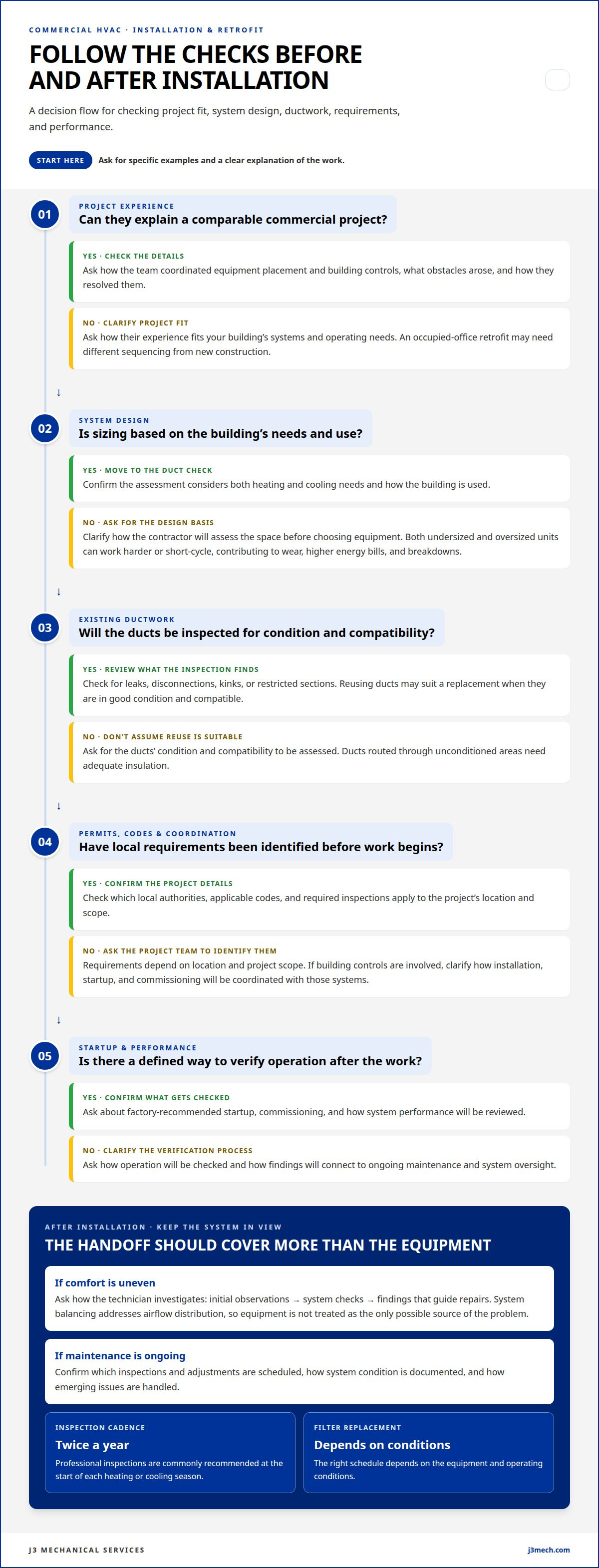
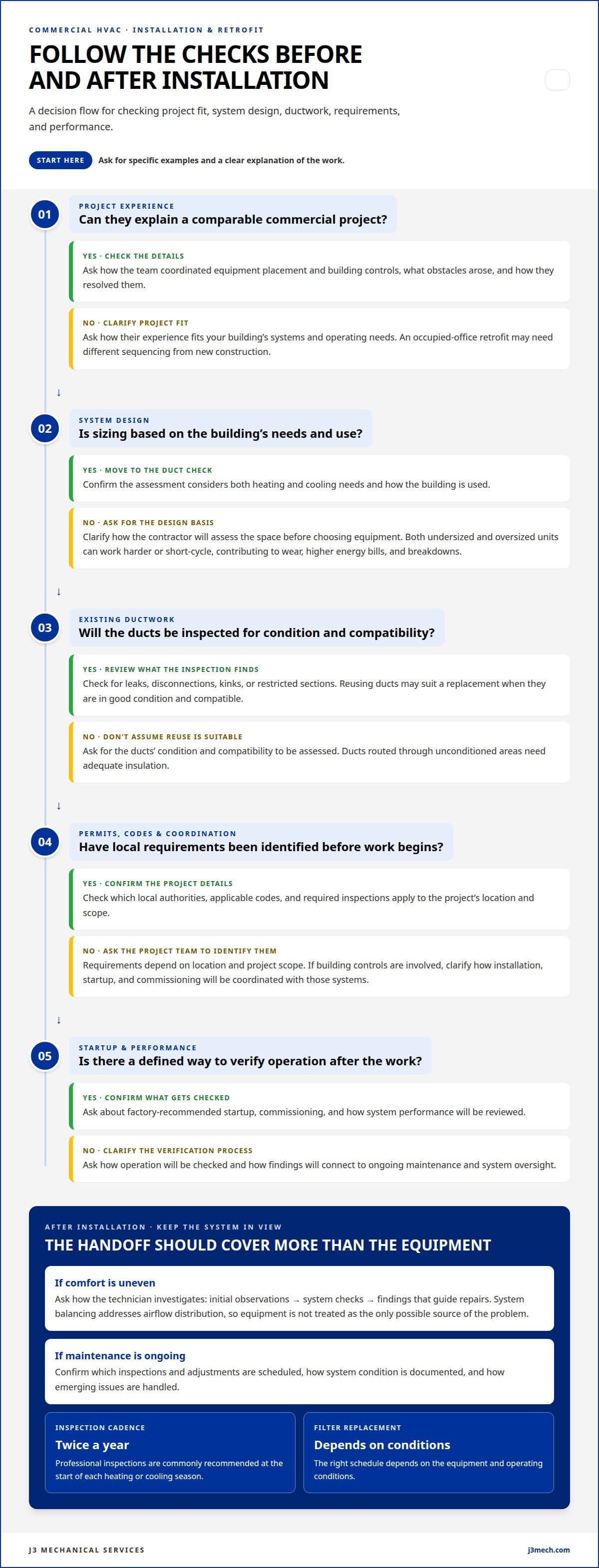
Experience with similar commercial projects can shape installation decisions before equipment reaches the site. A retrofit in an occupied office, for example, needs different sequencing from HVAC work in new construction. Ask how the contractor coordinated equipment placement and building controls on comparable projects, what obstacles arose, and how the team resolved them. Specific examples show whether its experience fits your building’s systems and operational needs.
How does the contractor size and design a commercial HVAC system for your building? A sound assessment considers the space’s heating and cooling needs and how the building is used. Ask whether the contractor will inspect existing ducts for leaks, disconnections, kinks, or restricted sections. Reusing ducts may suit a replacement system if they are in good condition and compatible; ducts routed through unconditioned areas need adequate insulation. An undersized unit may work too hard, while an oversized unit may short-cycle. Either can contribute to wear, higher energy bills, and breakdowns.
What permits, codes, and inspections apply to commercial HVAC work in your area? Requirements depend on the project’s location and scope. Before work begins, ask the project team to identify the relevant local authorities, applicable codes, and required inspections. For projects involving building controls, clarify how installation, startup, and commissioning will be coordinated with those systems.
Technical readiness is also evident in the diagnostic process. Ask a technician to explain how they would investigate a basic issue, such as uneven cooling between occupied areas. Their explanation should cover initial observations, system checks, and how the findings guide repairs. System balancing addresses airflow distribution, so the equipment is not treated as the only possible source of a comfort problem.
Commercial HVAC systems increasingly use connected controls and digital tools. Ask about experience with remote or wireless monitoring, the software used to review system information, and how these tools fit into service and maintenance workflows. Building controls affect equipment operation, so the installation plan should coordinate with them rather than treat them as an afterthought.
Clarify how the team verifies operation after installation or a retrofit. Ask about its process for factory-recommended startup, commissioning, and reviewing system performance. For ongoing maintenance, establish which inspections and adjustments are scheduled, how system condition is documented, and how emerging issues are handled. These details connect installation quality with practical oversight throughout the equipment’s operation.
2. Technician professionalism, adaptability, and teamwork
Warning signs include vague answers about who will perform the work, how findings are documented, or how safety hazards are managed. A technician who cannot explain their process for a commercial setting may lack relevant experience or preparation. During hiring, focus on specific examples rather than broad claims of expertise.
Ask how technicians’ qualifications and experience match the equipment they will service. Commercial systems differ from residential equipment in scale, controls, and operating demands, so technicians should be able to explain those distinctions. Ask how the team keeps its knowledge current as practices and codes change. Look for a clear description of practical learning or procedures, not general assurances.
Use a past job to assess judgment. Ask for an example of a safety hazard a technician encountered and how they responded. The answer can show whether they recognized the risk, communicated it to the crew, and took appropriate precautions before proceeding. Safety also depends on the work area: rooftop access, occupied spaces, and equipment rooms each require attention to site conditions.
Commercial HVAC service requires coordination with building staff and other trades. Ask how technicians communicate when work affects occupied offices, production areas, or scheduled operations. For example, a technician may coordinate access to a mechanical room with the facility manager or collaborate with specialized teams like Innovative Electrical Contractors when managing complex electrical connections. Strong teamwork means explaining the work, sharing relevant findings, and documenting follow-up for the building team.
Adaptability matters when symptoms change during an inspection. Ask how a technician distinguishes the reported issue from related system conditions and communicates revised findings. For example, a thermostat reading that conflicts with conditions in an occupied zone calls for a clear explanation before recommendations are made. The technician should distinguish observed conditions from proposed repairs and explain the reason for each step.
Technology recommendations should address the building’s actual operating needs. Ask why a smart thermostat, energy recovery ventilator, or other upgrade suits the application and how it would affect existing equipment and controls. New HVAC technology may offer efficiency or operational benefits, but recommendations should connect each feature to a specific building condition. Ask what information supports the proposal and how performance would be assessed after installation.
Finally, assess consistency by asking how technicians record service findings and share unresolved issues with the next crew. A useful record identifies the equipment reviewed, observations, and follow-up actions, creating continuity between visits. If a system needs troubleshooting or repair, commercial HVAC repair can address the issue through a defined service process.
3. What’s Actually Included in This HVAC Equipment Service Contract?
A service agreement should define covered equipment, scheduled tasks, payment terms, and procedures for unexpected repairs. Compare each clause with the building’s operating needs rather than relying on a vague description such as “full maintenance.” A facility with separate rooftop units and building controls, for example, needs a clear list of which assets receive service. Ask how completed work is recorded and findings are communicated after each visit.
Contractor recommendations should have a clear technical basis. Ask which equipment brands the contractor supports and why a particular brand fits the building’s operating requirements. A useful recommendation explains how the equipment aligns with existing systems, controls, and maintenance needs. Replacing one rooftop unit, for example, may affect how it integrates with other equipment. The agreement should identify the selected equipment and describe the installation or service scope.
How quickly does the company respond to emergency HVAC service calls? The agreement should state the response window and explain whether it measures call acknowledgement or technician arrival. It should also specify after-hours availability and whether emergency labor is included or billed separately, so the building team understands the process before an urgent failure.
Building-specific terms keep an agreement useful as operations change. Define covered systems by equipment type or location, then list scheduled visits, inspection tasks, and reporting expectations. If a tenant area, production schedule, or equipment inventory changes, the contract should explain how scope adjustments are proposed, approved, and documented. This keeps an outdated asset list from obscuring what the maintenance plan covers.
Review exclusions as carefully as inclusions. Clarify whether parts, labor, repairs, and replacement components are covered or charged separately. HVAC warranties may cover parts, labor, or both, so the agreement should distinguish warranty work from contract work. It should also explain how technicians report issues outside scheduled maintenance and how additional work is authorized before it begins.
Documentation shows what the contractor completed. Ask for a sample service report showing tasks performed, equipment condition, recommendations, and unresolved issues. For example, a report about a recurring fault should identify the affected unit and recommended next step. Clear records help facility teams track conditions across visits and assess whether recommendations address the original concern.
Bonding and insurance address different project risks. On larger projects, a bondable contractor may use a surety company to provide a financial guarantee. Public liability insurance can cover accidents at a contractor’s work site. Ask how these protections apply to the project and ensure the agreement identifies relevant coverage and responsibilities. Before work begins, seek a written, building-specific scope that clarifies deliverables, exclusions, payments, and emergency procedures.
4. Energy efficiency and operating costs
Evaluate efficiency using the building’s energy use, operating schedule, and cooling demands, not equipment labels alone. Ask how a proposed change could affect utility consumption and what assumptions support the estimate. An office with extended operating hours, for example, may use air conditioning differently from a facility occupied only during standard business hours. The comparison should reflect the actual schedule and building conditions.
SEER measures cooling released relative to the energy used. Ask how the proposed system’s SEER rating compares with the existing equipment, then consider operating conditions and lifetime costs. A higher rating can indicate greater cooling efficiency under the rating method, but building use, system condition, and controls also influence energy consumption. Treat the rating as one input, not a complete forecast.
For an upgrade proposal, request an estimate of return on investment and the time needed to recover upfront costs. The analysis should identify assumptions behind projected energy savings and explain which equipment or operating changes drive them. For example, compare a control adjustment with replacing an aging unit. This helps distinguish measures intended to reduce energy use from work primarily intended to improve reliability.
System age can guide that discussion. For equipment 8–10 years old or older, replacement may be worth considering to reduce energy use and utility bills. The decision should also account for current condition, repair needs, expected operating demands, and the proposed system’s efficiency. An older unit may still suit a building if its condition and performance meet operational requirements.
Efficiency improvements can involve more than the air conditioning unit. Ask how insulation, programmable thermostats, or duct sealing could affect system performance in your building. Sealing ductwork may address energy loss, while a programmable thermostat can align operation with occupancy schedules. The right measure depends on the building’s conditions and how its mechanical systems work together.
Ask whether equipment discounts or tax and utility rebates may apply to the proposed upgrade. An HVAC contractor can help determine eligibility, while the building’s location, equipment, and program criteria shape the outcome. Keep any incentive separate from the technical case for the project: the system should meet the building’s requirements even when a rebate is unavailable.
Connect recommendations to measurable building operations. Establish which utility information will serve as a baseline, what assumptions affect the estimate, and how performance will be reviewed after changes. A practical assessment can compare energy use before and after an upgrade while accounting for changes in occupancy or operating schedules. This gives decision-makers a clearer basis for evaluating efficiency and ongoing utility costs.
5. Preventive maintenance and filter replacement
A preventive maintenance plan schedules inspections rather than waiting for equipment failure. Professional HVAC inspections are recommended twice a year, at the start of each heating or cooling season. Experienced commercial specialists like Zee Jay Mechanical often structure these visits around seasonal transitions to verify equipment readiness. Ask the contractor to outline the tasks planned for each visit and connect them to the building’s equipment. For a facility with several systems, records organized by unit help teams track changes in condition and identify where attention is needed.
Filter replacement needs a defined schedule, too. Most HVAC air filters should be replaced at least every 90 days, while building conditions affect how quickly filters collect debris. Ask how the plan tracks filter types, condition, and change dates. For example, a space with heavier dust or longer equipment operating hours may need closer monitoring than a lightly used area. The schedule should account for observed conditions, not rely on a calendar date alone.
Maintenance frequency should reflect how the commercial space operates. Ask how equipment use, occupancy, operating hours, and seasonal demand shape the maintenance plan. A facility whose systems run for extended periods may place different demands on filters and components than a space with limited hours. These details help determine whether planned visits and filter reviews suit the building’s use, rather than applying one schedule to every system.
Documentation makes each visit useful to the next. Ask for a sample post-maintenance report summarizing the work performed, major component condition, repair or upgrade recommendations, and filter change dates and notes. If a report identifies a recurring concern on one unit, for instance, facility staff can track it across later visits and plan follow-up. The estimate and agreement should clarify which scheduled tasks are included and how additional repairs are handled.
Make filter records accessible to the people responsible for building operations. A maintenance log can identify each system, its filter type, the most recent replacement, and the next planned review. This helps facility teams coordinate service with heating and cooling needs and spot missed changes. Recording observations alongside replacement dates also gives technicians useful context during later inspections.
A sound preventive plan links inspections, filter replacement, and consistent reporting. Schedule commercial HVAC maintenance to establish a structured approach for your building’s equipment, operating needs, and service records.
J3 Mechanical Services: Commercial HVAC Installation & Replacement
J3 Mechanical Services supports commercial buildings with HVAC installation and replacement when existing equipment no longer fits operational needs or a new project requires coordinated system planning. Its work also includes commercial HVAC maintenance and repair, connecting equipment decisions with ongoing system care. For urgent disruptions, 24/7 emergency service is available.
Use these questions to clarify project scope, equipment requirements, service expectations, and preventive maintenance priorities. This preparation supports a more informed discussion about the building’s needs and the work required to address them.
Contact J3 Mechanical Services to discuss commercial HVAC needs for your building.
Move Your HVAC Decision Forward
A commercial HVAC decision shapes more than a single project. Turn your priorities into a clear discussion about building requirements, operational constraints, and the work needed to support reliable system performance. The questions to ask commercial HVAC companies help keep that conversation focused on practical needs rather than assumptions.
J3 Mechanical Services provides commercial HVAC installation and replacement, maintenance, and repair. Bring forward the concerns that matter most to your facility, whether you are planning equipment work, addressing an existing issue, or organizing ongoing care. A focused discussion can establish which needs require attention and how the next phase should proceed.
Contact J3 Mechanical Services to discuss your commercial HVAC requirements and determine a practical next step for your building.
Frequently Asked Questions
Do You Have Experience Working on Similar Projects?
Ask the contractor to describe a project with comparable equipment, building use, and operating constraints. A warehouse with high-bay spaces, for example, presents different airflow challenges from a multi-tenant office. Ask what the team coordinated with facility staff and what changed during execution. A relevant example helps you assess whether the contractor understands the conditions shaping your project, without relying on broad claims of commercial experience.
How Does Your Company Create and Maintain a Safe Workplace?
Ask how the company addresses worker and facility safety through training, safe work practices, and personal protective equipment. For rooftop work, clarify how the crew manages access and fall hazards. In occupied buildings, ask how technicians control access around active work areas. You can also ask how safety concerns are communicated to building staff and how the team accounts for applicable federal, state, and local requirements.
How Often Will Preventive Maintenance Visits Occur?
Professional HVAC maintenance is recommended twice a year, at the start of each heating and cooling season. The schedule should also reflect equipment use and building operations. A facility that runs continuously, for example, may need a different service plan from one with limited operating hours. Ask how visits align with seasonal transitions and how the schedule can respond to changes in equipment condition or operating demands.
Is Reporting and Documentation Included?
Ask what records you receive after each service visit and when they are provided under the agreement. Useful documentation identifies equipment inspected, work completed, observed condition, and recommended follow-up. A report that identifies a recurring issue by unit, for example, helps facility staff track it during later visits. Clarify who receives reports and how urgent findings are communicated.
What Is the Anticipated ROI of My HVAC Upgrades?
Ask for an estimate of the upgrade’s return on investment and the time required to recover upfront costs. The estimate should identify its assumptions, including building operating schedules, expected energy use, and which proposed changes contribute to savings. For example, compare a controls adjustment with equipment replacement as separate options. This makes the financial case easier to assess and shows how operational changes could affect projected results.
What Is the Standard Contract Agreement You Offer Commercial Clients?
Ask for a written agreement defining covered equipment, scheduled deliverables, payment terms, and procedures for unexpected repairs or emergencies. A multi-building portfolio needs a clear list of each location and the equipment included at each one. Also clarify how scope changes are documented and approved. These details help facility managers understand responsibilities and maintain continuity as operational needs change.
What’s Actually Included in This HVAC Equipment Service Contract?
Ask the contractor to distinguish scheduled maintenance from repairs, replacement parts, and emergency work. The agreement should state which equipment and tasks are covered, what is excluded, and how additional work is authorized. A maintenance visit may identify a component that needs repair, for example, but the contract should explain how that work proceeds. Clarify whether applicable equipment warranties cover parts, labor, or both.
What Questions Should You Ask When Hiring a Commercial HVAC Company?
A concise set of questions to ask commercial HVAC companies should address comparable projects, technician readiness, safety practices, contract scope, reporting, energy estimates, and filter planning. Also ask who will coordinate work with your facility contact and how outstanding issues carry forward between visits. For facilities in San Antonio, Selma, Seguin, Austin, Corpus Christi, Killeen, Joshua, Bandera, Beorne, New Braunfels, Edinburg, Mccallen, Rio Grand Valley, Rockport, Pleasanton, San Marcos, and Round Rock, exact coverage and availability must be confirmed for every request.
Need a hand with your building's HVAC?
Free quotes and honest answers from licensed commercial technicians across South Texas.