
Retail store HVAC maintenance and repair in Killeen
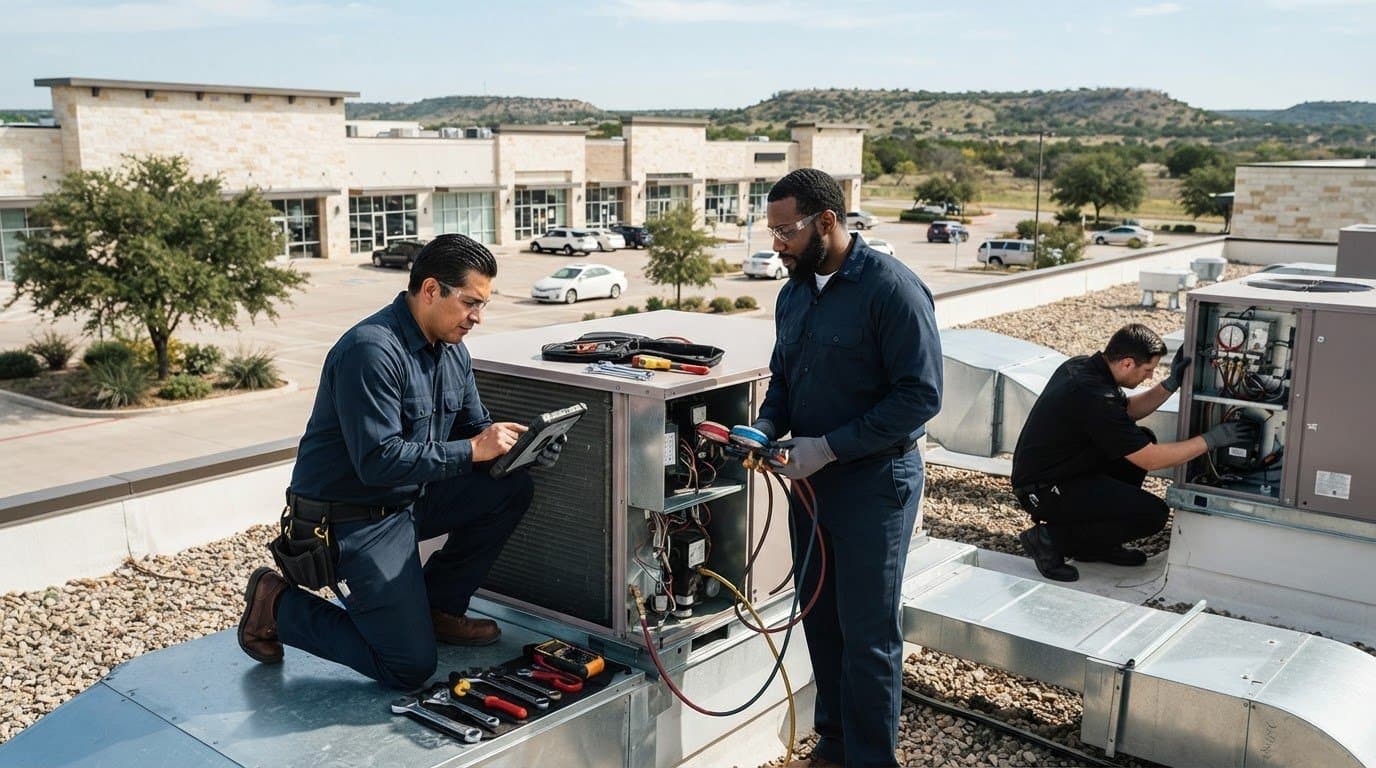
Reliable retail store HVAC maintenance in Killeen depends on scheduled system care and timely repairs when performance declines. The need is practical: Killeen summers can approach 100 degrees, while winter temperatures can fall below freezing, making consistent indoor comfort important across the year. Regular maintenance supports efficiency, comfort, fewer expensive repairs, and longer system life.
A retail store HVAC problem can affect customer comfort and daily operations, so waiting for a complete breakdown is not the only option. Maintenance helps identify developing issues, while repair addresses faults already disrupting system performance.
This guide explains what commercial HVAC maintenance and repair involve, what affects the work and its cost, and how to assess service for a retail property. It also covers how scheduled care and responsive repairs can support reliable operation through Killeen’s seasonal temperature shifts.
Key Takeaways
- Learn which maintenance checks help identify developing HVAC issues before they disrupt store operations.
- Recognize how repair needs differ from routine maintenance and when replacement may be the more practical path.
- See how system condition, building requirements, and project scope shape commercial HVAC work and its cost.
- Understand what to consider when arranging service for a retail property, including how to handle urgent system problems.
- Explore how J3 Mechanical Services’ commercial maintenance, repair, installation, and 24/7 emergency service relate to different HVAC needs.
Central air conditioning repair and maintenance
Central air-conditioning maintenance combines planned inspections with repairs for faults affecting cooling, airflow, or controls. For retail store HVAC maintenance in Killeen, the right scope depends on the equipment, operating symptoms, and building conditions.
Emergency AC and HVAC Repairs
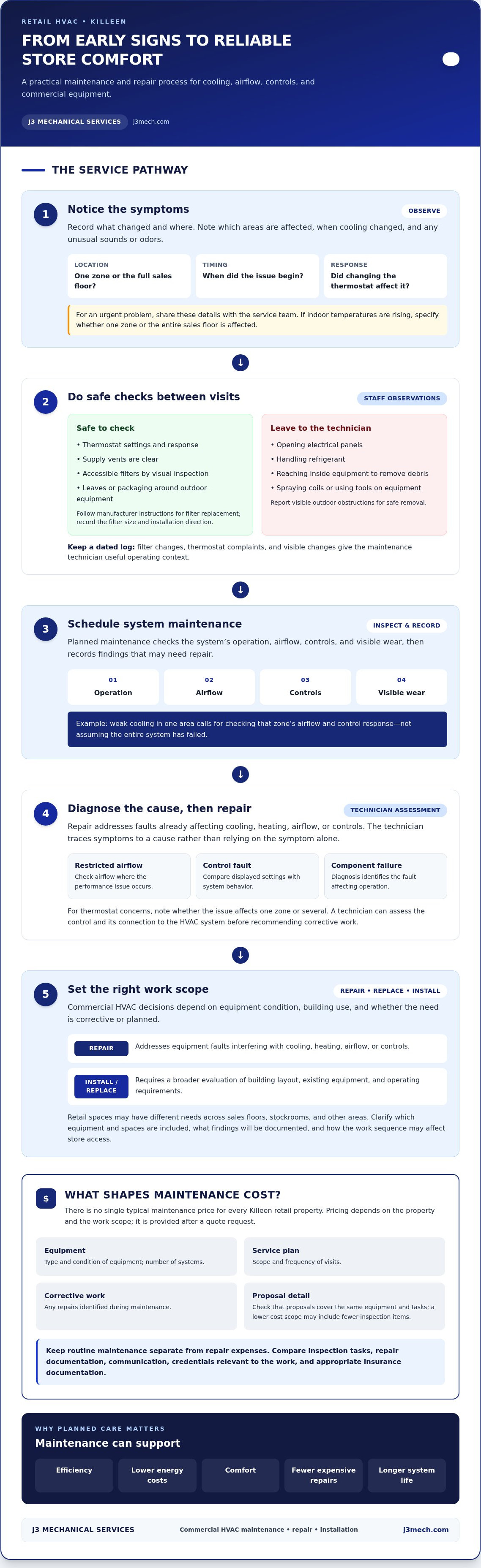
When reporting an urgent problem, share clear details: which areas are affected, when cooling changed, and whether there are unusual sounds or odors. This helps the service team understand the issue, but it does not replace equipment diagnosis. If indoor temperatures are rising, for example, note whether the problem affects one zone or the entire sales floor.
During a repair, the technician traces symptoms to their cause, such as restricted airflow, a control fault, or component failure. Record when the problem began and whether adjusting the thermostat changed anything. These details support diagnosis and help distinguish a sudden failure from a recurring maintenance issue.
Safe Tasks Between Service Visits
Retail staff can check thermostat settings, keep supply vents clear, and visually inspect accessible filters. Follow the manufacturer’s instructions when replacing a filter, and record its size and installation direction. Staff should not open electrical panels, handle refrigerant, or reach inside equipment to remove debris.
Staff can observe whether leaves or packaging obstruct the area around outdoor equipment, then report the obstruction for safe removal. Do not spray coils or use tools on the equipment. A dated log of filter changes, thermostat complaints, and visible changes gives the maintenance technician useful operating context.
Rebates and incentives for commercial HVAC systems in Killeen depend on current utility program rules and project eligibility. Review the requirements before selecting equipment, since qualifying conditions can affect which improvements receive support.
Scheduled maintenance typically examines system operation, airflow, controls, and visible wear, then records findings that may require repair. For example, a complaint about weak cooling in one area calls for checking its airflow and control response, rather than assuming the entire system has failed. Better efficiency, lower energy costs, increased comfort, fewer expensive repairs, and longer system life are potential benefits of regular maintenance.
Thermostat repair or replacement may be needed when displayed settings do not match system behavior or the control fails to respond. Compare the setpoint with room conditions and note whether the issue affects one zone or several. A technician can assess the control and its connection to the HVAC system before recommending corrective work.
Residential HVAC follows similar diagnostic principles, but home systems differ from the commercial equipment and zones in a retail building. Appliance repair is also a separate service category: a refrigerator or other appliance fault should not be mistaken for a central air-conditioning problem. Identify the affected equipment first, then describe its symptoms accurately.
Commercial HVAC repair, maintenance, and installation
Commercial HVAC decisions depend on equipment condition, building use, and whether the need is corrective or planned. Retail systems also serve occupied sales floors, stockrooms, and other spaces with different comfort demands.
Residential and commercial HVAC work can involve cooling, heating, airflow, and controls, but the building’s use changes the assessment. A home system serves household rooms; a retail system may need consistent conditions across customer and staff areas. Describe the affected zones, operating schedule, and symptoms so the service team can define the scope accurately.
When comparing commercial HVAC maintenance contractors in Killeen, assess whether each proposal explains inspection tasks, repair documentation, and how the work will fit store operations. Compare scope and communication, not just the service label.
Check that credentials apply to the work and that documentation of insurance is appropriate for a commercial property. Requirements depend on the project scope, so evaluate them alongside the proposed tasks and contract terms.
Commercial System Repair and Installation
Commercial repair addresses equipment faults that interfere with cooling, heating, airflow, or controls. Installation or replacement involves a broader evaluation of the building layout, existing equipment, and operating requirements. Uneven temperatures in the sales area and stockroom, for example, may reflect different zone demands, so the scope should account for both.
Before work begins, clarify which equipment and areas are included, what findings will be documented, and how the work sequence may affect store access. These details make proposals easier to compare and distinguish immediate repairs from longer-term equipment decisions.
Maintenance Costs in Killeen
There is no single typical maintenance price that applies to every Killeen retail property. The price depends on the equipment type and condition, the number of systems, the scope and frequency of visits, and any corrective work identified; it is provided after a quote request.
Compare proposals by checking whether they cover the same equipment and tasks. A lower-cost scope may include fewer inspection items, while a broader plan may document more system conditions. Keep repair work distinct from routine maintenance when reviewing projected expenses.
Retail Store Maintenance Providers
Retail stores in Killeen need commercial HVAC service suited to their equipment and operating needs. Rather than relying on a general label, compare stated maintenance tasks, repair capabilities, installation experience, and how findings are documented.
Ask for a clear scope that identifies covered equipment, scheduled work, and how reported problems are handled. For a store with separate customer and back-of-house areas, the scope should reflect those different spaces. A commercial HVAC maintenance plan can be considered as part of that evaluation.
HVAC services in Killeen and Central Texas
Retail HVAC service in Killeen can include routine system care, troubleshooting, and urgent service requests. Start by identifying the affected equipment, building area, and operational impact.
For a store in Killeen or elsewhere in Central Texas, describe the HVAC system layout before arranging work. Note whether the problem affects the sales floor, stockroom, offices, or several areas. A complaint limited to one zone calls for different checks than a system-wide loss of cooling. Record when symptoms began and whether they change during the day.
HVAC professionals serving Killeen assess equipment in the context of the building and its use. Gather available model information from equipment labels, recent service records, and a concise list of symptoms. For example, report a recurring temperature difference between the checkout area and stockroom, rather than simply saying the store feels uncomfortable. This information helps organize diagnosis and distinguish control, airflow, and equipment concerns.
Emergency HVAC service may be relevant when a failure disrupts essential store operations or creates a serious indoor comfort problem. When reporting an urgent issue, identify affected areas, describe unusual noises or odors, and state whether the system has stopped or is operating inconsistently. For after-hours requests, provide the address, facility, equipment, alarms, safety condition, access, operating impact, and responsible contact. After the call, coverage and next steps are confirmed; arrival or response times are not guaranteed.
Refrigeration services address equipment such as walk-in coolers, display cases, and freezers, which preserve products through a separate cooling process. A warm display case does not by itself mean the building’s central HVAC system has failed. Identify the specific unit and note whether the issue involves temperature, unusual sounds, or a visible change in operation. Keeping refrigeration concerns distinct helps direct the appropriate diagnostic work.
When coordinating work across Central Texas locations, keep a separate equipment record for each store. Include equipment identifiers, affected zones, service history, and recurring symptoms. A repeat issue at one location may need a different diagnostic focus than a similar complaint at another, since equipment condition and building configuration can differ. Consistent records also help managers track whether completed repairs resolved the original problem.
Before a service visit, assign one store contact to provide access and explain operational constraints, such as busy checkout periods or restricted stockroom areas. That contact can identify zones needing attention and communicate changes during the visit. These steps give the HVAC professional a clearer view of the building’s needs and help keep coordination orderly.
Branch phone and after-hours contact
A retail manager should keep the HVAC branch number and after-hours procedure in the store’s operating records. Use the same contact record for the store manager, facilities lead, and shift supervisor, so a cooling failure can be reported even when one person is absent. Confirm that the number reaches the intended service team before an urgent call is needed.
Keep the branch phone number in an accessible location, such as the store’s facilities directory, rather than relying on one employee’s personal phone. Avoid making access exclusive to one manager. The record should identify the store address, equipment location, and person authorized to arrange access, with updates whenever responsibilities change.
Before calling about an after-hours issue, prepare a concise incident report. State the store name and address, identify the affected area or equipment, and explain whether the system is operating, performing poorly, or stopped. For example, distinguish a warm sales floor from weak airflow in a single office. Clear details help the service team understand the request.
Include useful equipment information in the call record, such as a model label or previous service note, when readily available. Do not delay reporting an urgent operational disruption to search for paperwork. Provide the immediate symptoms first, then share records through the service process. Note the time of the call and any instructions received.
Store leadership should decide who communicates with the service team after business hours. The assigned contact can provide building access, explain restricted areas, and relay changes to staff. Include that responsibility in shift handover notes so the next supervisor knows whether arrangements have changed.
After contacting service, document the response and operational impact in the store log. Record the affected area, reported symptoms, actions taken, and whether customer or staff areas needed adjustment. This connects an after-hours incident with later maintenance findings, especially if the same zone develops another problem.
For stores with several locations, maintain a separate branch record for each address. Check that each record contains the correct local contact route, access instructions, and equipment notes. A centralized directory supports consistent reporting, while location-specific details help prevent confusion about equipment or entry procedures.
Review contact records during facilities handovers and whenever store leadership changes. Confirm that the contact information is accessible, escalation steps are clear, and staff know who is authorized to report an HVAC issue. Document changes promptly rather than waiting for another system interruption.
Heating safety checks
Killeen winter temperatures can fall below freezing, so review retail heating equipment before cold conditions arrive. A structured inspection considers system condition, controls, airflow, and visible damage. The aim is to identify concerns that could affect operation and document findings for appropriate repair or follow-up.
Begin with an exterior visual review from a safe, accessible position. Look for damaged equipment panels, blocked air intakes, loose debris, or changes around vents. Staff should record observations and report them, not open equipment or attempt internal repairs. For example, note a new vibration or unusual odor in the service record.
Inside the store, compare thermostat settings with heating behavior in each occupied zone. Note whether a sales area remains cool while an office warms normally, or whether the system cycles without improving comfort. These observations help distinguish a localized control concern from a broader heating issue and give the technician a precise starting point.
- Record the affected zone and the time symptoms appear.
- Note unusual sounds, odors, visible damage, or changes in airflow.
- Keep equipment access clear and avoid removing panels or guards.
- Share the observations with the technician during the service visit.
A professional heating review can assess equipment condition, control response, airflow, and components staff cannot safely inspect. For fuel-burning equipment, the technician can evaluate relevant operating components and venting as part of the system assessment. Store employees should not adjust combustion components or bypass controls; those actions require technical diagnosis and proper repair.
Keep inspection findings with the store’s HVAC records. Document the equipment, observed issue, work completed, and any recommended follow-up. If the same zone later develops a heating problem, these records help connect the new symptom with previous findings instead of relying on memory.
Arrange a planned review before cold weather rather than waiting for a heating failure during business hours. A technician can identify maintenance needs and explain which concerns require repair. If staff notice a sudden change, such as a burning odor or visible equipment damage, keep people away from the affected equipment and report the condition promptly.
For a retail property in Killeen, arrange a commercial heating system assessment to address equipment condition and maintenance needs through a professional review.
J3 Mechanical Services: Commercial HVAC Installation & Replacement
J3 Mechanical Services provides commercial HVAC installation and replacement, maintenance, and repair for retail properties. Turn to its team when recurring system problems, equipment condition, or a planned building project calls for a defined commercial HVAC scope.
For an existing store, commercial maintenance and repair address operating needs, while installation and replacement support equipment upgrades or new system requirements. J3 Mechanical Services also provides 24/7 emergency service for urgent commercial HVAC issues. Sharing the affected areas, equipment details, and operational concerns helps establish a clear starting point for the work.
Contact J3 Mechanical Services to discuss commercial HVAC needs for your retail store in Killeen.
Plan the Next Step for Your Store
A planned approach to retail store HVAC maintenance in Killeen makes system decisions part of facilities planning, rather than a response made under pressure. Use service records to identify recurring issues, note equipment that needs closer assessment, and align upcoming HVAC work with store operations. This gives your team a clear basis for discussing priorities and scope.
J3 Mechanical Services provides commercial HVAC maintenance and repair, along with installation and replacement. These services can support different stages of a system’s lifecycle, from ongoing care to corrective work or equipment changes. Sharing the property’s needs and operational concerns helps begin a focused conversation about the appropriate next step.
For a planned maintenance discussion, a repair concern, or an installation or replacement project, contact J3 Mechanical Services. A clear review of your store’s priorities can help your team move forward with greater confidence and a practical plan for its HVAC system.
Frequently Asked Questions
What HVAC maintenance services do Killeen retail stores need?
Retail stores need maintenance suited to their equipment, operating schedule, and building layout. A store with separate sales and storage areas, for example, benefits from checking how each zone responds to its controls and airflow. Maintenance records should document observed issues and completed work, helping managers connect recurring comfort complaints with particular equipment. Commercial HVAC maintenance is distinct from residential service and should reflect the demands of an occupied business.
How often should commercial HVAC systems in retail stores be serviced?
Service frequency should reflect equipment condition, manufacturer guidance, store operating hours, and system use. A retail space with long operating hours may need a different schedule from a location with limited hours or recently repaired equipment. Set the interval with system documentation and operating history in view, then revise it when recurring faults, building changes, or equipment replacement affect maintenance needs.
Do Killeen HVAC contractors offer preventive maintenance plans for retail businesses?
Yes, commercial HVAC contractors may offer scheduled preventive maintenance plans for retail properties. J3 Mechanical Services provides commercial maintenance programs for business facilities. Before adopting a plan, define which equipment and locations it covers, what tasks are scheduled, and how findings are documented. For a Killeen store with multiple HVAC units, a written equipment list can help keep scheduled work aligned with the property’s actual system inventory.
What should a retail store HVAC maintenance agreement include?
A useful agreement identifies covered equipment, scheduled maintenance tasks, service documentation, exclusions, and the process for requesting separate repairs. It should also clarify how the store reports a new issue and who can authorize work. For example, designate a facilities contact and explain how inspection findings are shared with store management. Review renewal terms and any written priority provisions carefully: priority applies only when documented in the agreement.
How quickly can Killeen HVAC companies respond to retail HVAC emergencies?
Response timing varies, so a Killeen store should not assume a specific arrival time. For J3 Mechanical Services, after-hours commercial emergency coverage is confirmed by phone; exact coverage and availability must be confirmed for every request. Provide the address, facility, equipment, alarms, safety condition, access, operating impact, and responsible contact. Coverage and next steps are confirmed after the call, and dispatch or response timing is not promised.
Need a hand with your building's HVAC?
Free quotes and honest answers from licensed commercial technicians across South Texas.