
Troubleshoot Commercial Furnaces: Repair or Replace?
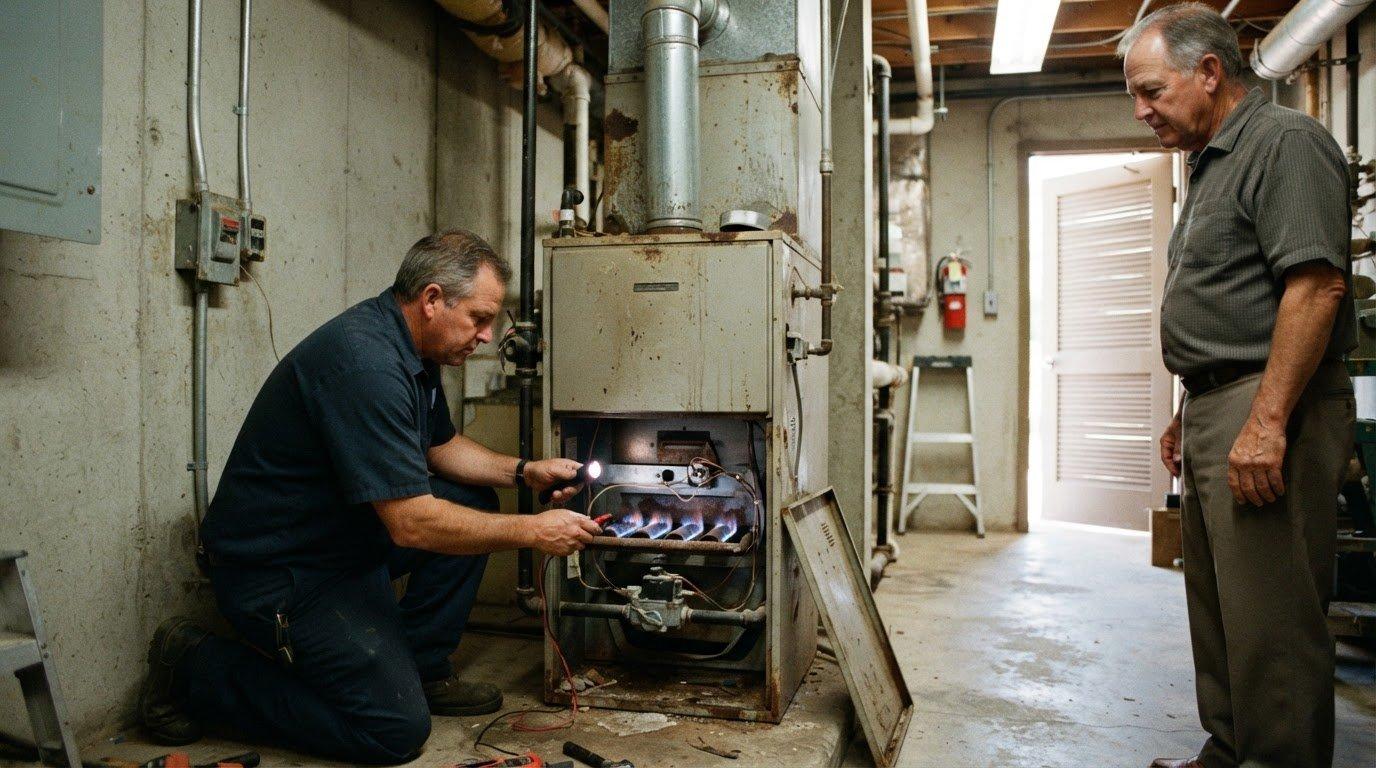
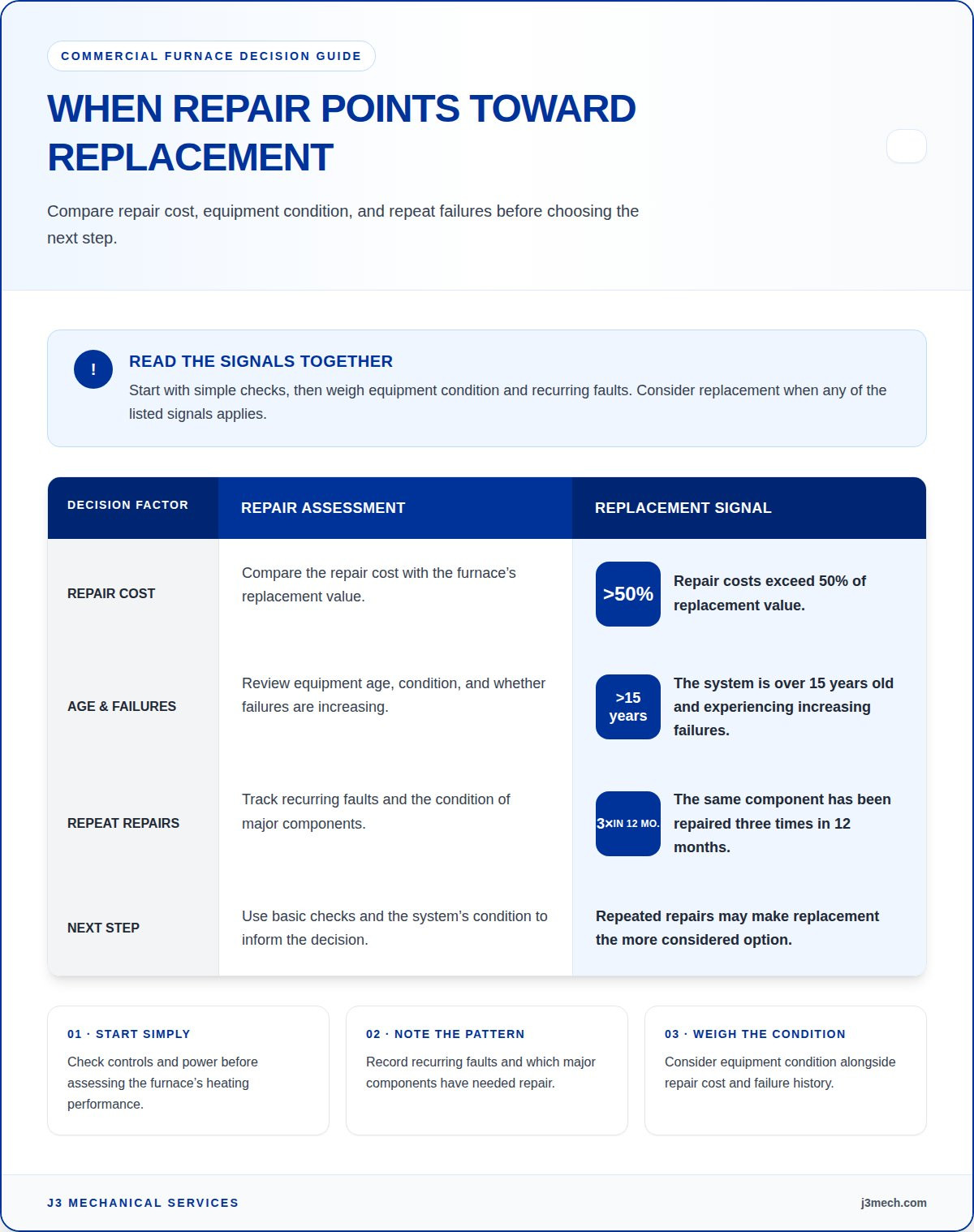
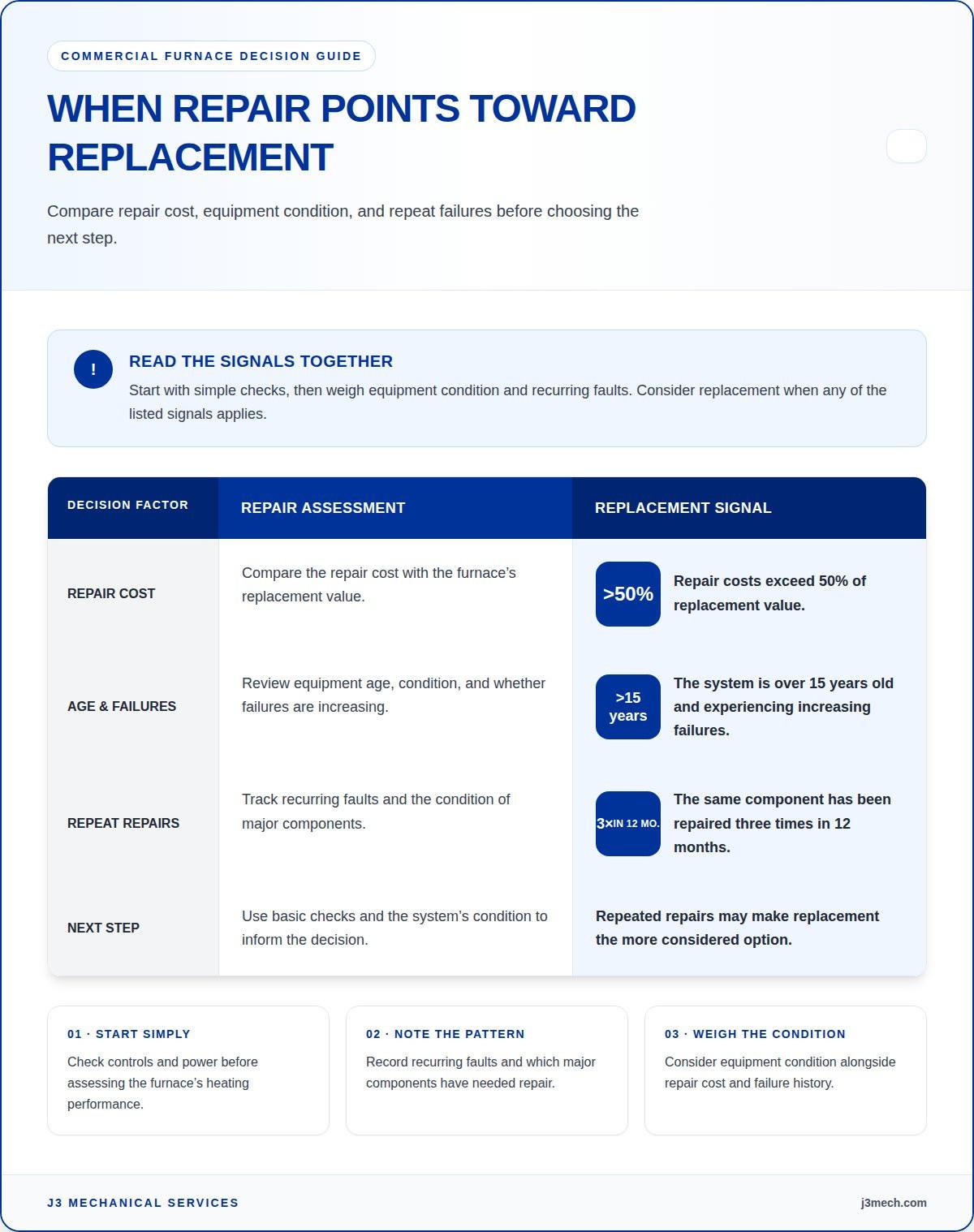
The right decision is not always to repair a commercial furnace: consider replacement when repair costs exceed 50% of its replacement value, when a system over 15 years old is experiencing increasing failures, or when the same component has been repaired three times in 12 months. A practical approach to troubleshooting commercial furnace problems starts with simple checks, then weighs equipment condition and recurring faults before choosing the next step. That distinction helps avoid spending on repeated repairs when replacement is the more considered option.
A furnace that stops heating can disrupt building operations, so checking power, breakers, flame color, and burners is a useful first step. This guide explains what you can safely observe, which symptoms point to a problem that needs professional attention, and how to assess repair against replacement. You will move from basic power checks to ignition and burner clues, then review the signs that an aging or repeatedly failing system may be a better candidate for replacement.
Key Takeaways
- Start with basic controls: confirm the thermostat is calling for heat and check the furnace’s power switch and breaker.
- Notice whether a visible furnace flame is steady and blue; a yellow or uneven flame can point to a burner issue.
- Recognize when ignition, flame-sensor, or control problems call for professional diagnosis rather than trial-and-error adjustments.
- Treat a carbon monoxide alarm or suspected furnace leak as an urgent safety concern and evacuate the facility.
- Use the pattern of failures and the condition of major components to guide a repair-or-replacement decision.
What is the most common HVAC problem in commercial buildings?
Thermostat settings, power interruptions, and airflow restrictions are useful places to start when a commercial furnace stops heating. Check the controls first, then observe the furnace without opening electrical or gas assemblies.
-
Verify Thermostat Settings and Batteries
Set the thermostat to heating mode and raise its setting at least five degrees above room temperature. This creates a clear call for heat rather than a cooling or idle command. If the screen is blank and the thermostat uses batteries, replace them and confirm the display returns. Commercial buildings may have multiple thermostats and zone controls, so identify which control serves the affected area. A wrong zone or setting can look like a furnace failure even when other areas are receiving heat.
-
Check Thermostat Power and Circuit Breakers
Check that the thermostat display is active, then inspect the furnace’s nearby power switch and the relevant circuit breaker. A furnace that is completely off may have lost power, while a tripped breaker can interrupt its controls and blower motor. One reset may restore power. If the breaker trips again, stop resetting it and arrange service. Repeated trips may indicate an electrical or equipment fault that a thermostat adjustment will not resolve. Keep the circuit panel accessible during this check.
-
Inspect Gas Valve and Furnace Controls
Look only at externally accessible controls. Check the gas valve’s position using its label or operating instructions. Do not force the handle or open the gas assembly. If the furnace has a standing pilot, an extinguished or unstable flame can prevent ignition. A thermocouple detects the pilot flame, while the control board coordinates operating signals. A failed signal or control can interrupt startup, but diagnosing those components requires appropriate testing. If you smell gas, leave the building and seek emergency help from a safe location.
- Compare the furnace’s response with the thermostat’s call for heat. If the burners do not ignite, note whether the pilot is lit and whether the control board shows a fault indicator. If the burners ignite but the building remains cold, note whether the blower motor starts and moves air. In a commercial system with multiple zones, record which areas heat and which do not. These observations can help distinguish a control or ignition issue from a distribution problem without adjusting gas or electrical components.
Checking furnace power and circuit breakers
Building staff can inspect accessible switches, thermostat displays, and visible warning signs. Leave electrical, gas, ignition, and internal drain repairs to a qualified HVAC technician. This sequence helps distinguish a basic power interruption from a fault that needs technical diagnosis.
- Confirm the furnace has power before investigating its heating performance. Check the nearby switch and the facility panel’s labeled circuit breaker, then note whether the display or other controls respond. A tripped breaker may interrupt the furnace and blower motor, leaving the HVAC system inactive. One reset may restore operation. If the breaker trips again, stop resetting it and arrange professional diagnosis. Repeated trips can indicate a fault that a simple restart will not correct.
- Use a basic checklist without opening equipment panels. Record whether the thermostat calls for heat, whether the furnace starts, and whether warm air reaches the affected area. Note if another zone still receives heat, since commercial systems can serve separate areas through multiple controls. Check visible vents for obstructions and note any unusual odor, noise, or water near the unit. These observations help a technician distinguish a power issue from an ignition or airflow problem.
- Check the gas valve only from its accessible position and follow the equipment label. Do not force the valve, disconnect a gas line, or attempt to repair ignition components. An extinguished pilot can stop some furnaces from operating, while newer equipment may use electric ignition. If you smell gas or notice an unusual odor, shut off the furnace only if it is safe to do so, evacuate the building, and contact a qualified technician immediately. Do not restart the furnace until the cause is addressed.
- Look for visible water around the furnace and condensate drain without dismantling the assembly. A clogged or cracked drain line, collector box, heat exchanger, or evaporator coil can contribute to a leak. A safety switch may stop operation if a condensate drain is clogged. Record where the water appears and whether the furnace has shut down. Leave clearing an internal drain line or servicing a condensate pump to a qualified HVAC technician, particularly if access requires opening the equipment.
- Before repair begins, give the technician a concise record of the furnace’s operation. Include which switch and breaker you checked, whether a reset restored power, and whether ignition occurred. Add the thermostat setting, affected zones, visible water, and any odor or repeated shutdowns. Do not repeatedly cycle the furnace to test it, bypass a safety switch, or replace internal electrical parts. These actions can obscure the original fault or create additional risk. Clear observations help target the next diagnostic step.
Furnace flame color and burner maintenance
Use the visible flame and burner area to identify signs that need professional attention. Error codes and diagnostic lights indicate operating status or a fault, but their meanings vary by furnace model. Use the unit’s legend to interpret them.
-
Examine Burner Condition and Flame Color
Observe the furnace flame through its designated viewing window without removing panels or touching burner parts. An even blue flame is a normal visual reference for older furnaces with visible flames; yellow or uneven flames may signal dirty or obstructed burners. Do not attempt to clean burners while the unit is operating. Record the flame’s appearance and any changes, as these details can help identify when burner inspection or repair is needed.
-
Troubleshoot Ignition and Flame Sensors
Note whether the pilot light stays lit, the burners ignite, or the furnace shuts down shortly after startup. An extinguished pilot can prevent a fuel-burning furnace from operating, while a faulty igniter or flame sensor can interrupt ignition. Avoid adjusting gas components or cleaning internal sensors without the required service procedures. Share any diagnostic light or displayed code with the technician, along with the startup sequence and the point where operation stops.
- Include burner and ignition inspection in preventive maintenance at least once a year. A technician can assess burners, flame sensors, and pilot lights, and identify deposits or obstructions affecting combustion. Annual service also gives the technician an opportunity to check for developing mechanical faults before they cause a shutdown. Commercial heating specialists such as Blueflame Boilers Ltd similarly highlight that routine servicing helps detect developing faults early and maintain safe combustion. If the furnace shows a yellow flame or repeated ignition failures between visits, schedule an inspection rather than treating the symptom as routine.
- Include filter and airflow checks in the maintenance plan. A dirty or clogged air filter restricts airflow, which can contribute to overheating and poor furnace operation. Check the filter’s condition and fit during scheduled service, and use the type specified for the equipment. A filter that is too thick or dense may also restrict airflow. Never operate a furnace without its filter, since doing so can cause serious equipment problems.
- Track component condition and maintenance dates in a service record. Commercial furnace ignitors typically last 3-5 years, so note their installation date and any ignition-related repairs. This interval is a planning reference, not a reason to replace a working part automatically. A technician can assess wear and operating performance during service, then determine whether repair, replacement, or continued monitoring best supports reliable operation and efficiency.
Your Commercial Furnace: Why Is It Not Working?
Trace symptoms from heat output to airflow, and recognize when safety concerns call for immediate action. The startup and shutdown pattern, along with building temperatures, can help narrow down the cause.
-
Confirm Whether the Furnace Produces Heat
Observe a complete heating cycle and record whether the furnace starts, ignites, and delivers warm air. If the unit runs without producing heat, note whether the burners light and the blower moves air. A dirty air filter can restrict airflow, while an extinguished pilot, faulty igniter, or flame sensor can interfere with reliable ignition. Check accessible vents for obstructions, but do not open panels or handle internal components. Share the sequence of events with the technician.
-
Assess Insufficient Heat and Short Cycling
Compare temperatures across affected zones and note whether the furnace shuts down soon after starting. A clogged filter can restrict airflow, contribute to overheating, and trigger short cycling. A malfunctioning thermostat or gas supply problem can also cause rapid on-and-off operation. Record when the cycles occur, which areas remain cold, and whether the blower continues running. These observations help distinguish airflow restrictions from control or fuel-related faults. Avoid repeatedly restarting a furnace that keeps shutting down.
-
Inspect the Blower Motor and Heat Exchanger
Listen for screeching, grinding, or rattling, and note whether the blower starts during a heating cycle. Worn blower components can prevent heated air from circulating, even when the burners ignite. A technician should inspect the heat exchanger annually for cracks. A cracked or damaged exchanger can release carbon monoxide into the facility. If a carbon monoxide detector activates, occupants should evacuate and seek immediate professional assistance. Do not continue operating the furnace while a suspected exchanger fault or detector alarm remains unresolved.
- Document the furnace’s symptoms before arranging diagnostic service. Include the display or diagnostic light, timing of shutdowns, unusual sounds, and zones without heat. A safety switch may stop operation because of a clogged condensate drain or dirty flame sensor. Resetting it without identifying the underlying cause can leave the fault unresolved. If the system repeatedly trips a safety control, leave internal inspection and repair to a technician.
How do you troubleshoot commercial furnace ignition, burner, or flame-sensor problems?
- Record what happens during a heating call before attempting any adjustment. Note whether the furnace starts, ignition occurs, and the burners stay lit. An extinguished pilot can prevent a fuel-burning furnace from operating, while newer furnaces use electric ignition only when heat is needed. This distinction helps identify the ignition system involved. Do not remove access panels or touch wiring, gas connections, burners, or sensors while observing the equipment.
- Check the gas supply only at an accessible, clearly labeled shutoff, and stop if you are unsure of its position. A closed gas valve can prevent a fuel-burning furnace from igniting, but turning internal components or disconnecting a line is not a safe diagnostic step. If you smell gas, leave the facility and contact emergency services from a safe location. Do not attempt ignition, pilot relighting, or further troubleshooting while the odor remains.
- Observe the ignition sequence and identify where it stops. If the pilot is lit but the furnace does not start, report that detail rather than attempting to clean an igniter. A faulty igniter may need replacement, while a flame-sensor problem can prevent the furnace from continuing to operate. Record any diagnostic light or displayed code, since its meaning depends on the specific furnace model and its label.
- Have a qualified technician assess burners, igniters, and flame sensors when ignition remains unreliable. Dirty burners may produce heat ineffectively, and professional service can inspect and maintain these components. A technician can determine whether the issue involves an obstructed burner, faulty igniter, flame-sensing problem, or another control fault. Avoid scraping, sanding, or repositioning internal parts, since an incorrect adjustment can leave ignition unreliable or cause additional damage.
- Include ignition and flame-sensor checks in scheduled furnace maintenance. The research facts recommend cleaning a commercial furnace flame sensor annually and identify preventive service as a way to maintain reliable ignition. Ask for the service record to note the component inspected, observed condition, and any repair completed. If the furnace continues to fail ignition or cycle off, arrange commercial furnace repair rather than repeatedly restarting it. A documented sequence helps focus diagnosis and reduce avoidable trial and error.
J3 Mechanical Services
J3 Mechanical Services can help when a commercial furnace fault persists, returns after a reset, or raises safety concerns. Its commercial HVAC repair and maintenance services address operating problems and support ongoing system care, while installation and replacement provide a path forward when equipment condition points beyond another repair. For urgent system disruptions, 24/7 emergency service is also available.
Share the symptoms observed, affected areas, and any diagnostic lights or recurring shutdowns. That information helps clarify whether the next step is repair, maintenance, or a broader replacement assessment. Contact J3 Mechanical Services to discuss the furnace issue and determine a practical next step.
Make the Next Furnace Decision Deliberately
A commercial furnace decision affects more than immediate heating; it shapes how you plan for building operations. Use the symptoms and service history to discuss the equipment’s condition, the impact of continued interruptions, and whether repair or replacement better suits your facility. Careful troubleshooting commercial furnace problems is most useful when it supports a decision based on system performance, not repeated guesswork.
When the cause remains unclear, faults recur, or safety concerns arise, involve a commercial HVAC professional rather than continuing adjustments. J3 Mechanical Services can help assess the situation and identify an appropriate next step for the system. Contact J3 Mechanical Services to discuss your commercial furnace. A considered decision today can help you move forward with greater clarity and confidence.
Frequently Asked Questions
Why does my HVAC system keep turning on and off every few minutes?
Repeated starts and stops often point to restricted airflow, a thermostat fault, or a gas supply problem. When troubleshooting commercial furnace problems, record when the system starts, stops, and restarts, and whether the blower continues running. Compare the pattern across zones: if one area cycles while others continue heating, local controls may be involved. A recurring cycle needs diagnosis, not repeated resets.
What are the most common commercial furnace problems and symptoms?
Common symptoms include failure to start, weak or uneven heat, repeated cycling, ignition trouble, unusual noises, and water near the unit. A structured approach to troubleshooting commercial furnace problems also considers whether the issue affects one zone or the entire building. For example, heat loss in one area may point to local airflow or zone-control trouble, while a building-wide shutdown suggests a broader system fault.
How do you troubleshoot a commercial furnace that won't start?
Start with the thermostat’s heating setting and display, then check the accessible furnace switch and labeled breaker. Note whether the furnace responds, ignition begins, and equipment with a pilot light has a visible flame. Do not open electrical panels inside the furnace or adjust gas components. If a breaker trips again or startup repeatedly fails, stop resetting the system and arrange professional diagnosis.
How do you diagnose a commercial furnace that runs but doesn't heat adequately?
Determine whether the burners ignite and the blower moves air into affected spaces. A running furnace with little heat may have restricted airflow, a dirty filter, burner trouble, or a blower fault. Compare conditions across zones and note whether airflow is weak everywhere or limited to certain vents. These observations help a technician focus on combustion, air movement, or distribution rather than replacing parts without a clear diagnosis.
What causes a commercial furnace to short cycle or overheat?
Restricted airflow from a clogged filter or blocked register can contribute to overheating and short cycling. A malfunctioning thermostat or gas supply problem can also cause rapid starts and stops. Record whether cycling follows a change in filter condition, thermostat operation, or heating demand. Do not bypass safety switches. They may be stopping the equipment because an underlying fault needs attention, not because the control should be defeated.
What are the carbon monoxide and gas leak warning signs, and what should you do?
Treat an activated carbon monoxide detector, suspected gas leak, or unusual gas odor near the furnace as an emergency. Evacuate the facility and call emergency services from a safe location. Do not re-enter or restart the equipment while the hazard remains. A cracked heat exchanger can allow carbon monoxide into the building, so an alarm requires immediate action even if occupants cannot identify the source.
When should a commercial furnace be repaired versus replaced?
Repair can suit a limited fault when the equipment’s overall condition supports continued operation. Consider replacement when repair costs exceed 50% of replacement value, an over-15-year-old system has increasing failures, or one component has been repaired three times in 12 months. A cracked heat exchanger also commonly points toward replacement. For facilities in San Antonio, Selma, Seguin, Austin, Corpus Christi, Killeen, Joshua, Bandera, Boerne, New Braunfels, Edinburg, McAllen, Rio Grande Valley, Rockport, Pleasanton, San Marcos, or Round Rock, exact coverage and availability must be confirmed for every request.
What do commercial furnace error codes and diagnostic lights mean?
Error codes and diagnostic lights indicate operating status or a fault, but their meanings vary by furnace model. Use the unit’s legend to interpret them.
Need a hand with your building's HVAC?
Free quotes and honest answers from licensed commercial technicians across South Texas.